
Imran Khan’s Solitary Confinement: An Escalating Human Rights Crisis
Former Prime Minister of Pakistan, Imran Khan, has been detained since August 5, 2023. His incarceration has evolved into a case of prolonged solitary confinement marked by systematic denial of basic rights, defiance of court orders, and conditions that violate Pakistan’s own jail rules as well as binding international human rights standards. UN experts and international media have raised alarms, warning that his treatment may amount to psychological torture.
This case has crossed from political detention into a full-scale human rights emergency: – Prolonged solitary confinement – Sensory deprivation through darkness – Denial of books and human contact – Ignoring court orders – Conducting trials under isolation.
Call to the International Community
- Immediate independent inspection of detention conditions
- Enforcement of court-ordered access to lawyers and family
- End to prolonged solitary confinement
- Compliance with UN Mandela Rules
Failure to act sets a dangerous precedent for political prisoners worldwide.
Duration of Detention
Imran Khan, former Prime Minister of Pakistan and chair of Pakistan Tehreek-e-Insaf (PTI), has been detained since August 5, 2023 on multiple charges, including corruption and anti-terrorism cases. (The Times of India)
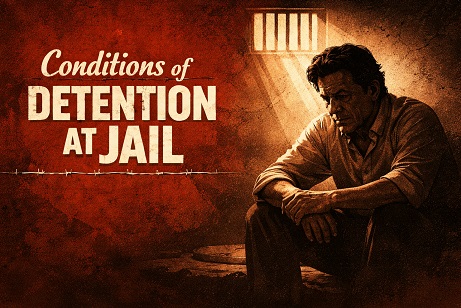

Conditions of Detention at Adiala Jail
Khan is currently held at Adiala Jail in Rawalpindi under conditions that have drawn widespread concern for violating basic human rights and international detention standards:
Prolonged Solitary Confinement
- Imran Khan is held in 8 x 6 jail cell.
- Isolation imposed for weeks and months at a time, far exceeding international limits
- Khan has reportedly been confined to a small cell for 22–23 hours a day for extended periods, amounting to prolonged solitary confinement as defined by international norms. (The Times of India)
- Reported that Khan has been kept in 23 hours per day isolation under highly restricted conditions. (JURIST)
Khan’s detention clearly exceeds the United Nations’ definition of solitary confinement — which identifies confinement for more than 22 hours per day with minimal human contact as solitary. Prolonged solitary confinement — beyond 15 days — is recognized by UN standards as inhumane and amounting to torture. (The Times of India)
Darkness & Electricity Cut-Off
- On multiple occasions, electricity to his cell was cut, plunging him into complete darkness for several consecutive days
- Darkness was reported even during daytime hours, causing severe psychological distress
- Such treatment violates minimum prison standards and constitutes sensory deprivation
- Reports from credible local sources and human rights observers state that at certain times electricity to his cell was cut off, leaving him in complete darkness for several days — a condition that amounts to psychological torture and is below minimum prison standards. (Dawn News)

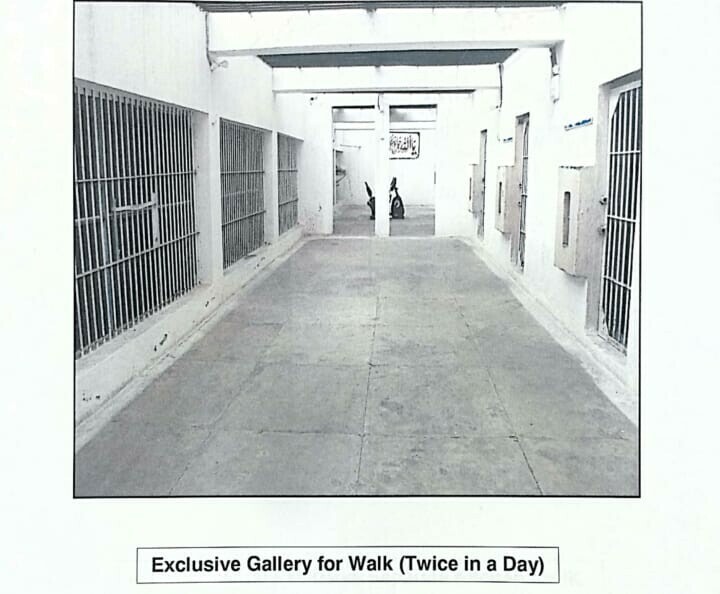
Denial of Books & Reading Material
- Books and newspapers sent by family members were confiscated or withheld for extended periods
- Educational and religious reading material — permitted under jail rules — was deliberately denied
- This removed one of the only means of mental stimulation during isolation
- Materials sent by his family, including books and newspapers, have repeatedly been withheld or confiscated by jail authorities for extended periods. Khan himself has stated that books sent by family were not given to him for months, and that access to information was deliberately blocked. (Reddit)
Restricted Living Conditions
- Poor ventilation and limited natural light
- Constant surveillance
- Severe restrictions on movement and interaction
Mental and Physical Distress
- Family claims psychological torture and “death cell” conditions — widely reported by Sky News. (Sky News)
Restricted Human Contact
- Family, lawyers, party officials, and even senior political leaders have been repeatedly denied access to meet him, despite clear court orders directing the jail authorities to allow such visits. (The Times of India)
- Sky News on isolation and psychological torture allegations
- Sky News reported that Khan’s sons described his detention cell as a “death cell” and alleged that guards are not allowed to communicate with him, implying severe isolation and psychological torture tactics. (Sky News
“[He is] being subjected to psychological torture tactics… completely substandard conditions that don’t meet international law for any sort of prisoner.”
Even limited family access was tightly controlled and comes only after significant pressure — reported internationally. (Aaj English TV)
Family Appeals Reported Internationally
International sources report Kasim Khan, Imran Khan’s son, demanding proof of life and alleging a complete communication blackout, with no visits, calls, or meetings allowed despite court orders. (www.ndtv.com)
He said: “For the past six weeks, he’s had complete isolation, no phone calls, no visits, no contact — this is deliberate and not part of any security protocol.” (www.ndtv.com)
This directly addresses denial of access to family and lawyers — a core human rights issue. (www.ndtv.com)
Sister Uzma Khan on restricted access and “mental pressure”
International reporting notes that, even when family met him, visits were severely limited and supervised, and that restrictions on lawyer/family access continue. (Aaj English TV)
Her observations:
- Visits were supposed to happen weekly, but were repeatedly denied or cut short.
- Security restrictions around the jail remain heavy even during permitted visit days. (Aaj English TV)
Defiance of Court Orders: Family & Lawyer Access
- Pakistani courts repeatedly ordered that Imran Khan be allowed to meet:
- His legal counsel
- Immediate family members
- Jail authorities routinely ignored or delayed compliance
- Lawyers were denied access before key hearings, directly undermining his right to defense
- Family members were blocked for weeks at a time, creating prolonged communication blackouts
This persistent non-compliance represents a breakdown of rule of law within the prison system.
Denied Access to Family & Lawyers
Kasim Khan’s proof of life appeal highlights weeks of communication blackout and denial of access despite clear court orders. (ndtv.com)


UN Expert Warnings
UN Special Rapporteurs have warned Pakistan that Imran Khan’s treatment is:
- Inhumane
- Degrading
- Potentially constituting psychological torture
According to UN Standard Minimum Rules for the Treatment of Prisoners (Nelson Mandela Rules):
- Solitary confinement is defined as confinement for 22 hours or more per day without meaningful human contact.
- Prolonged solitary confinement (over 15 days) is considered a form of psychological torture and is expressly prohibited except in strictly defined, exceptional circumstances — which do not apply here.
- Prisoners must have access to family, lawyers, educational materials, and humane living conditions.
Solitary confinement used as a tool of political repression violates these standards.
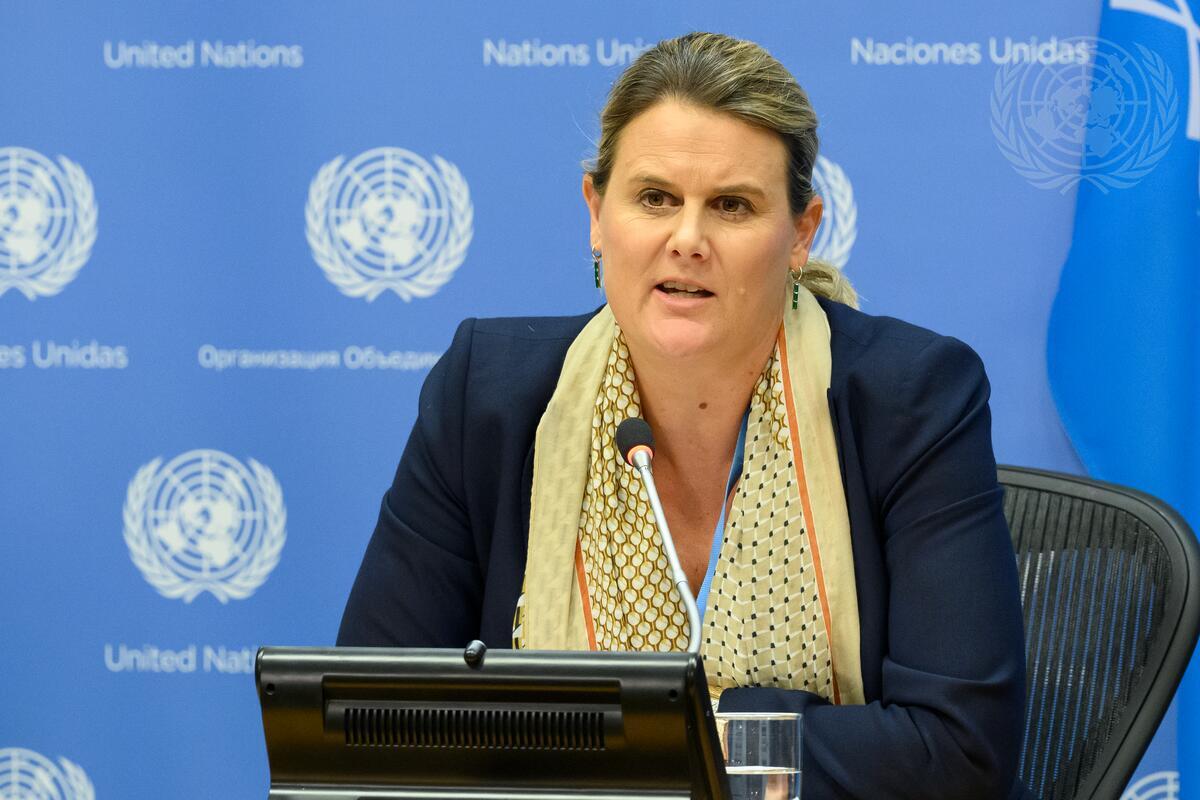
The UN Special Rapporteur on torture, Alice Jill Edwards, urged Pakistan to address reports of inhumane detention conditions for Imran Khan — warning they could amount to torture and cruel, degrading treatment and must meet international standards.
Key points from her statement:
- Khan has reportedly been held for 23 hours a day in his cell.
- Conditions are described as inhumane and undignified.
- UN expert called for immediate action to ensure detention standards comply with human rights law. (JURIST)
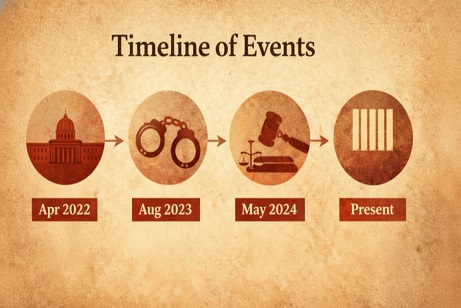
Timeline of Key Events
5 August 2023 – Imran Khan arrested and transferred to custody following multiple politically charged cases.
Aug–Sep 2023 – Initial confinement in high‑security conditions; early restrictions placed on family meetings and lawyer access.
Late 2023 – First reported periods of extended isolation exceeding 22 hours per day. Jail authorities begin inconsistent compliance with court‑ordered visits.
Early 2024 – Trials increasingly shifted to inside‑jail proceedings, limiting transparency and public oversight.
Mid‑2024 – UN Working Group on Arbitrary Detention declares Imran Khan’s detention arbitrary and contrary to international law.
Late 2024 – Multiple court orders issued directing jail authorities to allow lawyer and family access; implementation remains irregular.
Early 2025 – Reports emerge of electricity cut‑offs in Khan’s cell, leaving him in complete darkness for several days at a time. Books and reading materials sent by family are withheld.
Mid‑2025 – Extended communication blackout; lawyers denied access before key hearings. Family raises alarm internationally.
Sep–Nov 2025 – UN human rights experts publicly express concern over prolonged solitary confinement and degrading conditions.
Dec 2025 – Detention exceeds 850 days. Solitary confinement, denial of books, darkness, and defiance of court orders collectively identified as a humanitarian and legal crisis.
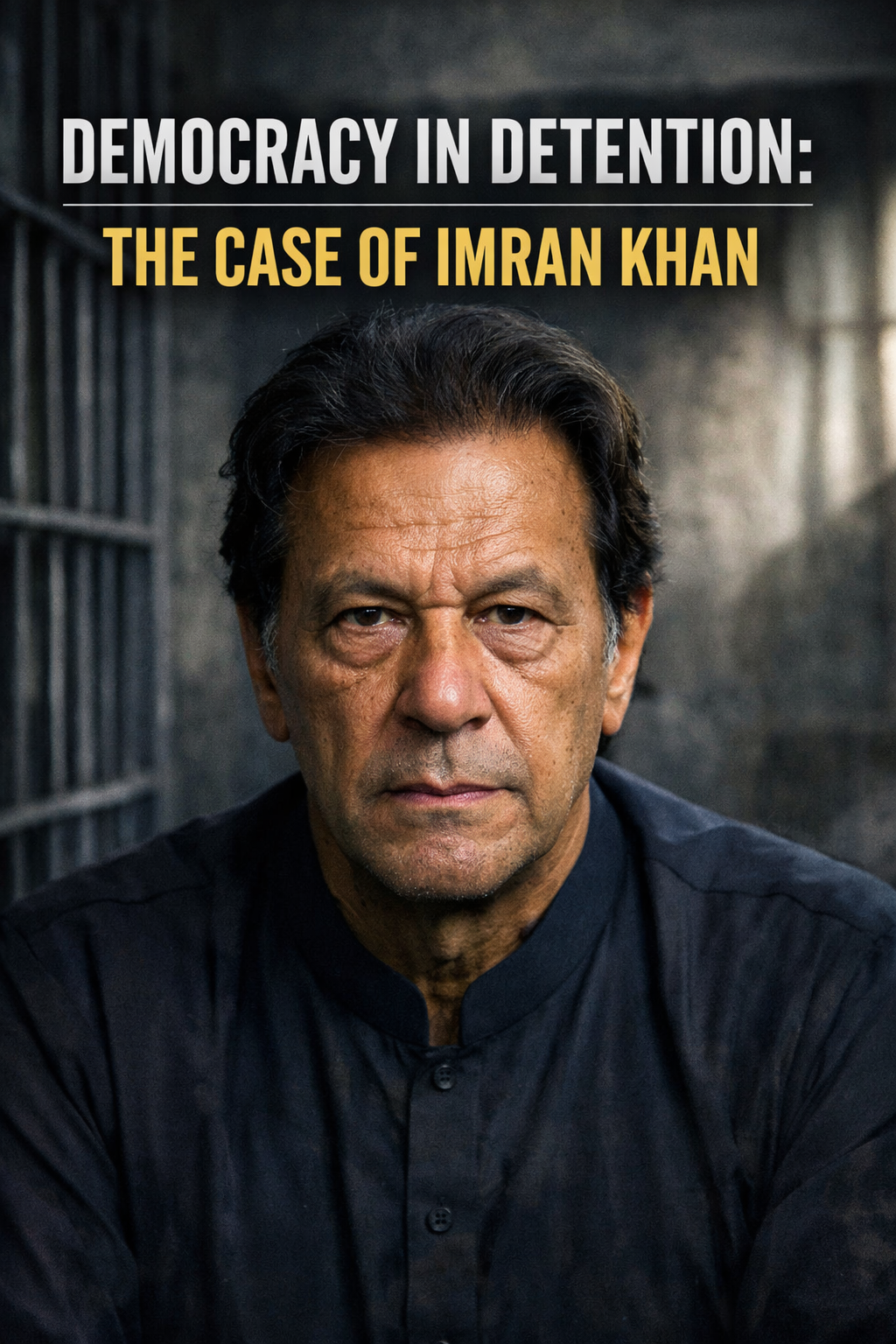
Why This Is a Crisis
This case has crossed from political detention into a full-scale human rights emergency: – Prolonged solitary confinement – Sensory deprivation through darkness – Denial of books and human contact – Ignoring court orders – Conducting trials under isolation
Under international law, these conditions constitute cruel, inhuman, and degrading treatment.
The ongoing treatment of Imran Khan has reached a level of urgency and crisis for the following reasons:
- Repeated defiance of court orders on access and visitation rights. (Firstpost)
- Systematic denial of basic facilities guaranteed under Pakistan’s own prison manual, including books and communications. (Dawn News)
- Complete or partial cuts to electricity, plunging the cell into darkness. (Dawn News)
- Allegations of political repression through legal and extralegal measures.
- International norms on solitary confinement clearly categorize the conditions as psychological torture.
This situation underscores a broader concern about rule of law, due process, and human rights in Pakistan — and requires urgent international attention, monitoring, and advocacy.