Asim Munir’s biggest gripe since the conflict with India in 2025 is that while he has made geo-political gains, there is no comfort for the general at home.
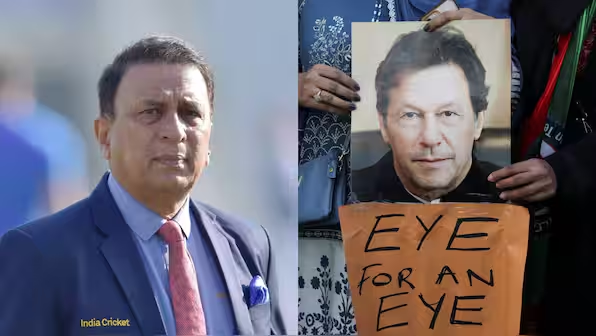
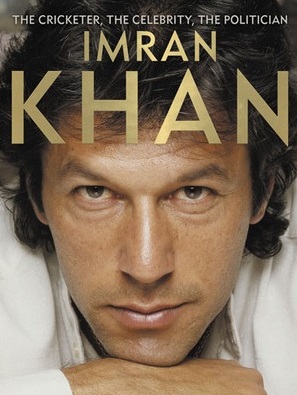
Meeting a friend turned into quite an experience for me yesterday. He had a broad grin on his face, unable to hide his excitement after hearing news of the Pakistan Supreme Court ordering the government to shift Imran Khan from his jail cell in Rawalpindi to a private hospital in Islamabad. Though in mirth, he couldn’t stop expressing his gratitude to Field Marshal Asim Munir for making the freedom of his leader possible.
Soon after, I saw similar excitement on social media—some reactions joyful, others anxious.
Not surprisingly, the grapevine in Islamabad is abuzz with gossip. Some are even chattering about an upcoming political change that may start with providing a bit of physical relief to the Pakistan Tehreek-e-Insaf (PTI) leader, whose health had become a matter of concern for his family and supporters in the last few months.
A major reason for speculation is that the other realities of Pakistan’s politics remain the same. There is no pressure on the real power in the country—the field marshal—nor has the Supreme Court become independent. There is also no sign of any serious friction between the political government and the General Headquarters (GHQ) of the army. Despite that, Prime Minister Shahbaz Sharif has come under criticism from his Interior Minister, Mohsin Naqvi, who in reality is the army chief’s minister despite being part of the federal cabinet. This means someone has moved pieces on the political chessboard for a gentler reconsideration of Khan’s health.
Shifting the former Prime Minister, Khan, to a hospital isn’t about bringing him relief. It is a signal to the other two major political parties, the Pakistan Muslim League – Nawaz (PMLN) and the Pakistan People’s Party (PPP) – that if they disagree with Asim Munir’s imagination for the Pakistani state and its politics, the general is likely to let loose the PTI chief, who would then decimate them politically.
The Decentralisation Plan
The reality of Pakistan’s politics is that anything close to fair elections may see the two major parties, especially the PMLN, routed. It has hardly any support left in Punjab, as Nawaz supporters are not impressed with Maryam Nawaz, his daughter’s performance as chief minister. Her arrogance, inability to connect with party and provincial assembly members, and have political ideas are bothering even the hardcore PMLN supporters. So, it wouldn’t take much effort to change the political scene in Punjab, which many in Pakistan treat as its heartland.
Therefore, it is important to note that any relief to Imran Khan is not going to come easily or immediately. The government has already petitioned the higher courts against its decision to move the PTI chief. Reportedly, the petition was later withdrawn.
Though the decision is not likely to be reversed, the time between the review and a final verdict is probably being used to send a signal to Khan as well. To reconsider his political choices and think of the option of being moved to a more comfortable location in case he agrees to negotiate with Asim Munir. Even though Imran Khan seems to have held strong so far, the reality is that Munir has not been keen to negotiate with the PTI chief either. This is possibly the first serious signal from the establishment to Khan to think about options and negotiate if he intends to.
Referring to the real intent of the above-mentioned move, the field marshal clearly desires to change the geography of Pakistan’s politics. His biggest gripe since the conflict with India in 2025 is that while he has made geo-political gains – from being recognised by American President Donald Trump as his ‘favourite field marshal’ to getting involved in the Middle East and being looked upon by several Middle Eastern states to fill the gap left due to Washington’s politics – there is no comfort for the general at home. Ordinary folk in Pakistan, when they criticise the current government, actually point a finger at the real power centre that is the army. No use telling the general that the real problem hurting Pakistan is the army’s intervention. He actually believes that the current government is incapable of delivering better governance, which is what makes the army unpopular.
It was only recently that the Interior Minister Mohsin Naqvi, who is more a part of the field marshal’s cabal than a member of Sharif’s cabinet, spoke about the collapse of a system that needs to be fixed.
It is a fact that governance in Pakistan is too centralised and political parties shy away from investing their efforts in local government. There is a basic flaw in the political party structure—the leadership doesn’t invest in party cadres, which means there is no involvement at the local community level. Governments tend to then run governance through overdependence on state bureaucracy.
Historically, military regimes have tried to address the problem by introducing a version of local government. From General Ayub Khan’s ‘basic democracies’ and Zia-ul-Haq’s local bodies ordinance to Pervez Musharraf’s devolution of democracy plan, each one in power has tried their hand at decentralising power. Munir, however, wants to go a step further by creating more provinces.
Sources in Islamabad talk about 20 administrative units that would be carved out of the provinces: five in Punjab, five in Sindh, four in Khyber-Pakhtunkhwa, four in Balochistan, one in Gilgit-Baltistan and one in Pakistan-occupied Kashmir (POK). So far, a method of governance is being chalked out. People in Islamabad even joke about consultancies being given left, right and centre to write plans and papers regarding management of these units. This change will be accompanied by constitutional guarantees for a local government system.
All of this is to be included in the proposed 28th amendment to the 1973 Constitution. One would have expected few issues with the passing of any constitutional change since the earlier 27th amendment was passed without any opposition. But accepting the idea of division of provinces goes against the politics of parties, especially the PPP. Actually, dividing the provinces will damage all political parties that wouldn’t know how to survive in this new environment, compounded by the problem of weak party cadre.
The only party that seems to have expressed opposition is the PPP. More than the PPP, its people in Sindh are averse to the idea.
Any agreement with the plan would demolish the PPP’s political stature. Sindh’s recent history is mired in the uncomfortable discourse between the migrant community represented by the Muttahida Qaumi Movement (MQM) and the Sindhi populace over the control of urban Sindh. There is deep suspicion among the latter that cities of Sindh like Karachi will be taken away from them and the migrant community will gain control. There is a history of violent contestation around the control of urban Sindh. Battles were fought not just between Mohajirs and Sindhis but Mohajirs and Pashtuns in Karachi as well.
Because the PPP is the only party opposing the constitutional change, Imran Khan and his PTI’s help is required. There are two possible scenarios. First, the PPP agrees after some dilly-dallying, in which case Munir does not have to be too soft on Khan. The establishment will then have to work out a face-saver for the PPP. The question worth asking is about the possibility of Asif Zardari managing to convince Asim Munir to replace the condition of administrative units with the federal government taking control over the sea-belt including Gwadar and Karachi.
The underlying assumption is that all Munir wants is better control of financial resources and not having to go and beg provincial governments every year for more funds. The army’s desire for more is a reality but so is the fact that every military regime in Pakistan imagines itself as a moderniser and wants to bring a new generation of political, economic and social elite. The local bodies system, and in this case the administrative units formula, is a struggle toward that.
The PPP co-Chairman and President of Pakistan, Asif Ali Zardari, has a reputation of being a dealmaker. In any case, he is not inclined toward the politics of idealism. The only issue is getting the establishment to sympathise with the PPP and leave space for it.
Second, the PPP is abandoned, and a partnership is thrashed out between the PMLN and the PTI. It is worth noting that Nawaz Sharif, who is currently obsessed with his daughter’s political survival, is more likely to accommodate the establishment than push back. The older Sharif has learned his lesson about not challenging the establishment.
If the PMLN and PTI join hands, not literally as partners but in support of the amendment, there would be a safe majority in Parliament for the establishment to secure the change. Some sources even suggested that a change could be brought in at least three provinces: Punjab, KP and Balochistan, with Sindh remaining out. The provincial assemblies will also have to agree to the administrative/political change. In case Sindh stays out, a narrative could then be built trashing its government. That PPP has failed to deliver because it has not embraced change in the system.
This brings me back to the question of what will Imran Khan do, or what is likely to happen to Shahbaz Sharif? As Mohsin Naqvi suggested in one of his later statements after creating the initial ‘storm in the teacup’ that, the current government will survive.
Since Shahbaz Sharif, in fact, the entire Sharif family will offer the least resistance, the current regime’s removal may not be on the cards. Any negotiation with Khan could possibly be around his future – providing him some relief and promise of an opportunity in the next elections if he remains docile and accepts kinder treatment. The time between the Supreme Court’s initial order for shifting Khan and the final implementation will be used to open doors for negotiations. The average PTI supporter believes that Khan will not give in and will draw a hard bargain. The question is: Is he in a position to dictate terms?
The real story remains Munir’s plan to reshape Pakistan’s politics and create administrative units that could be run through favorable politicians, businessmen-politicians or/and technocrats. This is a structure that will be weak enough to reduce fiscal space for Munir’s military in the future. Wrestling financial power back from the provinces is where the idea of changing the structure started from. In addition, like his powerful predecessors, Munir is yet another general making another effort to create a new generation of politicians, capitalists, and civil society actors. In short, a new elite to replace the old one. The bottom line is that the game remains the same even after 79 years of Pakistan’s existence.
Article from: https://theprint.in/opinion/why-asim-munir-may-be-softening-on-imran-khan/3020677/