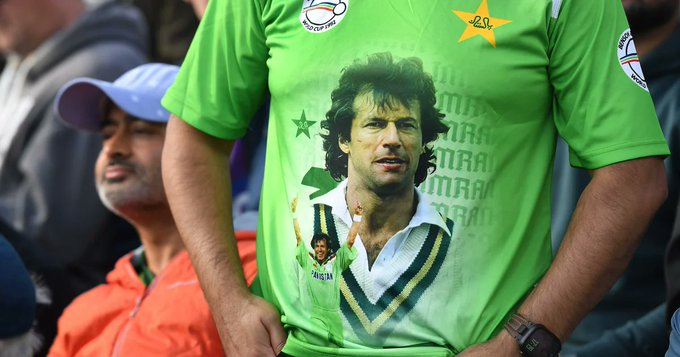
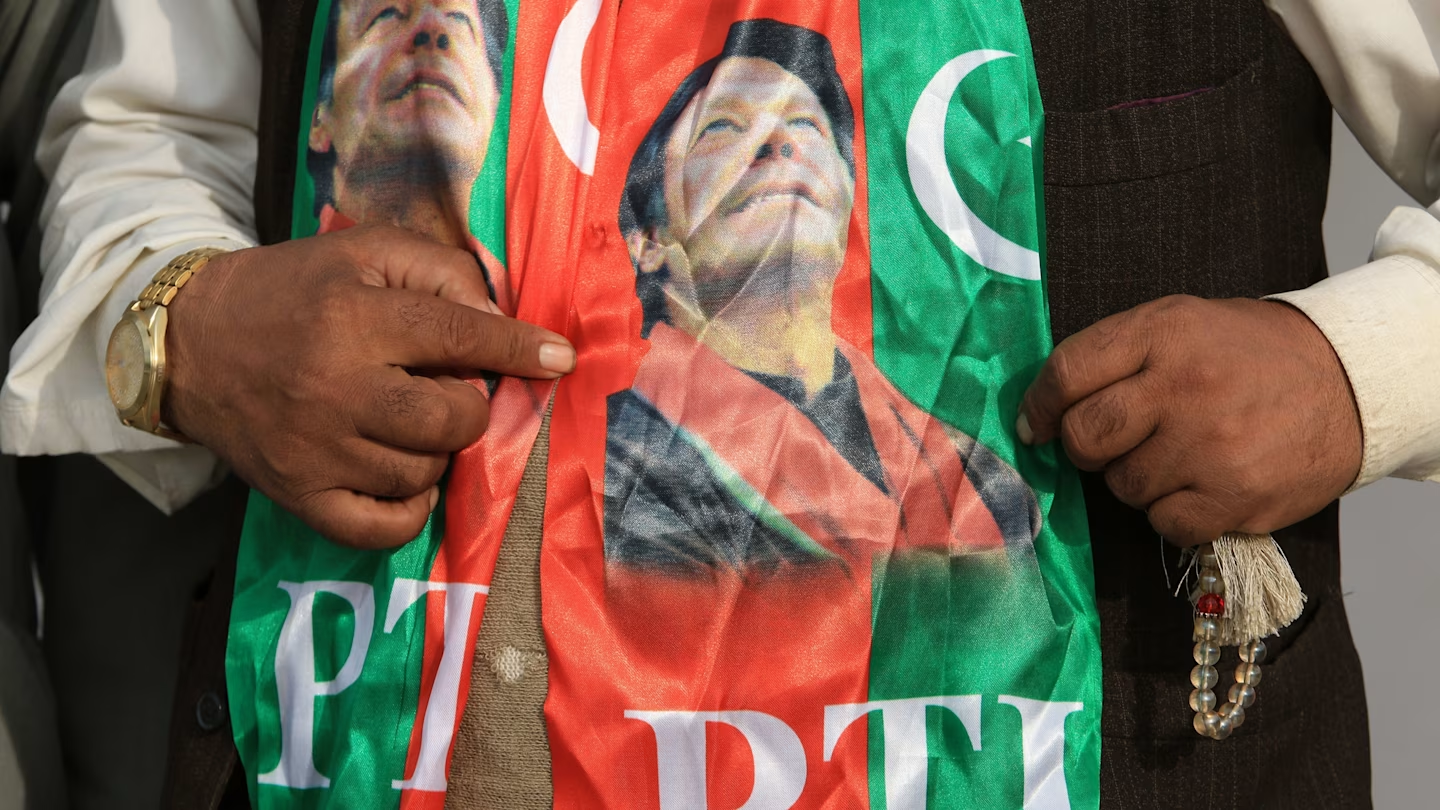
Pakistan’s military cannot resolve its “Imran Khan problem” because the former prime minister commands massive, cross-provincial public popularity that cannot be easily crushed without triggering severe national instability
Repository
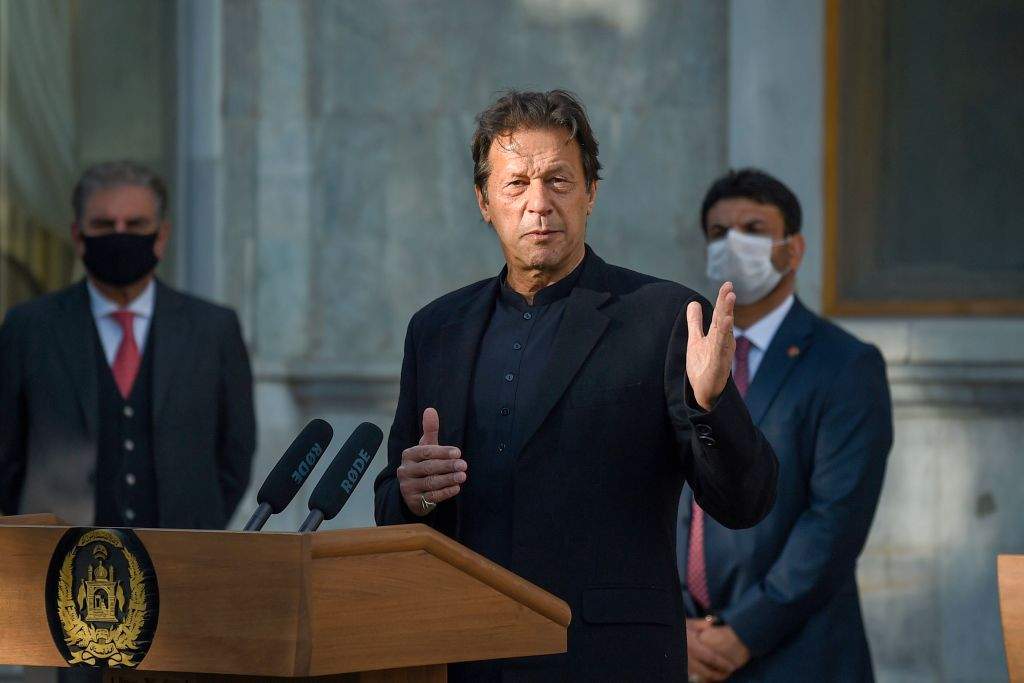

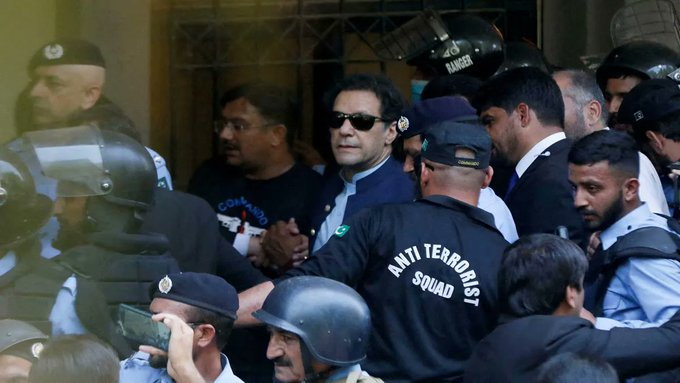
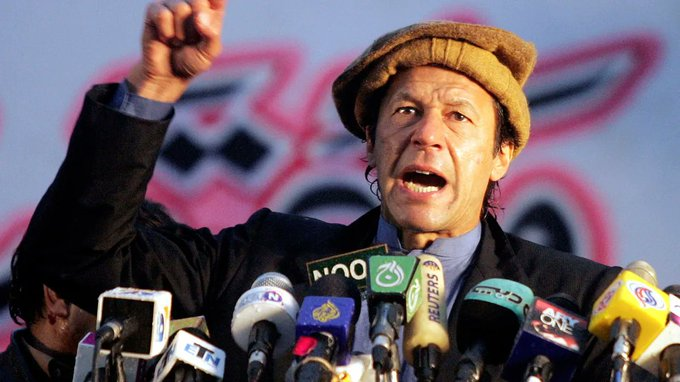

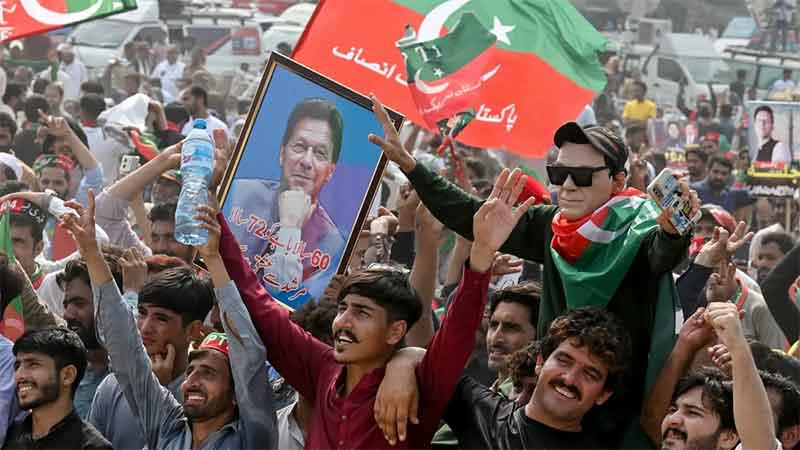
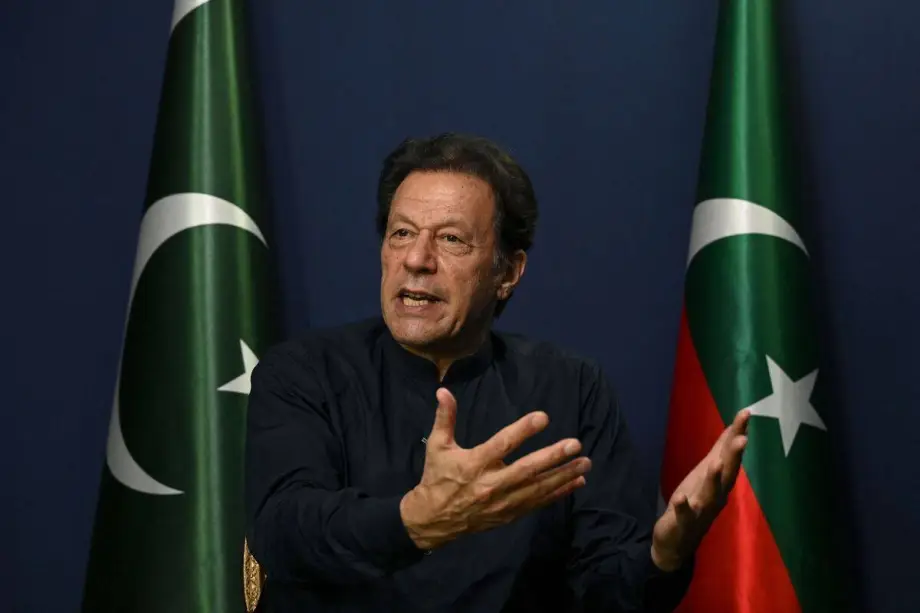
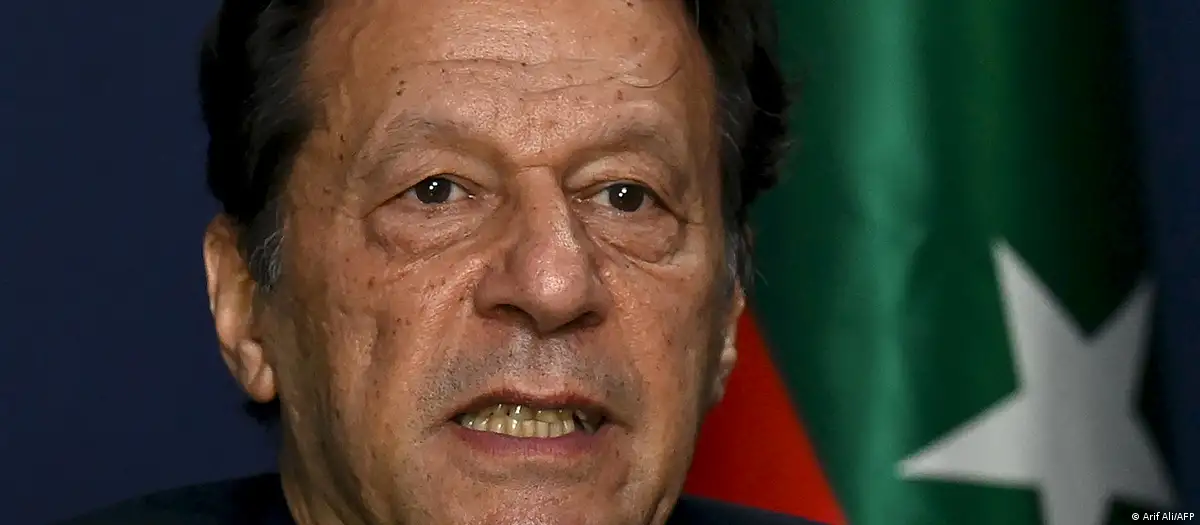
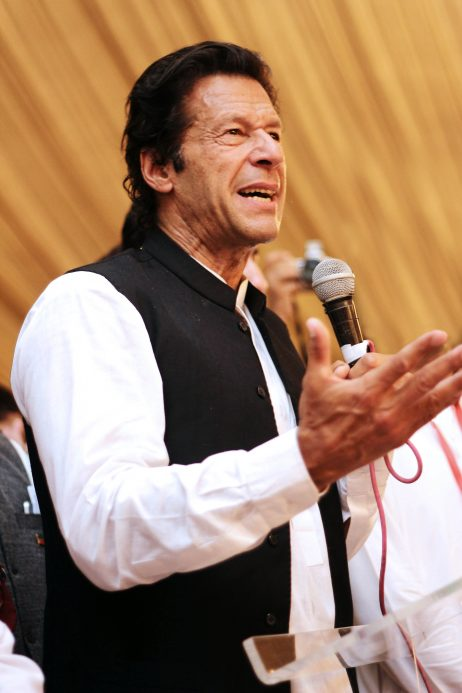
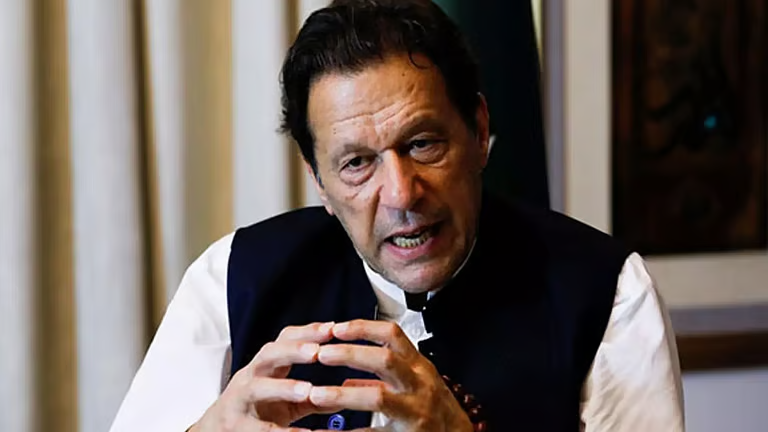
The circumstances surrounding his medical care remain fluid. But the larger issue is not. Khan remains imprisoned amid a broader erosion of civilian and democratic institutions and the extraordinary political power exercised by Pakistan’s military establishment.
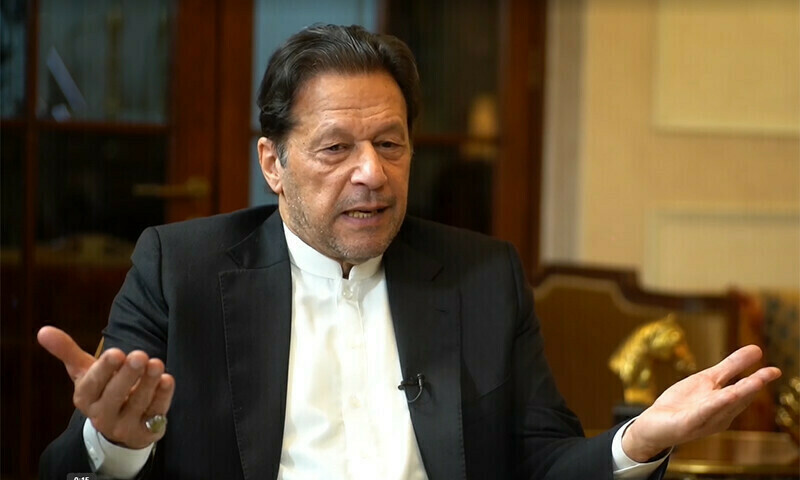
Three years behind bars have not diminished Imran Khan’s political influence; if anything, his imprisonment has turned him into the central challenge to Pakistan’s political and military establishment
Ashish K Singh
There is a simple question behind Pakistan’s continuing political crisis: if Imran Khan is as politically finished as the government and military establishment suggest, why is he still in jail?
Khan has been imprisoned since August 2023 and remains at Adiala Jail, despite several of the cases that once threatened to keep him behind bars having been overturned, suspended or otherwise weakened. He is still facing a formidable collection of legal cases, however, including corruption-related convictions. The most consequential is the Al-Qadir Trust case, in which Khan and his wife were sentenced in 2025 to 14 years in prison. Khan denies wrongdoing and says the prosecutions are politically motivated.
That is the legal explanation. The political explanation is more revealing.
Khan is not in prison simply because he is a convicted former prime minister. He is in prison because he remains the most formidable political challenger to Pakistan’s existing power structure.
His popularity was demonstrated dramatically in the February 2024 general election. Although Khan was behind bars and his Pakistan Tehreek-e-Insaf (PTI) was prevented from contesting under its party symbol, candidates backed by the party won the largest number of directly elected National Assembly seats. The result forced a coalition of rival political parties to form the government.
That election exposed the central weakness of the present arrangement: it can keep Khan away from power, but it has struggled to remove him from the political imagination of Pakistan.
The latest controversy concerns Khan’s health.
His family and PTI have raised serious concerns about his medical condition, particularly problems with his right eye. Khan has been diagnosed with central retinal vein occlusion, and his lawyers have argued that he requires specialist treatment. Jail authorities, meanwhile, have maintained that his condition has improved and that he is receiving adequate medical care.
The episode illustrates why Khan remains such a sensitive figure: even a hospital visit can become a political mobilisation point.
The current political order has survived partly because its most popular opponent has been physically removed from the political arena. His release would give PTI a leader capable of addressing supporters directly, organising protests and potentially challenging the government through elections.
More importantly, Khan’s confrontation is not merely with one political party. It is with a wider establishment that has traditionally exercised enormous influence over Pakistan’s political system.
Khan’s relationship with the military was once close. His rise to power in 2018 was widely seen as having benefited from military support. But the relationship collapsed spectacularly before his removal from office in April 2022. Since then, Khan has transformed himself into perhaps the strongest civilian critic of the establishment.
For the military establishment, therefore, the issue is not simply whether Khan becomes prime minister again. It is whether a politician who has openly challenged its political role can return to the centre of Pakistani politics.
The present government therefore has a legitimacy problem. It may possess parliamentary power, but parliamentary power and popular legitimacy are not necessarily the same thing.
That explains the extraordinary sensitivity surrounding Khan’s movements, prison access and medical treatment.
Khan has multiple cases and convictions, meaning that winning or suspending one case does not automatically free him. The state can continue to rely on other proceedings to keep him incarcerated.
But politics can move faster than courts.
If negotiations emerge between PTI and the establishment, if courts provide broader relief, or if the political cost of keeping Khan imprisoned becomes greater than the cost of releasing him, the calculation could change.
For now, however, the government’s behaviour suggests that it sees Khan’s release as a political risk rather than merely a legal decision.
For India, an unstable Pakistan is never a comfortable development.
A Pakistan consumed by an internal power struggle has less political bandwidth for economic reform, regional engagement and sustained diplomacy with its neighbours. At the same time, political instability inside Pakistan can increase the temptation to use nationalism and India-related rhetoric as a means of consolidating domestic support.
The more important Indian interest is stability — a Pakistan where civilian institutions function, elections command credibility and the military does not remain the ultimate arbiter of political power.
Imran Khan’s imprisonment has not solved Pakistan’s political problem. It has exposed it.
The irony is that every attempt to push Khan out of politics appears to reinforce his centrality. His opponents may control the government, parliament and much of the state machinery. But as long as a jailed politician can remain the most powerful symbol of opposition, the question confronting Pakistan is not whether Imran Khan matters.
It is how long the system can continue to keep him behind bars without confronting the political forces that put him there.
Article from: https://theindianeye.com/2026/08/24/op-ed-why-pakistani-regime-is-afraid-of-imran-khan/
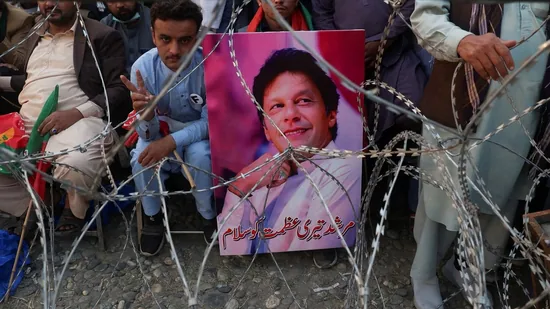
Pakistan’s muzzled judiciary suddenly finding its voice and giving Khan relief signals that there is more to this than meets the eye.
Pakistan’s top court ordered former Prime Minister (PM) Imran Khan’s transfer to a private hospital amid concerns about his health. Khan, 73, who was ousted in 2022 and has been imprisoned since August 2023 on what are largely believed to be politically driven convictions, is reported to have lost significant vision in his right eye. Pakistan’s Supreme Court cited Khan’s fundamental right, while ordering the authorities to ensure his health and safety. A federal minister promised to implement the order in letter and spirit, while another said they will seek Khan’s treatment at a public hospital.
The 18th Amendment to Pakistan’s Constitution curtailed the role of the federal government. Khan is believed to be amenable to repealing it. (Photo credit: Reuters)
Khan’s arrest after falling out with the military establishment sparked unprecedented protests and attacks on military installations. His party, Pakistan Tehreek-e-Insaf (PTI), was stripped of its election symbol, the cricket bat, ahead of the 2024 election, and its candidates were forced to contest as independents. Yet, they emerged as the single- largest bloc in the country’s parliament and retained power in Khyber Pakhtunkhwa province.
The order in Khan’s favour following years of sweeping crackdown on PTI came against the backdrop of fresh talk about rethinking the 18th Constitutional Amendment, which was passed in 2010 to devolve greater powers to provinces. It left the federal government with only 48% of the national budget.
Reports suggested Pakistan’s powerful army chief Asim Munir, widely seen as a de facto ruler, has been unable to get his civilian allies in the government on board to scrap the amendment. The allies are not forthcoming, despite ganging up against Khan for their return to power with the military’s support. They expanded Munir’s powers through the 27th Constitutional Amendment to further marginalise Khan, who remains popular.
The 27th Amendment granted the army chief lifelong legal immunity and limited the Supreme Court’s independence. President Asif Ali Zardari, whose signature enshrined the amendment in Pakistan’s Constitution, is the main champion of the 18th Amendment. His Pakistan People’s Party (PPP) has been among its main beneficiaries.
The PPP has ruled Sindh, the country’s second-largest province, for 18 years. It has expanded its patronage networks with greater fiscal space in a province whose capital, Karachi, is Pakistan’s economic engine.
The Sharifs, Zardari’s rivals-turned-allies, were also pleased to see the back of Khan as he wrested power from them in the political heartland of Punjab in 2018. The Sharifs invested heavily in infrastructure, with a network of motorways a visible symbol of their developmental politics.
The 18th Amendment is critical to the Sharifs in Punjab, where Nawaz Sharif’s daughter, Maryam, is the chief minister. Maryam is being groomed for a bigger role, with Lahore’s infrastructure development as a model.
The civilian allies allowed the passage of the 27th Amendment without much debate, undermining the Supreme Court’s remit, weakening the check on executive power, and the essence of what they claim to champion—democracy. They elevated Munir to the post of chief of defence forces, in charge of the army, the navy, and the air force, and granted him lifelong immunity from criminal prosecution for short-term goals.
The military is now entrenched more than before. There is no guarantee that it will not fall back upon its musical chairs policy. Khan’s opponents accused the military of bringing him to power. Khan initially maintained he was on the same page with the military. Like Nawaz Sharif and Benazir Bhutto, he later accused the military of forcing him out of power.
Khan’s falling out with the military followed a pattern since the 1960s, beginning with Zulfikar Ali Bhutto, who was made military ruler Ayub Khan’s foreign minister at 35. As the PM, Bhutto chose Zia-ul-Haq as army chief, superseding seven generals. Bhutto was executed following a questionable trial after Zia deposed him in 1977.
In the 1980s, Zia mentored Sharif before the military cut short his first term as prime minister in 1993. Sharif chose Pervez Musharraf, superseding two officers. Musharraf would depose and jail Sharif.
Sharif accused army chief Qamar Javed Bajwa of pressuring the judiciary to convict him of corruption and disqualify him in 2017. Four years earlier, Sharif had come to power and appointed Bajwa, superseding four officers. Sharif accused Bajwa of installing Imran Khan. Khan then blamed Bajwa for his removal.
The Nawaz Sharif-led government’s inability to allocate more funds is believed to have been among the reasons for its falling out with Bajwa. The 18th Amendment left the federal government with fewer resources. Bajwa spoke publicly against it, equating it with Sheikh Mujibur Rahman’s six points for greater autonomy before Pakistan split in 1971.
Imran Khan was the first PM elected since the 18th Amendment came into effect in 2015. He felt the financial pinch, with debt service taking roughly 30% of the federal budget. Defence spending was raised by 18% this year.
The 18th Amendment has curtailed the role of the federal government, which is effectively run by the military. Imran Khan is believed to be amenable to repealing it. The Supreme Court’s relief for Khan is significant in this context. It came months after the passage of the 27th Amendment, which greatly undermined the independence of the judiciary years after it clashed with Musharraf and forced him to step down. In 2019, the Supreme Court allowed a special court to try and convict Musharraf despite the military’s opposition. It suspended Bajwa’s extension, forcing Khan’s government to legislate. In 2012, the court ordered criminal proceedings against former army chief Aslam Beg and retired lieutenant general Asad Durrani for illegally financing a campaign to influence the 1990 election.
The 27th Amendment was a major blow to an occasionally assertive and activist judiciary. The muzzled judiciary suddenly finding its voice and giving Imran Khan relief signals that there is more to this than meets the eye.
The views expressed are personal
Article from: https://www.hindustantimes.com/opinion/the-riddle-of-judicial-relief-for-imran-khan-101787501914258-amp.html
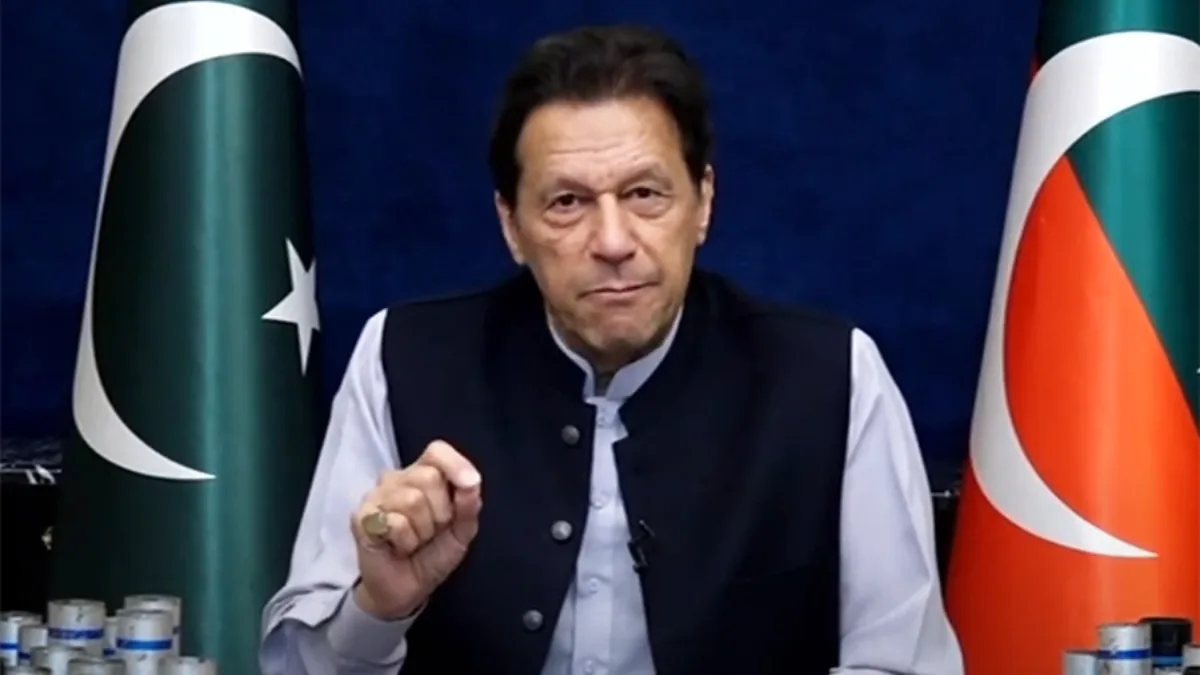
The Pakistan Supreme Court’s order to move Imran Khan from prison to a hospital is about much more than the health of a former prime minister.
The Pakistan Supreme Court’s order to move Imran Khan from prison to a hospital is about much more than the health of a former prime minister. It raises a larger question about whether Pakistan’s institutions can uphold basic constitutional obligations when the prisoner involved remains one of the country’s most powerful political symbols.
Khan has been behind bars since 2023, convicted in cases he says were designed to remove him from politics. His supporters have repeatedly alleged that his treatment in custody has been punitive. The state, for its part, has insisted that he is being treated according to law. The latest intervention suggests that Pakistan’s highest court is not prepared to leave the question of his medical care entirely to prison authorities. That distinction matters. A court ordering hospitalisation does not establish that Khan has been deliberately deprived of medical treatment. Nor does it invalidate the convictions against him.
But it does indicate that the safeguards surrounding his health have become sufficiently contentious for judicial intervention to be considered necessary. The concern is particularly serious because the dispute involves his eyesight. Khan’s lawyers have alleged severe deterioration in his right eye and inadequate access to specialist treatment. Medical assessments have produced more complicated findings, including reports of improvement. The conflicting claims make one thing clear: a politically neutral, specialist medical assessment is essential. The answer cannot be determined by either Khan’s political camp or government officials.
That is precisely why the Supreme Court’s intervention is important. A prisoner does not surrender his right to humane treatment by losing his political freedom. If anything, custody increases the state’s responsibility because the prisoner cannot independently arrange his own medical care. This principle must apply to Khan irrespective of whether one regards him as a victim of political persecution or as a politician properly held accountable by the courts. The order also provides for weekly family meetings and telephone contact with his sons.
That is a reminder that imprisonment is a restriction of liberty, not a licence for unnecessary isolation. Restrictions may be justified on security grounds, but they should be proportionate, transparent and subject to scrutiny. There is an additional irony. Khan’s supporters have been warned against turning his hospitalisation into a political gathering. That is a reasonable precaution. A hospital should not become another stage for confrontation between the state and the Pakistan Tehreek-e-Insaf. But neither should security concerns become an excuse for keeping a politically inconvenient prisoner beyond meaningful public and judicial scrutiny.
The government’s response will now matter enormously. If it accepts the principle of independent medical supervision while contesting only practical details, the dispute can remain institutional. If it attempts to dilute the court’s intervention, the issue will become larger: whether Pakistan’s judiciary can impose meaningful limits on executive power in a case involving the country’s most consequential political prisoner. The strongest state is not the one that can imprison its most formidable opponent. It is the one that can demonstrate that the law operates above politics.
Article from: https://www.thestatesman.com/opinion/the-khan-question-1503629690.html

Asim Munir’s biggest gripe since the conflict with India in 2025 is that while he has made geo-political gains, there is no comfort for the general at home.
Meeting a friend turned into quite an experience for me yesterday. He had a broad grin on his face, unable to hide his excitement after hearing news of the Pakistan Supreme Court ordering the government to shift Imran Khan from his jail cell in Rawalpindi to a private hospital in Islamabad. Though in mirth, he couldn’t stop expressing his gratitude to Field Marshal Asim Munir for making the freedom of his leader possible.
Soon after, I saw similar excitement on social media—some reactions joyful, others anxious.
Not surprisingly, the grapevine in Islamabad is abuzz with gossip. Some are even chattering about an upcoming political change that may start with providing a bit of physical relief to the Pakistan Tehreek-e-Insaf (PTI) leader, whose health had become a matter of concern for his family and supporters in the last few months.
A major reason for speculation is that the other realities of Pakistan’s politics remain the same. There is no pressure on the real power in the country—the field marshal—nor has the Supreme Court become independent. There is also no sign of any serious friction between the political government and the General Headquarters (GHQ) of the army. Despite that, Prime Minister Shahbaz Sharif has come under criticism from his Interior Minister, Mohsin Naqvi, who in reality is the army chief’s minister despite being part of the federal cabinet. This means someone has moved pieces on the political chessboard for a gentler reconsideration of Khan’s health.
Shifting the former Prime Minister, Khan, to a hospital isn’t about bringing him relief. It is a signal to the other two major political parties, the Pakistan Muslim League – Nawaz (PMLN) and the Pakistan People’s Party (PPP) – that if they disagree with Asim Munir’s imagination for the Pakistani state and its politics, the general is likely to let loose the PTI chief, who would then decimate them politically.
The Decentralisation Plan
The reality of Pakistan’s politics is that anything close to fair elections may see the two major parties, especially the PMLN, routed. It has hardly any support left in Punjab, as Nawaz supporters are not impressed with Maryam Nawaz, his daughter’s performance as chief minister. Her arrogance, inability to connect with party and provincial assembly members, and have political ideas are bothering even the hardcore PMLN supporters. So, it wouldn’t take much effort to change the political scene in Punjab, which many in Pakistan treat as its heartland.
Therefore, it is important to note that any relief to Imran Khan is not going to come easily or immediately. The government has already petitioned the higher courts against its decision to move the PTI chief. Reportedly, the petition was later withdrawn.
Though the decision is not likely to be reversed, the time between the review and a final verdict is probably being used to send a signal to Khan as well. To reconsider his political choices and think of the option of being moved to a more comfortable location in case he agrees to negotiate with Asim Munir. Even though Imran Khan seems to have held strong so far, the reality is that Munir has not been keen to negotiate with the PTI chief either. This is possibly the first serious signal from the establishment to Khan to think about options and negotiate if he intends to.
Referring to the real intent of the above-mentioned move, the field marshal clearly desires to change the geography of Pakistan’s politics. His biggest gripe since the conflict with India in 2025 is that while he has made geo-political gains – from being recognised by American President Donald Trump as his ‘favourite field marshal’ to getting involved in the Middle East and being looked upon by several Middle Eastern states to fill the gap left due to Washington’s politics – there is no comfort for the general at home. Ordinary folk in Pakistan, when they criticise the current government, actually point a finger at the real power centre that is the army. No use telling the general that the real problem hurting Pakistan is the army’s intervention. He actually believes that the current government is incapable of delivering better governance, which is what makes the army unpopular.
It was only recently that the Interior Minister Mohsin Naqvi, who is more a part of the field marshal’s cabal than a member of Sharif’s cabinet, spoke about the collapse of a system that needs to be fixed.
It is a fact that governance in Pakistan is too centralised and political parties shy away from investing their efforts in local government. There is a basic flaw in the political party structure—the leadership doesn’t invest in party cadres, which means there is no involvement at the local community level. Governments tend to then run governance through overdependence on state bureaucracy.
Historically, military regimes have tried to address the problem by introducing a version of local government. From General Ayub Khan’s ‘basic democracies’ and Zia-ul-Haq’s local bodies ordinance to Pervez Musharraf’s devolution of democracy plan, each one in power has tried their hand at decentralising power. Munir, however, wants to go a step further by creating more provinces.
Sources in Islamabad talk about 20 administrative units that would be carved out of the provinces: five in Punjab, five in Sindh, four in Khyber-Pakhtunkhwa, four in Balochistan, one in Gilgit-Baltistan and one in Pakistan-occupied Kashmir (POK). So far, a method of governance is being chalked out. People in Islamabad even joke about consultancies being given left, right and centre to write plans and papers regarding management of these units. This change will be accompanied by constitutional guarantees for a local government system.
All of this is to be included in the proposed 28th amendment to the 1973 Constitution. One would have expected few issues with the passing of any constitutional change since the earlier 27th amendment was passed without any opposition. But accepting the idea of division of provinces goes against the politics of parties, especially the PPP. Actually, dividing the provinces will damage all political parties that wouldn’t know how to survive in this new environment, compounded by the problem of weak party cadre.
The only party that seems to have expressed opposition is the PPP. More than the PPP, its people in Sindh are averse to the idea.
Any agreement with the plan would demolish the PPP’s political stature. Sindh’s recent history is mired in the uncomfortable discourse between the migrant community represented by the Muttahida Qaumi Movement (MQM) and the Sindhi populace over the control of urban Sindh. There is deep suspicion among the latter that cities of Sindh like Karachi will be taken away from them and the migrant community will gain control. There is a history of violent contestation around the control of urban Sindh. Battles were fought not just between Mohajirs and Sindhis but Mohajirs and Pashtuns in Karachi as well.
Because the PPP is the only party opposing the constitutional change, Imran Khan and his PTI’s help is required. There are two possible scenarios. First, the PPP agrees after some dilly-dallying, in which case Munir does not have to be too soft on Khan. The establishment will then have to work out a face-saver for the PPP. The question worth asking is about the possibility of Asif Zardari managing to convince Asim Munir to replace the condition of administrative units with the federal government taking control over the sea-belt including Gwadar and Karachi.
The underlying assumption is that all Munir wants is better control of financial resources and not having to go and beg provincial governments every year for more funds. The army’s desire for more is a reality but so is the fact that every military regime in Pakistan imagines itself as a moderniser and wants to bring a new generation of political, economic and social elite. The local bodies system, and in this case the administrative units formula, is a struggle toward that.
The PPP co-Chairman and President of Pakistan, Asif Ali Zardari, has a reputation of being a dealmaker. In any case, he is not inclined toward the politics of idealism. The only issue is getting the establishment to sympathise with the PPP and leave space for it.
Second, the PPP is abandoned, and a partnership is thrashed out between the PMLN and the PTI. It is worth noting that Nawaz Sharif, who is currently obsessed with his daughter’s political survival, is more likely to accommodate the establishment than push back. The older Sharif has learned his lesson about not challenging the establishment.
If the PMLN and PTI join hands, not literally as partners but in support of the amendment, there would be a safe majority in Parliament for the establishment to secure the change. Some sources even suggested that a change could be brought in at least three provinces: Punjab, KP and Balochistan, with Sindh remaining out. The provincial assemblies will also have to agree to the administrative/political change. In case Sindh stays out, a narrative could then be built trashing its government. That PPP has failed to deliver because it has not embraced change in the system.
This brings me back to the question of what will Imran Khan do, or what is likely to happen to Shahbaz Sharif? As Mohsin Naqvi suggested in one of his later statements after creating the initial ‘storm in the teacup’ that, the current government will survive.
Since Shahbaz Sharif, in fact, the entire Sharif family will offer the least resistance, the current regime’s removal may not be on the cards. Any negotiation with Khan could possibly be around his future – providing him some relief and promise of an opportunity in the next elections if he remains docile and accepts kinder treatment. The time between the Supreme Court’s initial order for shifting Khan and the final implementation will be used to open doors for negotiations. The average PTI supporter believes that Khan will not give in and will draw a hard bargain. The question is: Is he in a position to dictate terms?
The real story remains Munir’s plan to reshape Pakistan’s politics and create administrative units that could be run through favorable politicians, businessmen-politicians or/and technocrats. This is a structure that will be weak enough to reduce fiscal space for Munir’s military in the future. Wrestling financial power back from the provinces is where the idea of changing the structure started from. In addition, like his powerful predecessors, Munir is yet another general making another effort to create a new generation of politicians, capitalists, and civil society actors. In short, a new elite to replace the old one. The bottom line is that the game remains the same even after 79 years of Pakistan’s existence.
Article from: https://theprint.in/opinion/why-asim-munir-may-be-softening-on-imran-khan/3020677/
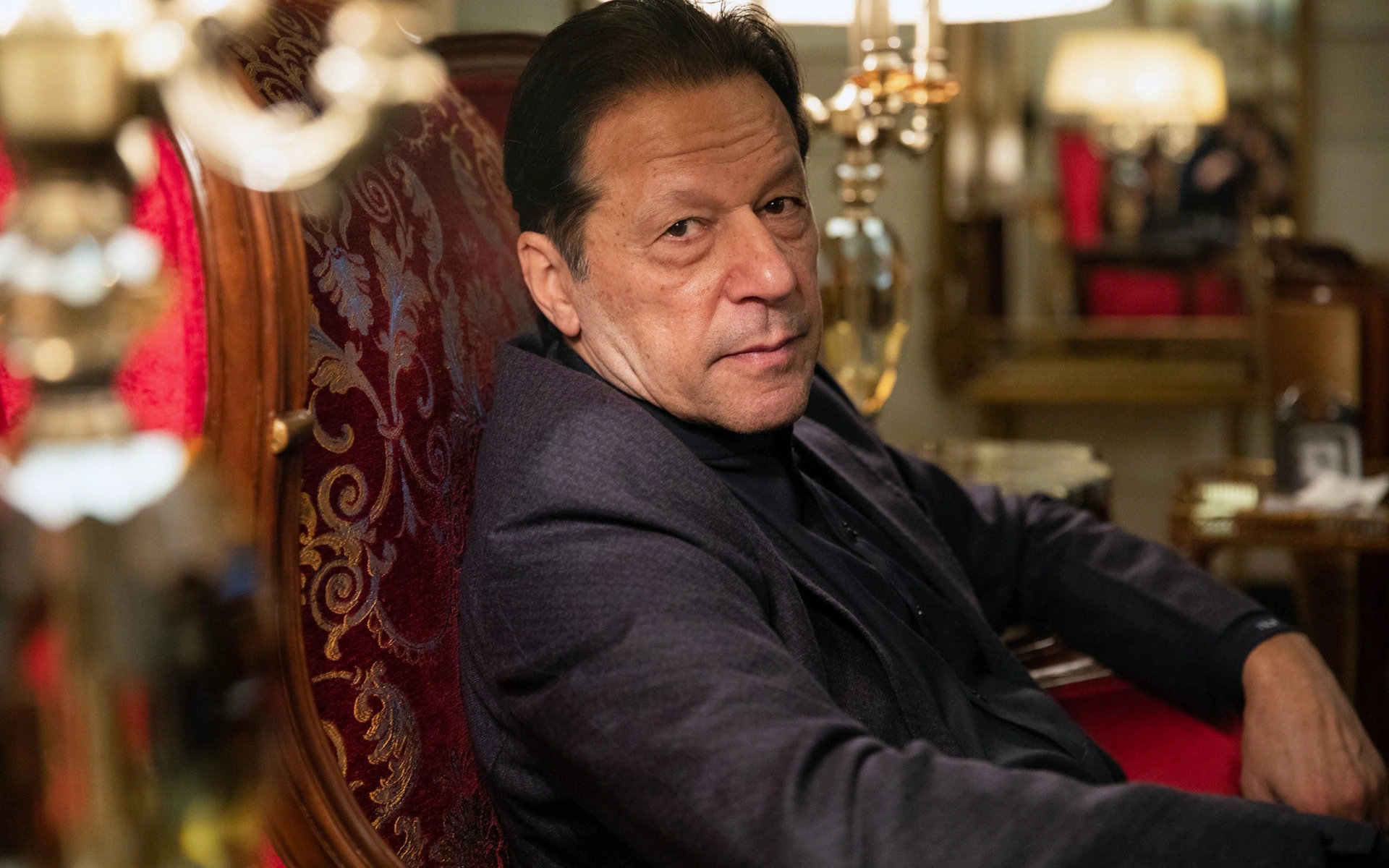
Daniel Hannan
Whatever mistakes he made as PM, he is a symbol of democratisation in a country that has been pillaged for decades by a military junta.
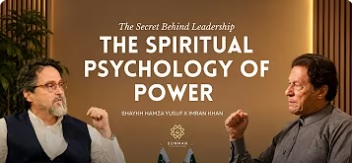
The Sunnah Foundation is a dedicated initiative committed to preserving, teaching, and spreading the authentic knowledge of Ahlus Sunnah wal Jama’ah. Our purpose is to serve the Ummah by making sound Islamic knowledge accessible, relevant, and transformative — nurturing hearts, refining character, and guiding individuals toward a life rooted in the Qur’an and the Sunnah of Rasulullah ﷺ. Through carefully curated content, we aim to revive sincerity, strengthen faith, and reconnect the believer with the timeless guidance of our scholars. Beyond educational content, we are committed to providing resources that support personal and spiritual growth. For those seeking deeper understanding, we offer access to carefully selected books and materials that benefit the soul, develop clarity, and enrich one’s journey of knowledge. These resources are available through our platform for those who wish to continue learning and growing with purpose.
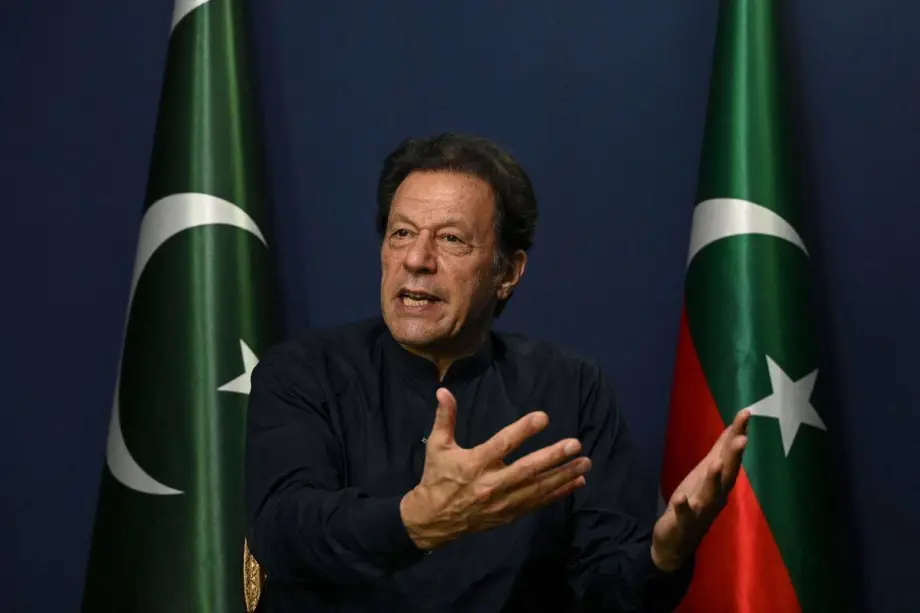
by Junaid S. Ahmad
The problem is not that every Muslim scholar or activist must support Khan. The problem is that so many built careers on the very vocabulary his persecution now tests: Islamophobia, empire, authoritarianism, Muslim agency, decoloniality, political subjectivity, resistance.
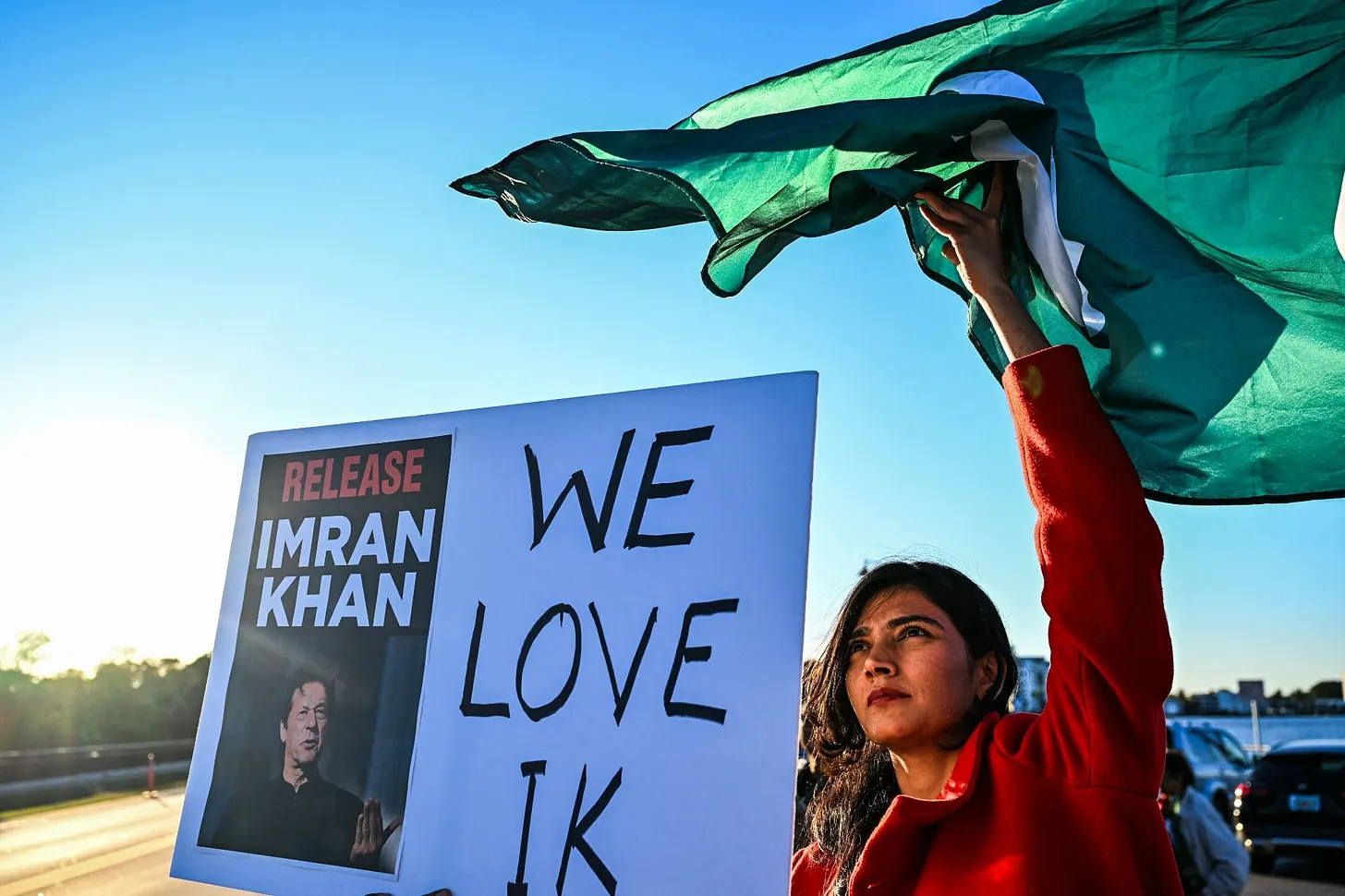
By Prem Thakker
The former Pakistani leader remains behind bars, prompting those Pakistani-American groups that backed Trump and Republicans in 2024 to now worry they got ‘played’ by the president and his team.
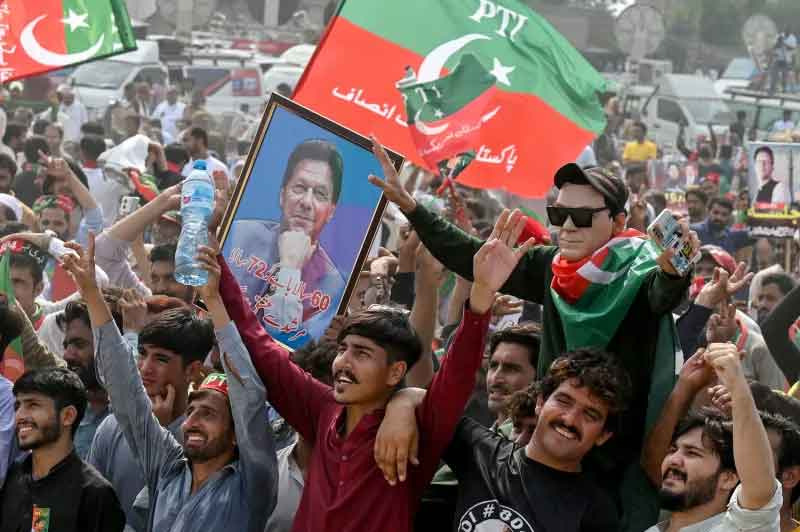
by Junaid S Ahmad
The tragedy of a section of Pakistan’s left is not that it misread Imran Khan politics often involves misjudgments. The real tragedy is that even after witnessing censorship, arrests, military trials, enforced disappearances, and political repression, many still chose cautious vocabulary over moral courage.
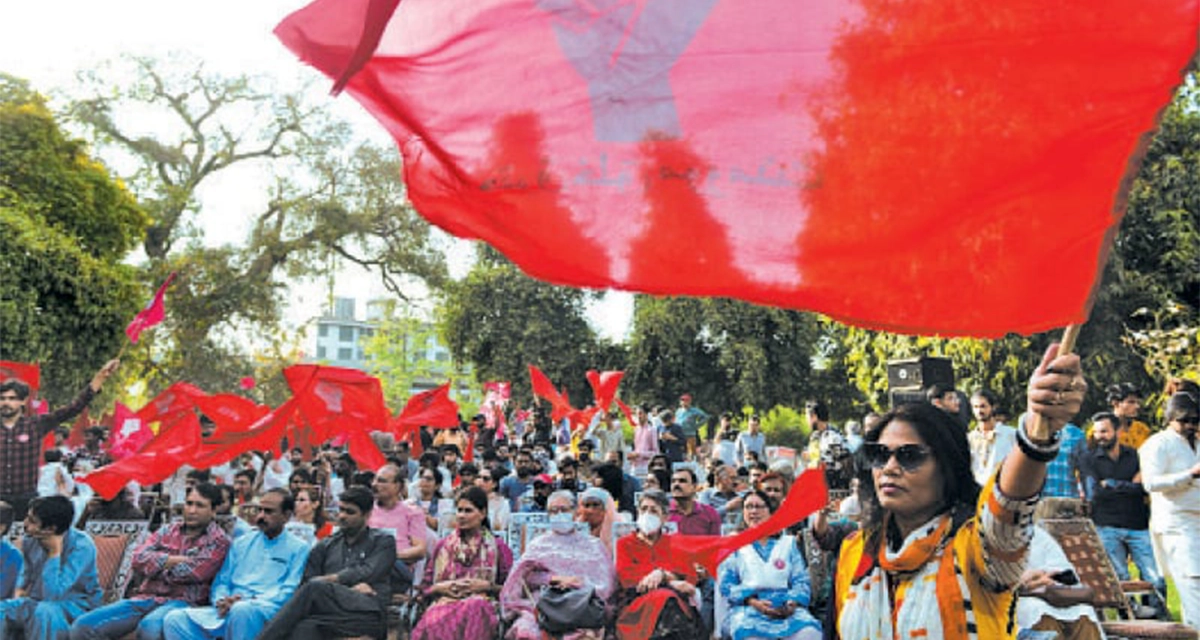
By PROFESSOR JUNAID S. AHMAD
Pakistan’s liberal class has long practiced a curiously convenient form of courage: the kind that attacks power only after first making sure power is not in the room. It performs dissent under chandeliers, quotes Faiz with moist eyes, invokes Jalib with theatrical tremor, and then develops sudden laryngitis when asked to name the institution that actually rules the country. This is not politics. It is dissent as dinner theatre.
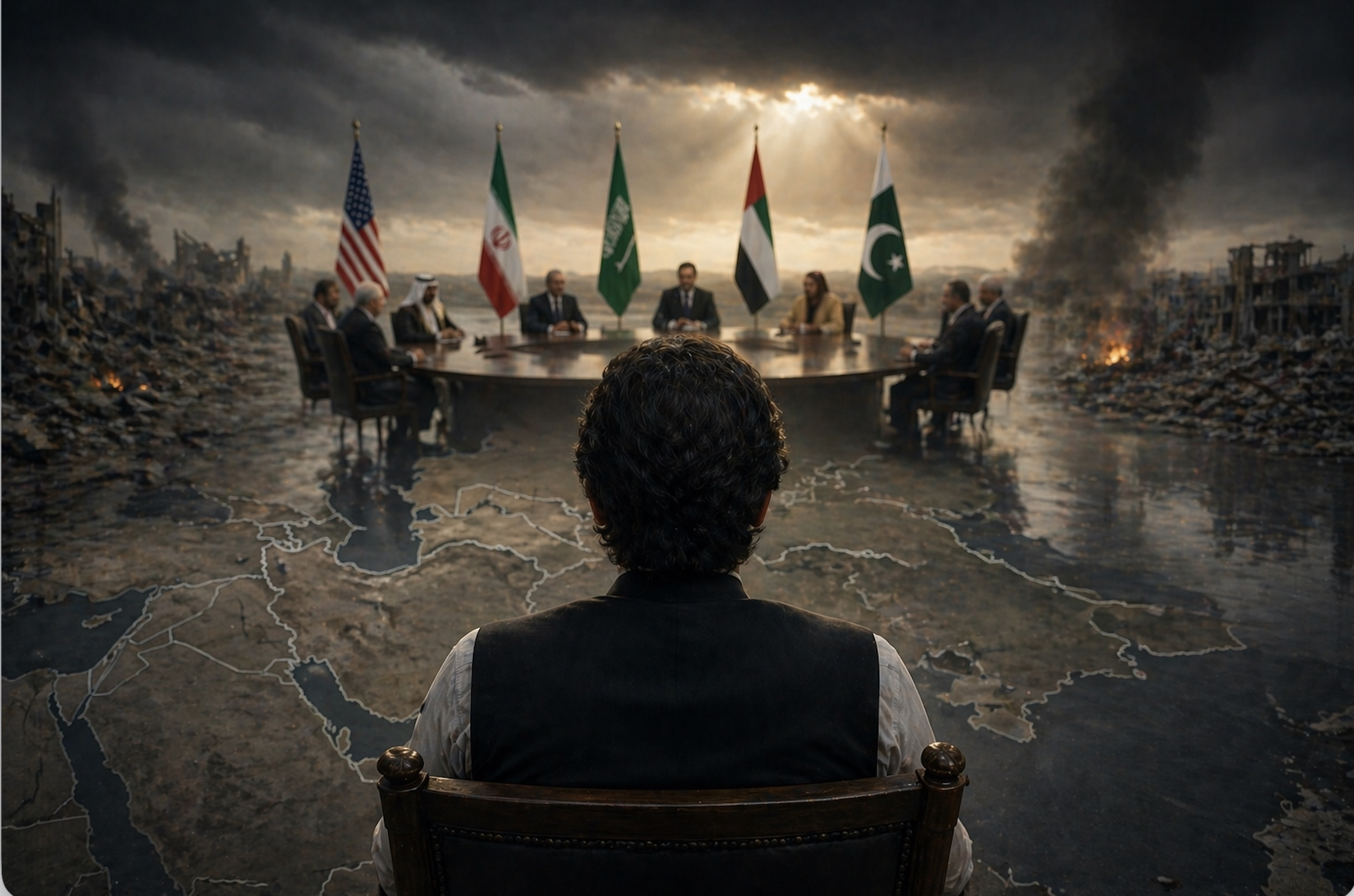
by Tahir Azad
In April 2022, Imran Khan became the first prime minister in Pakistan’s history to be removed through a vote of no confidence. What followed was a campaign of institutional suppression without precedent in the country’s democratic experience. Party leaders were arrested en masse.
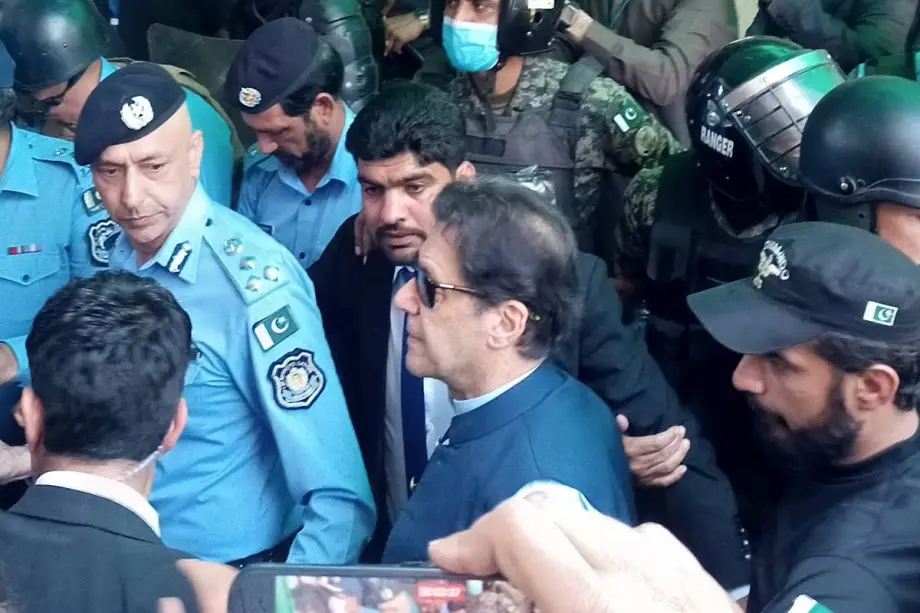
When a regime starts rationing a prisoner’s light, it is no longer governing — it is unravelling. If credible reports are accurate that Imran Khan’s eyesight has catastrophically deteriorated in custody, this is not bureaucratic failure, nor medical misfortune. It is escalation. It is the continuation — by more brutal means — of a four-year campaign of relentless state persecution against the most popular, electrifying, and historically singular political figure Pakistan has produced in its 78-year existence. The dimming of his vision is not incidental. It is terror by design.
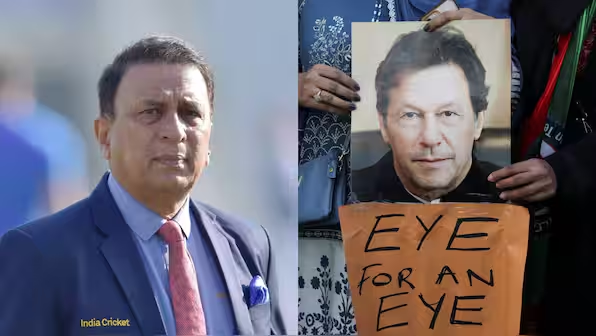
Sunil Gavaskar has made another passionate plea to the Pakistan government over providing Imran Khan with the best possible medical care in the jail. He made the appeal through a video.
Indian legendary cricketer Sunil Gavaskar has made a second appeal to the Pakistan government to provide best medical care to former Pakistan captain and Prime Minister Imran Khan, who is currently serving jail term in Rawalpindi’s Adiala Jail. Gavaskar’s first appeal was made through a letter that has been signed by 13 other former captains including Kapil Dev.
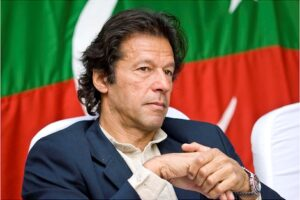
By Asif Ullah Khan
In trying to contain Khan, the system may be unintentionally shaping the very legend it fears.
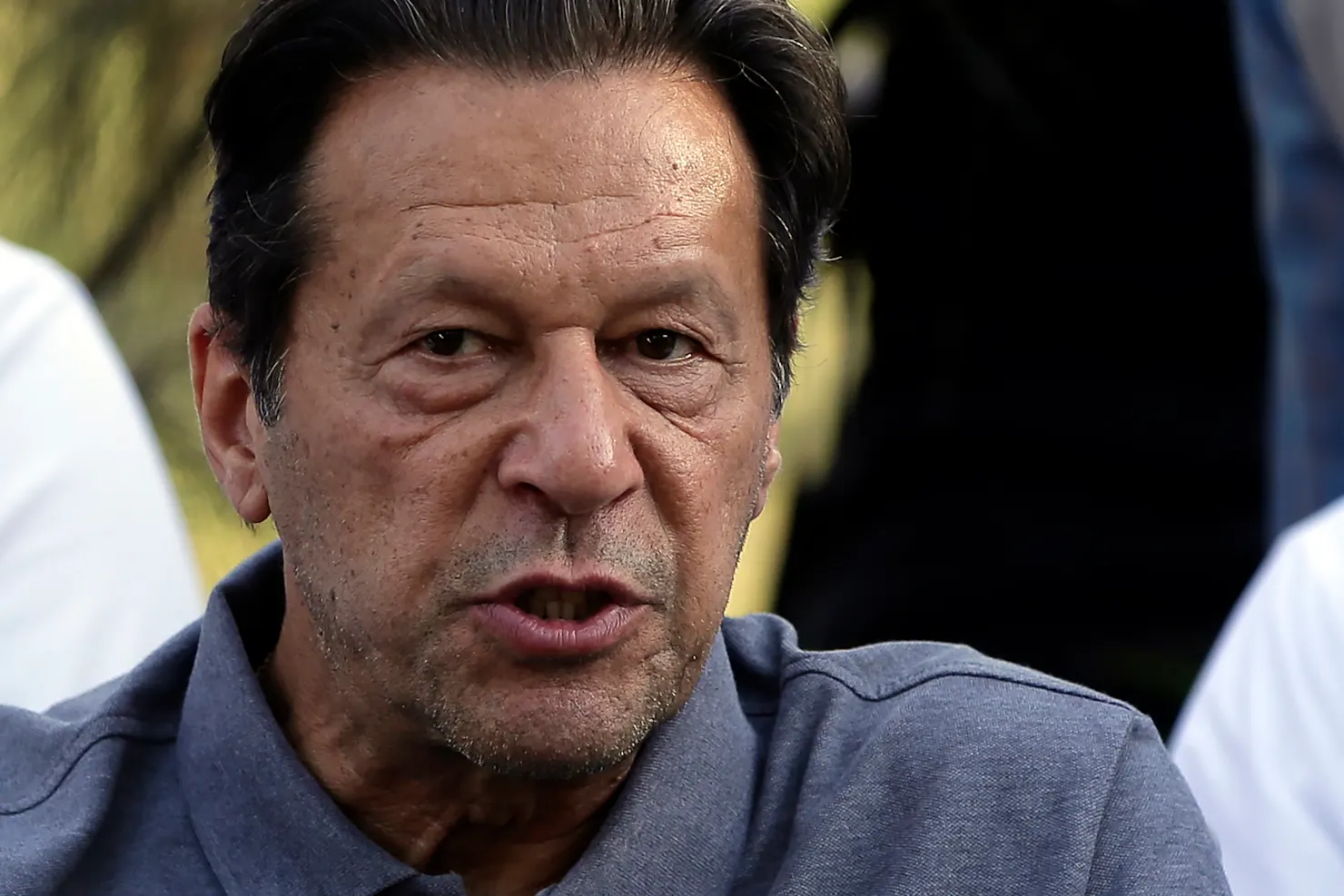
Zulfikar Ali Bhutto was 51 when he was executed. Benazir Bhutto Zardari was 54 when she was assassinated. Imran Khan is now 75. He appears physically fitter than most men his age — even after retiring from cricket, he never stopped exercising, and reports say he continues to work out daily in prison. He is also being provided with food of his choice. Yet physical fitness alone cannot shield a man of his age from the toll of imprisonment, especially the psychological strain.
Fourteen former international cricket captains from five Test teams have appealed to the Pakistan government to request better prison treatment for Imran Khan, amid serious fears for the health of the 73-year-old ex-captain and prime minister.
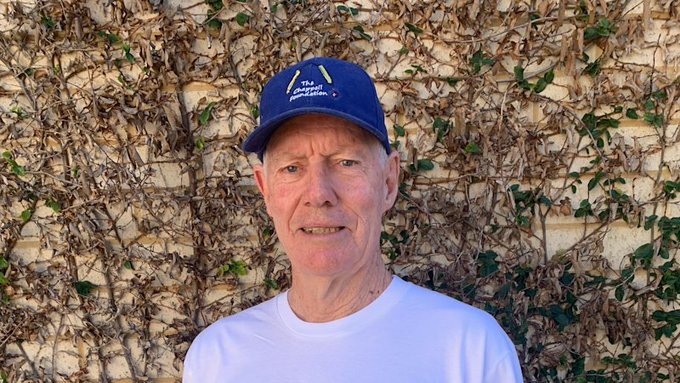
The petition, drafted by former Australian skipper Greg Chappell and delivered to Pakistan’s Prime Minister Shehbaz Sharif on Tuesday afternoon, has also been undersigned by former Indian captains Sunil Gavaskar and Kapil Dev, plus the likes of Allan Border, Steve Waugh, Ian Chappell, Belinda Clark and Kim Hughes.
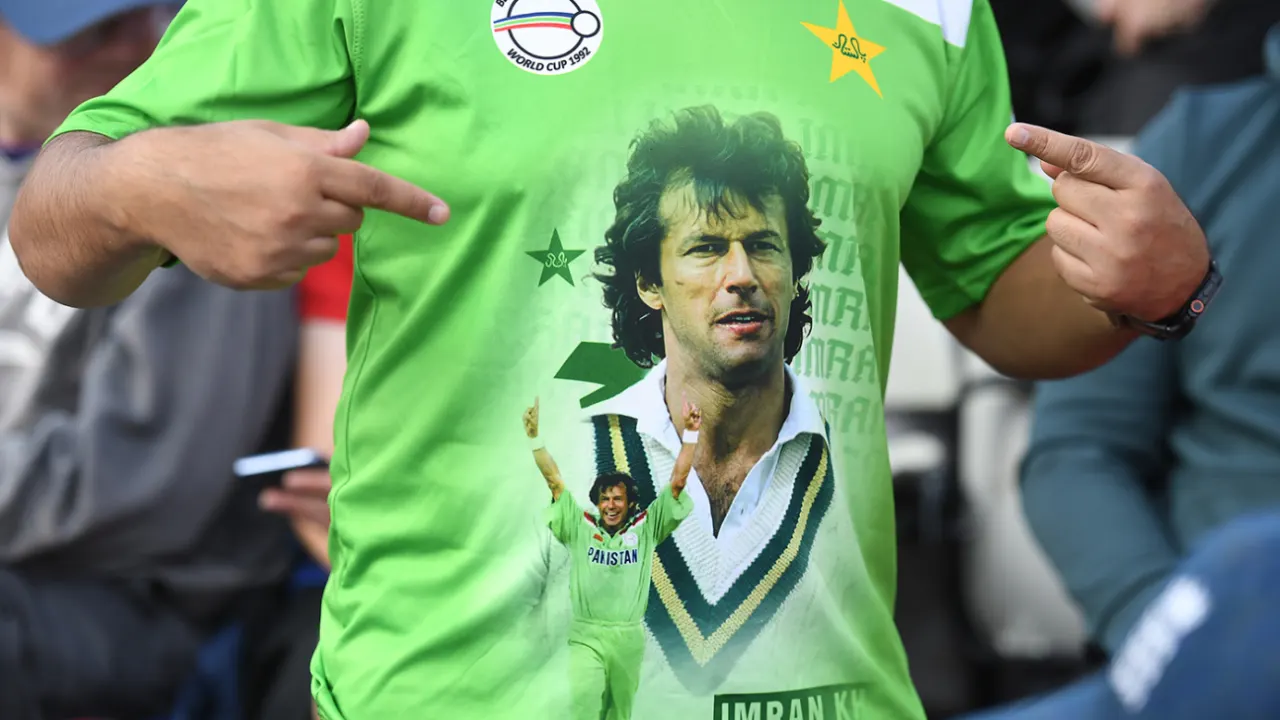
Imran Khan’s public life spans more than four decades and touches sport, philanthropy, politics, and social reform. For many Pakistanis, he first emerged as a symbol of national pride when he led the country’s cricket team to victory in the 1992 World Cup. Yet his later work, particularly in healthcare, social welfare, and governance, has shaped his legacy in ways that reach far beyond the boundary lines of a cricket field. Whether admired or criticised, his services to Pakistan and his advocacy on global platforms have left a mark that continues to influence public debate and civic life.
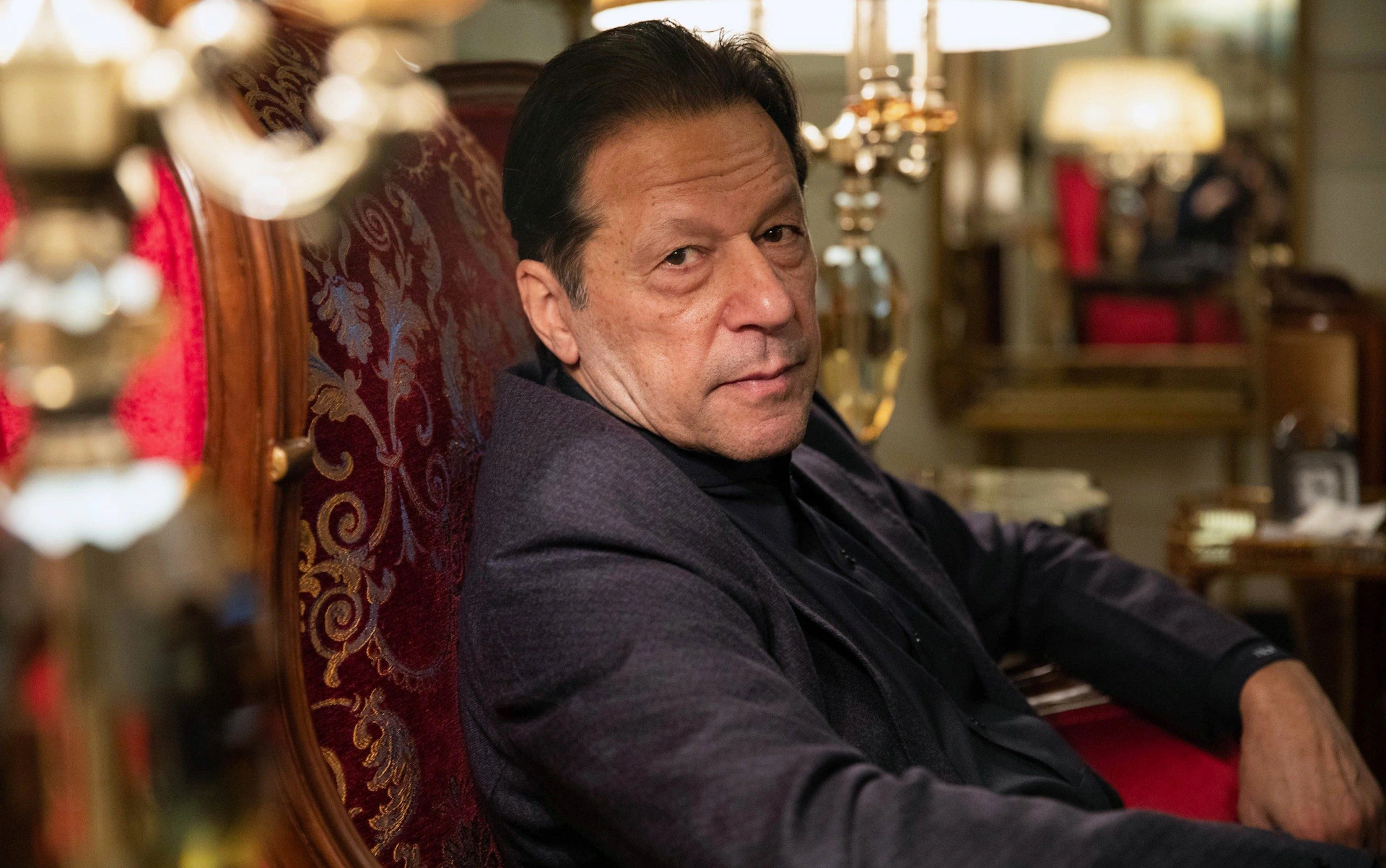
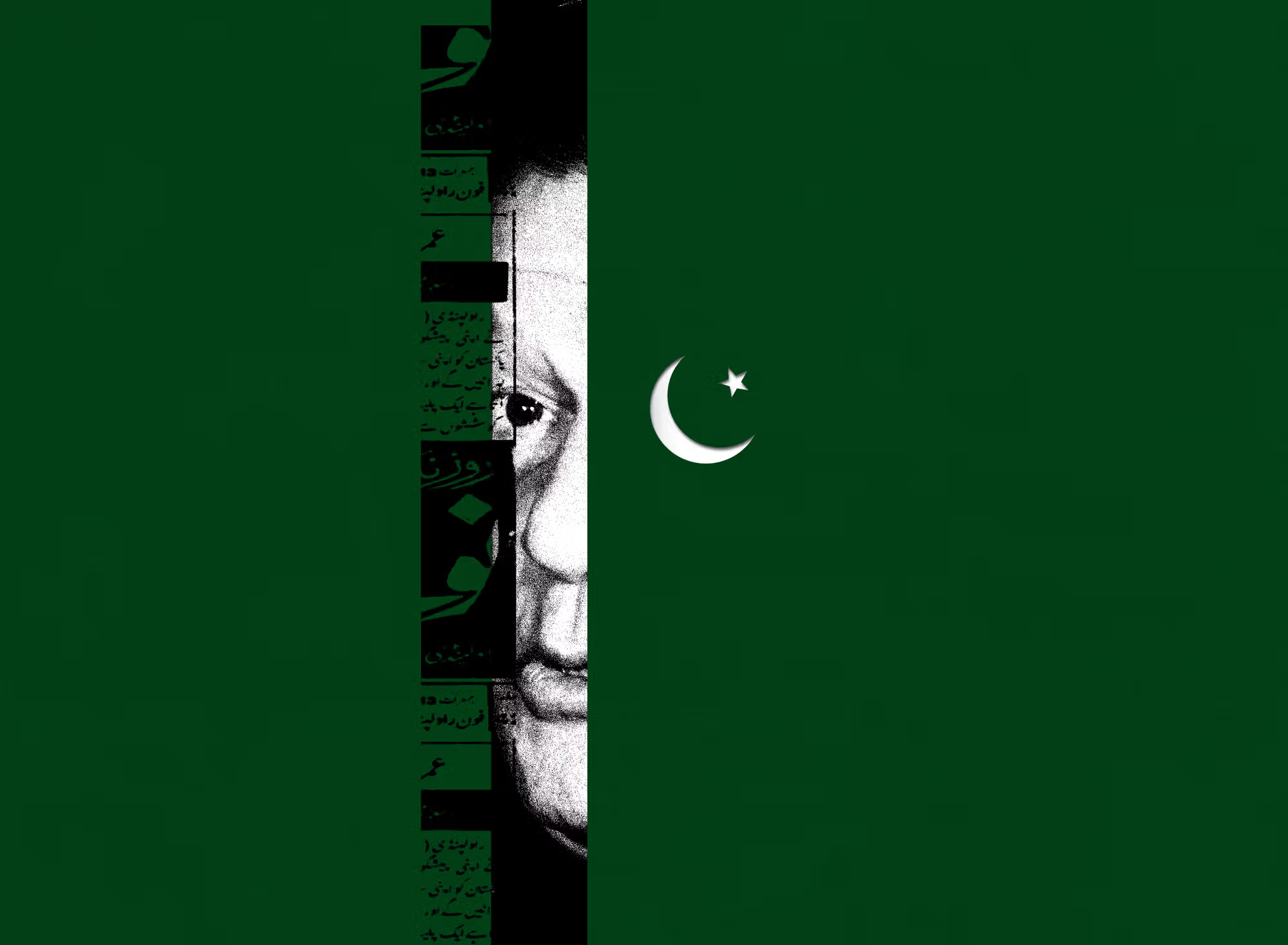
by Osman Samiuddin
Just so we’re clear, the following is a fact. Not opinion, not a point of view, not a hot take. Fact. There is no Pakistani male, female, dead, alive, real, imagined – as famous as Imran Khan. Every turn in a multifarious public life has abounded in fame, first as a cricket legend, then as a beloved philanthropist who built a cancer hospital for the poor, latterly as a maverick politician who swept to power promising reform, and now, as the sole occupant of a cell in Pakistan’s most notorious jail. So famous he’s been the subject of two death hoaxes most recently in November, when he went unseen for so long that many concluded he had died.

Love of a foreign painter for Imran Khan, the world recognizes and admires Imran Khan.

Reporter: Meenakshi Ravi – Al Jazeera
Despite being in jail for more than two years, Imran Khan continues to occupy air time in Pakistan. After the army restricted access to Khan, rumours of his death ricocheted across social media. Pressure from his supporters and family forced the military to lift the restrictions and grant Khan’s sisters access to speak to him.
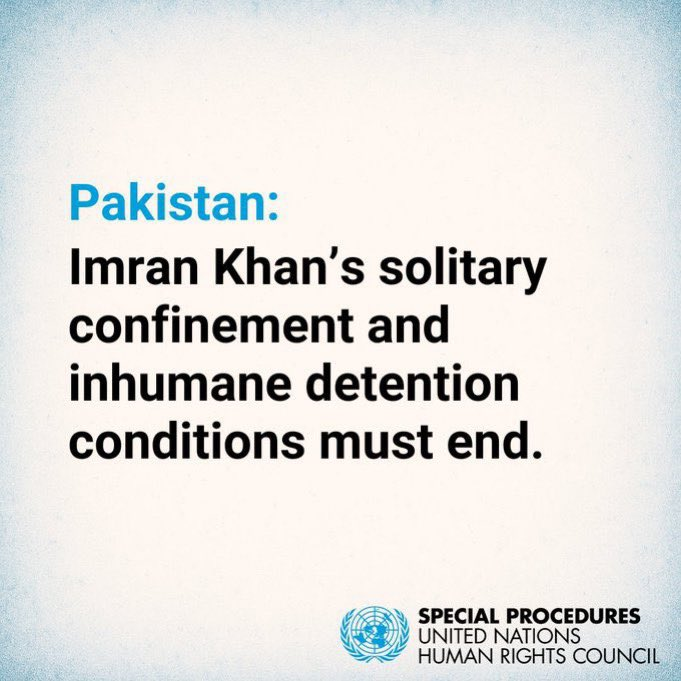
GENEVA – The UN Special Rapporteur on torture, Alice Jill Edwards, today urged the Government of Pakistan to take immediate and effective action to address reports of inhumane and undignified detention conditions of former Prime Minister Imran Khan, warning that they could amount to torture and other inhuman or degrading treatment.
“I call on Pakistani authorities to ensure that Khan’s conditions of detention fully comply with international norms and standards,” Edwards said.
by Orhan Khan
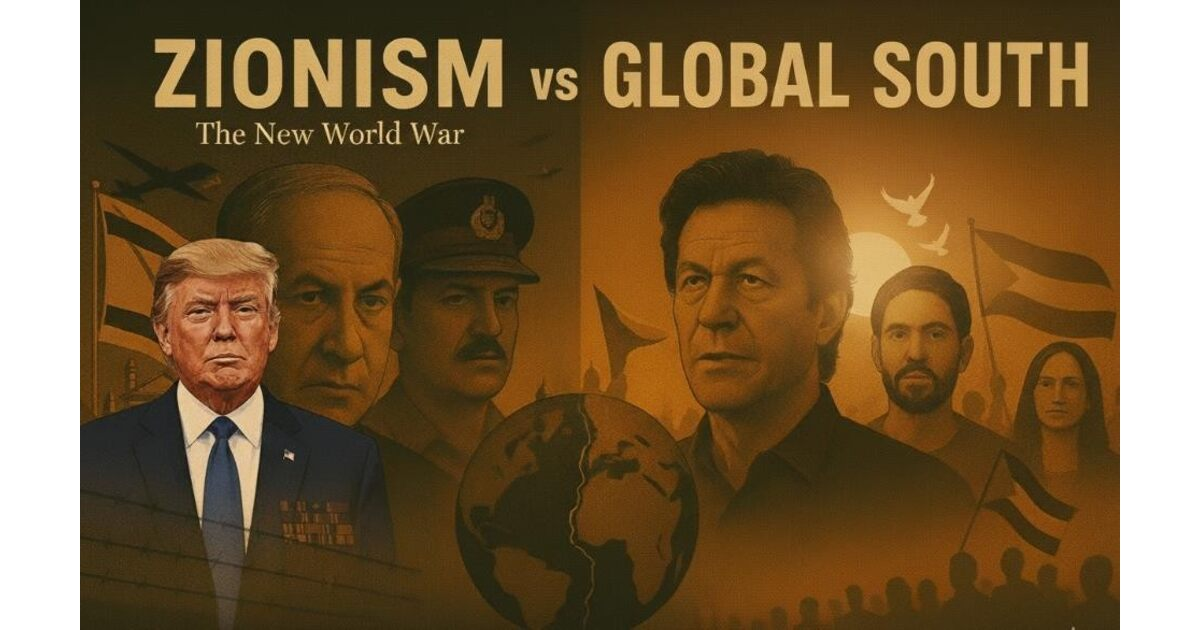
The current Gaza crisis has violently stripped away the carefully crafted veneer around Zionism, revealing its true essence, brutal, racist, expansionist, and devoid of humanity. Zionism is not simply an Israeli political ideology; it has metastasized into a global network embedded inside the United States and other Western power structures.

by Dr. Salman Ahmad
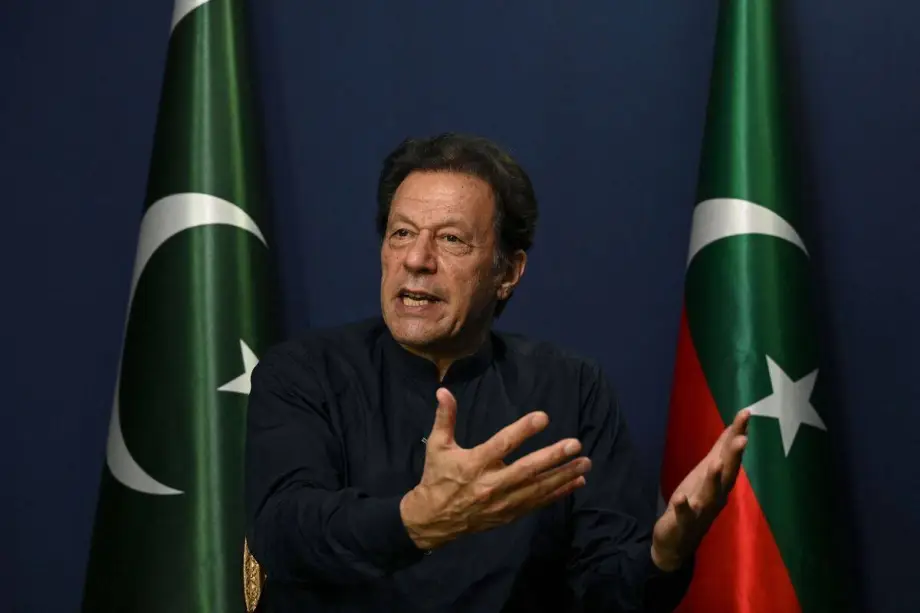
In the sweeping panorama of global history, from the dawn of the twentieth century to the disruptive present of 2025, the distinction between those who ruled and those who fundamentally educated their people about rights, freedom, and dignity is starkly drawn. While countless leaders have rallied movements or held the reins of government, a rare handful stand apart for transforming the very consciousness of their societies—redefining the political imagination, not just state policy.
by Junaid S. Ahmad
From the barracks of Rawalpindi to the halls of Washington, a sordid alliance stalks the republic of Pakistan: a military caste addicted to power, a civilian class cowed into servitude, and a foreign patron ever ready to pull the leash. What unfolds is less a grand strategy than a tragicomedy: generals trading sovereignty for sinecures, soldiers harbouring contempt for their officers, and a once-promising democratic movement crushed under the twin weights of imperial ambition and martial tutelage.

by Orhan Khan
In Pakistan today, the country’s powerful generals have turned politics into a zero-sum game — a battle for survival in which the rise of Imran Khan would mark the end of the military’s 78-year-long dominance.

By Husain Nadim.
Since a lie on-repeat becomes a given truth, let me correct the record on this:

by Steve H, Hanke
August 5th marked another grim day for Imran Khan, the former Prime Minister of Pakistan and one of the world’s greatest cricketers. It was the second anniversary of his incarceration in Rawalpindi’s Adiala jail on trumped-up charges.

by Kelly Ng
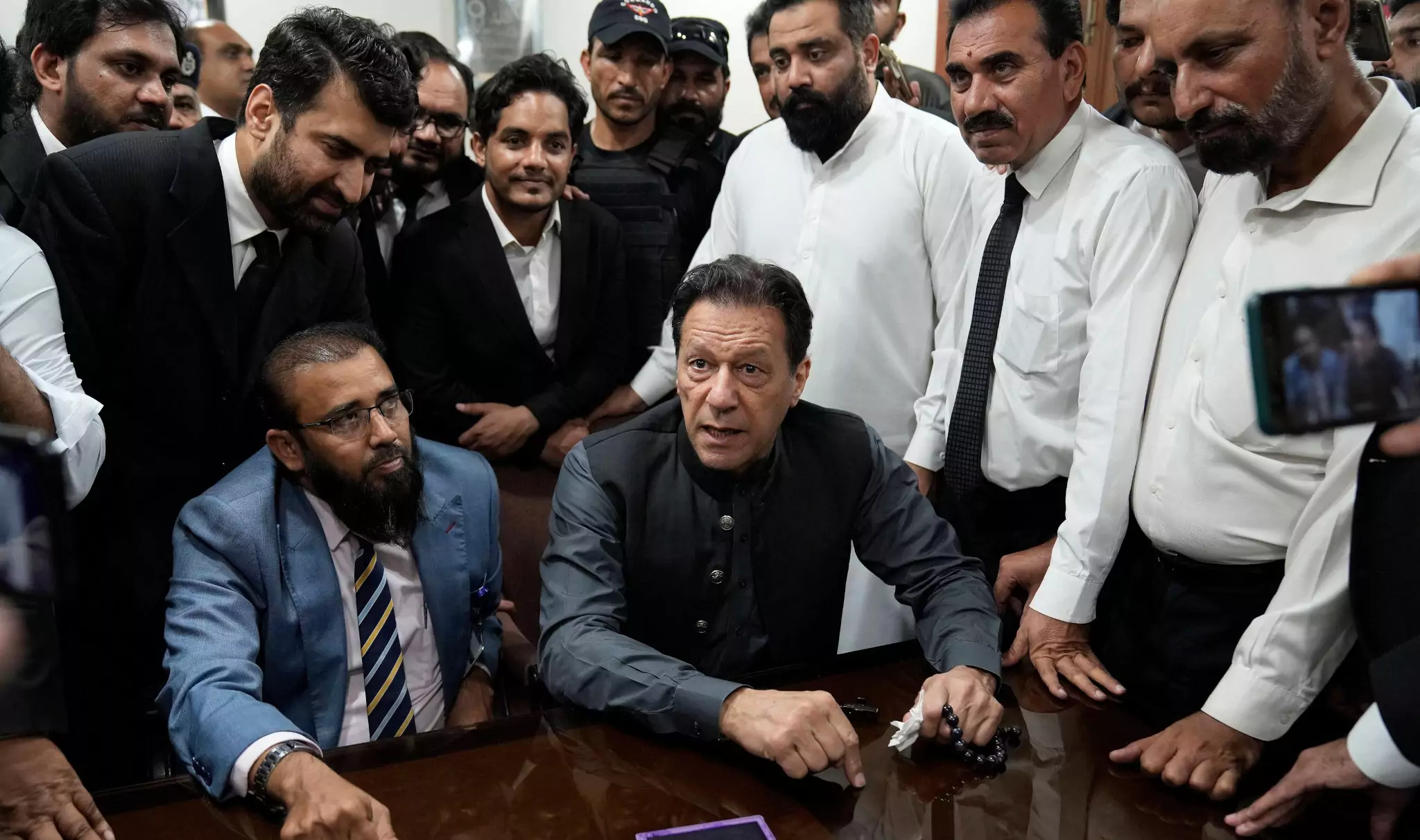
Pakistan has sentenced to prison 108 members of jailed ex-Prime Minister Imran Khan’s party, for their involvement in protests against the military in 2023. Violent protests erupted nationwide in May 2023 after security forces arrested Khan during his court appearance on corruption charges.
by Shahzad Akbar
The United Kingdom prides itself on being a champion of democracy and human rights, frequently condemning political repression and imprisonment in authoritarian states such as China, Iran, Russia and North Korea.
Yet, its response to the arbitrary imprisonment of Pakistan’s former prime minister Imran Khan an elected leader with extensive ties to Britain has been muted at best and complicit at worst over the last two years.
by Imran Khan
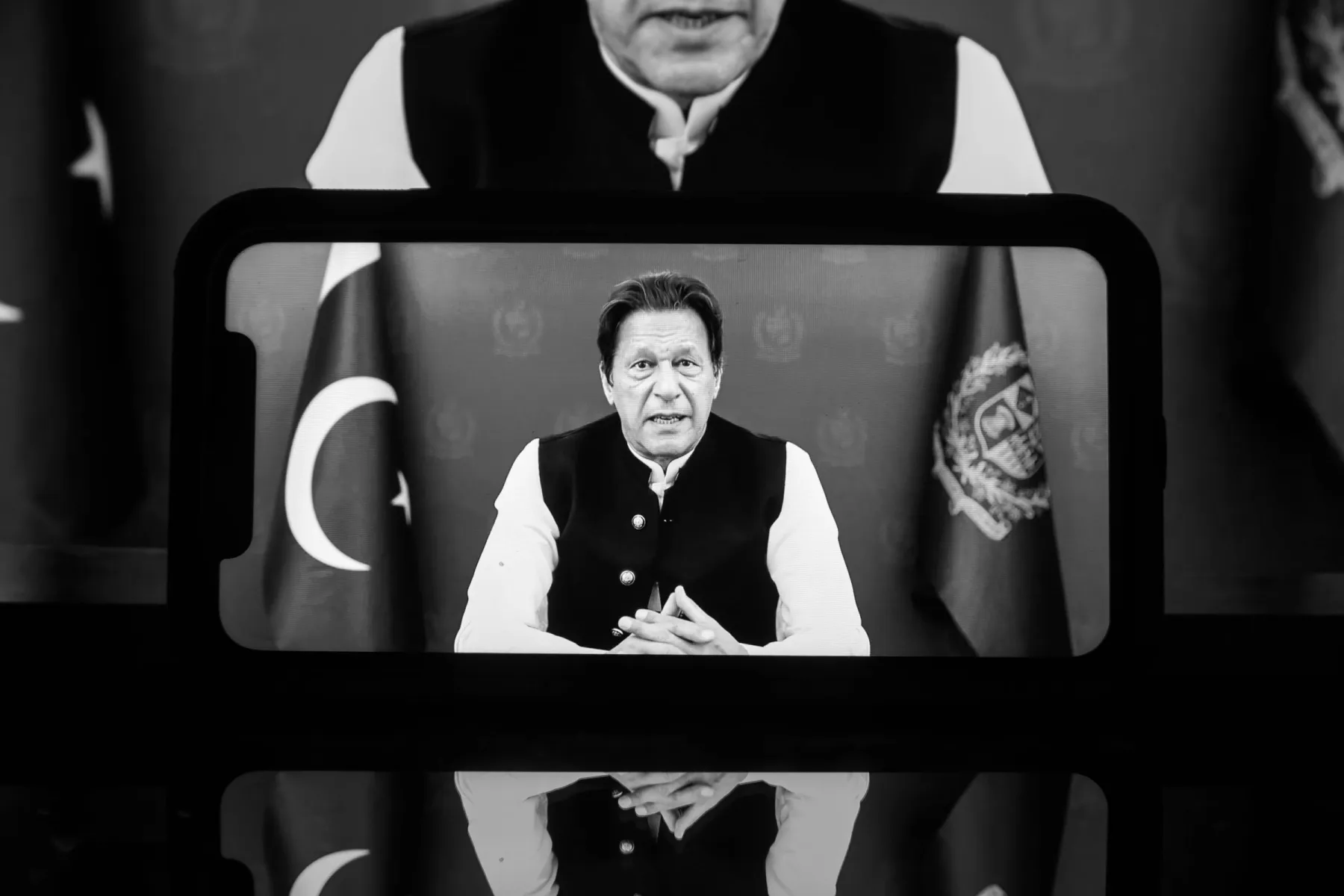
As we settle into 2025, I reflect on what has been one of the most tumultuous and testing periods in Pakistan’s history. From my confinement in a solitary cell, I witness the heartbreaking reality of a nation gripped by authoritarian rule.
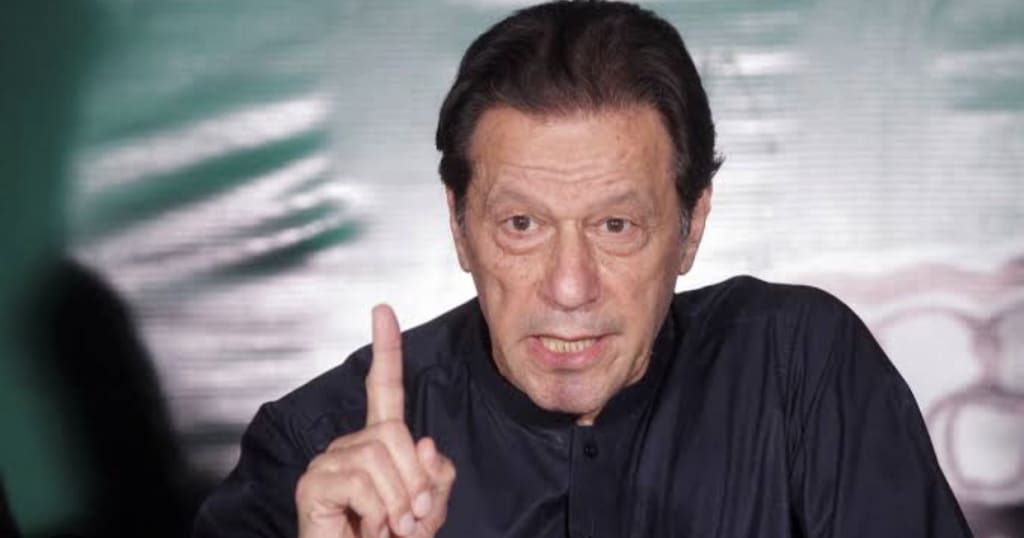
Lahore: Pakistan’s incarcerated former Prime Minister Imran Khan has said that economic progress can never happen as long as the current “fascist system” is in place and warned that there is a plan to impose a “10-year dictatorship” in Pakistan.
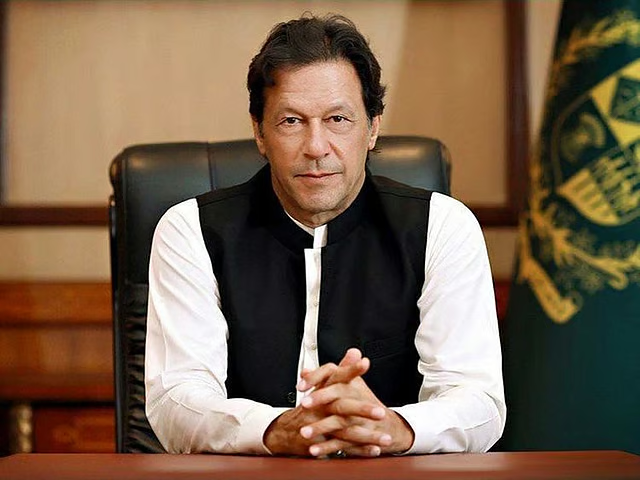
Imran Khan: Hope or Hype? Why Pakistanis protest for him | DW News Desk
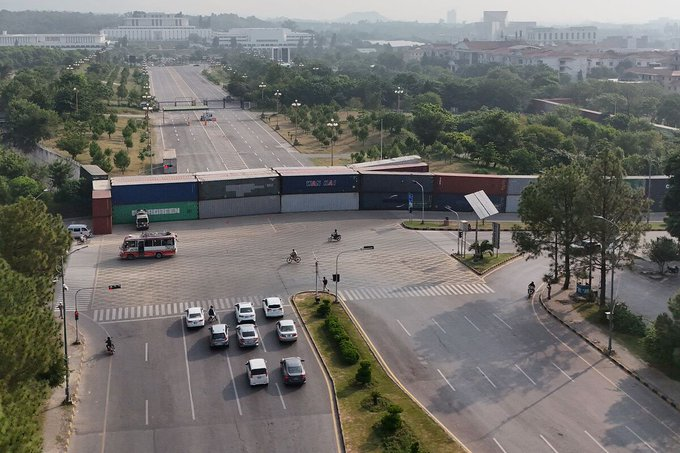
Thousands of protesters in Pakistan defied a security crackdown on a march to Islamabad. At least one police officer was killed and dozens of people injured as supporters of jailed former Prime Minister Imran Khan clashed with security forces outside Pakistan’s capital Islamabad, according to officials and the PTI (Pakistan Tehreek-e-Insaf) Party.
Authorities have enforced a security lockdown for the last two days after Khan called for a march on parliament for a sit-in demonstration to demand his release, while highways into the city have been barricaded. Voted out of power by parliament in 2022 after he fell out with Pakistan’s powerful military, Khan faces charges ranging from corruption to instigation of violence, all of which he and his party deny.
Why do people think Imran Khan can save the country’s future? This time on News Desk, we ask: Imran Khan: Hope or Hype? Why are Pakistanis protesting for him?

Imran Khan: The Idea of Pakistan Crystallized
by Faizan Dogar
“A nation is a detour of nature to arrive at five or six great men” – Friedrich Nietzsche.
Imran Khan is hitherto the greatest man the Pakistani collective (un)conscious has birthed. His persona successfully integrates the unconscious aspects of the Pakistani psyche with its bold ideals. Historian Ayesha Jalal explores how Pakistan’s postcolonial identity is shaped by a lingering colonial mentality, which contributes to a crisis of self-worth. This mentality leads Pakistanis to look toward Western models of success and governance while struggling to reconcile this influence with their own Islamic ideals.
Imran Khan is unique in this context: he is the only Pakistani who has scaled the heights of achievement, fame, and success as defined by the British, yet has redirected these triumphs toward a vision of self-assured independence and pride for Pakistan—a vision that aligns Pakistan with its boldest ideals. Imran Khan has resolved the inferiority complex Pakistanis inherit due to their colonial past by achieving success on terms set by the British themselves. For many Pakistanis, there exists a subtle, almost subconscious desire for validation from the West – a lingering effect of the colonial mentality that measures success by Western standards.
Imran Khan is the only Pakistani to have truly gained that validation, satisfying a craving that so many share but rarely articulate.
His education at Oxford, an emblem of British academia and aristocratic prestige, marked his entry into British society. His becoming the fancy of British women represents his deep acceptance by British society. His World Cup victory over England—a triumph in cricket, the very game the British invented—was no coincidence but a powerful symbol of his conquest over them. His subsequent marriage to Jemima Goldsmith, a figure of British wealth and aristocracy, further cemented his triumph within British society. For a nation where migration to the West is often viewed as the ultimate success, Khan’s choice to return to Pakistan after capturing the British imagination, rather than settle abroad, marks a profound psychological shift.
By bringing his achievements back to Pakistan, he redefined success not as external validation but as something rooted in one’s homeland. His return embodies a resolution of the inferiority complex, showcasing that the highest form of success is not in gaining approval from the West but in channeling those accomplishments into pride and purpose at home. What makes Imran Khan the greatest of Pakistani men isn’t just his overcoming of the inherited inferiority complex; it’s also his personification of Pakistan’s boldest ideals.
The idea of Pakistan may be hotly contested, but there is no dispute that Dr. Muhammad Iqbal, revered as Allama Iqbal, is the ideological father of the nation. Iqbal’s vision for governance within an Islamic state is complex, but his writings reveal key principles: he viewed matter as nothing but spirit within a space-time reference, and he regarded the essence of Tawhid (unity) as being rooted in equality, solidarity, and freedom. Iqbal’s understanding of spirit as matter projected onto space-time aligns with his verse: Khird huwee hai zamaan o makaan ki zunaari na hai zamaaN, na makaaN! La ilaha il Allah (The mind has worn the holy thread Of Time and Space like pagans all Though Time and Space both illusive “No god but He” is true withal) According to Iqbal, the state is a defined human organization, meant to bring the spiritual principles of equality, freedom, and solidarity into the temporal world. However, Iqbal’s vision of an Islamic state was in no way a theocracy where a single, self-appointed representative of God could impose his will under the pretense of infallibility.
On the contrary, Iqbal’s emphasis on individual development, combined with his view that reality is ultimately spiritual, gave rise to his concept of a “spiritual democracy.” Such a democracy could only reach its fullest potential through individuals who have transcended the material, recognizing spirit as the core of reality. Yet, these individuals are not ascetic Sufis removed from the world; they are people who, having understood reality’s essence, actively accept their responsibilities to their communities. As Iqbal states: “Fard qaim rabt-e-millat se hai, tanha kuch nahin, Mauj hai darya mein aur bairun-e-darya kuch nahin.” (An individual stands strong with the nation; alone they are nothing. A wave is only part of the river, outside it is nothing.) This aligns with Imran Khan’s commitment to his community and country, exemplifying that greatness is in serving the collective. Imran Khan exemplifies this ideal. His conviction in these ideas is evident from his lifelong journey of self-growth, a journey rooted in “mind over matter” as displayed through his achievements in cricket, philanthropy, and politics. But this conviction is perhaps most vividly demonstrated by his willingness to sacrifice his life for the ideals he upholds: equality, solidarity, and freedom.
In this commitment, Imran Khan bears the immense weight of Pakistan’s lofty ideals. Imran Khan’s transcendence of the classic Pakistani inferiority complex, combined with a spiritually grounded life dedicated to the service of his countrymen, embodies Iqbal’s Asrar-e-Khudi (Secrets of the Self) and Rumuz-e-Bekhudi (Mysteries of Selflessness)—two of Iqbal’s most celebrated works. If Iqbal were to fashion an individual according to his own vision, that person would undoubtedly be Imran Khan. Therefore, his imprisonment is the imprisonment of the Pakistani spirit. His freedom will be the emancipation of the Pakistani soul. Pakistan Zindabad!
Imran Khan: The Idea of Pakistan Crystallized
— Faizan Dogar (@faizandogar96) November 10, 2024
“A nation is a detour of nature to arrive at five or six great men” – Friedrich Nietzsche.
Imran Khan is hitherto the greatest man the Pakistani collective (un)conscious has birthed. His persona successfully integrates the…
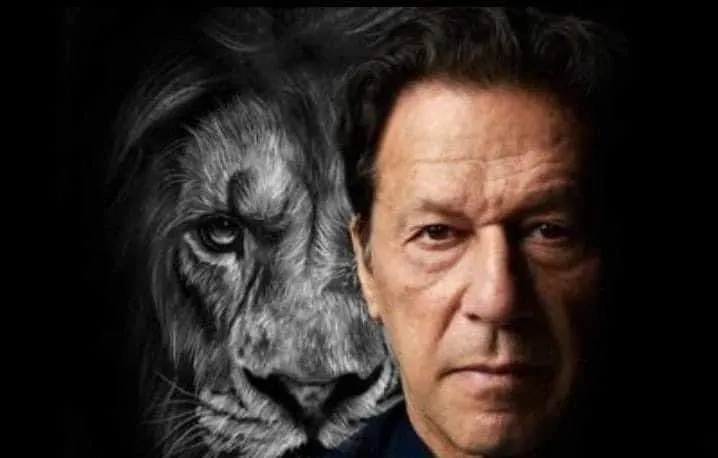
by Saadullah Mazari
When consciences are traded, principles are bid, and loyalties are valued in the marketplace, a voice is heard from somewhere, announcing that principles have no value, honor cannot be sold, and truth bids. Cannot be applied.The name of that voice is Imran Khan, the red of Shaukat Khanum, who saw the treasures of the world, all the doors of power and authority were opened, but he did not hesitate or bow down.

Amnesty International Public Statement
A year on from Imran Khan’s conviction and sentencing, Amnesty International has found several fair trial violations under international human rights standards which have resulted in his arbitrary detention, denying his right to liberty. Amnesty International has reviewed key documents in Imran Khan’s cases and spoken to lawyers involved in the trials. We have noted a pattern of weaponization of the legal system to keep Imran Khan under detention and away from all political activity. Amnesty International calls on the Pakistani authorities to immediately release Imran Khan from arbitrary pre-trial detention.

UN Group Demands Release of Ex-Pakistan PM Imran Khan; Says His Detention Violates International Law
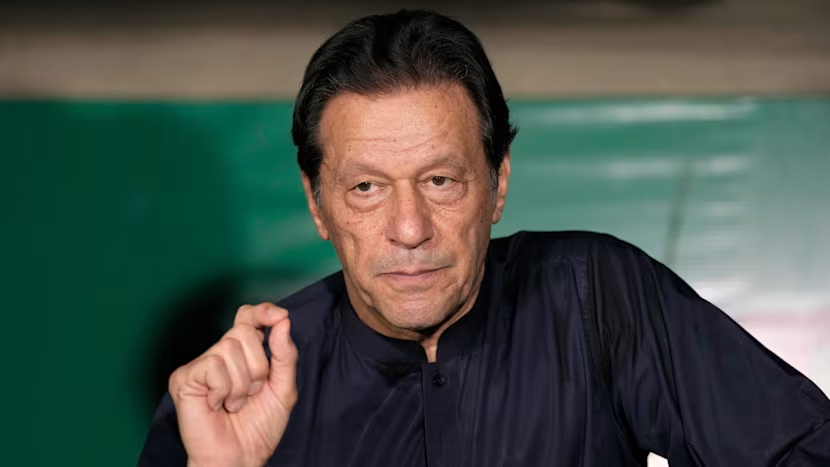
A United Nations human rights working group on July 1 called for the immediate release of Pakistan’s imprisoned former Prime Minister Imran Khan, saying he had been detained “arbitrarily in violation of international laws.”
by Rohit Kachroo
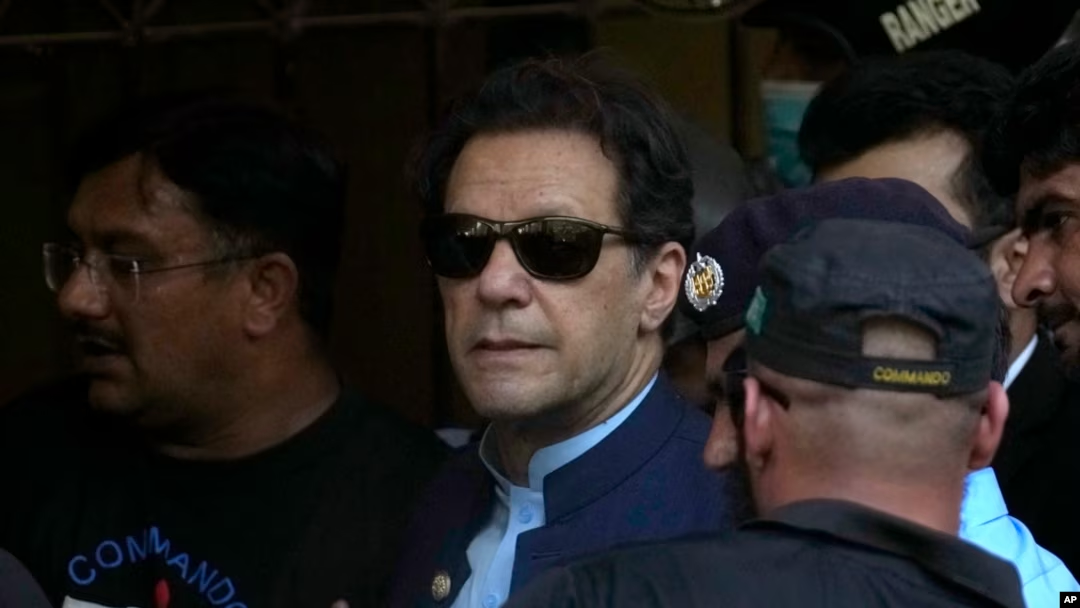
Pakistan’s jailed former prime minister Imran Khan has urged Sir Keir Starmer to raise awareness of threats to democracy in Pakistan in a rare interview granted from solitary confinement
Article by Christina Lamb
The Times: rare interview from behind bars – Pakistan’s jailed former prime minister Imran Khan has said he is being caged like a terrorist
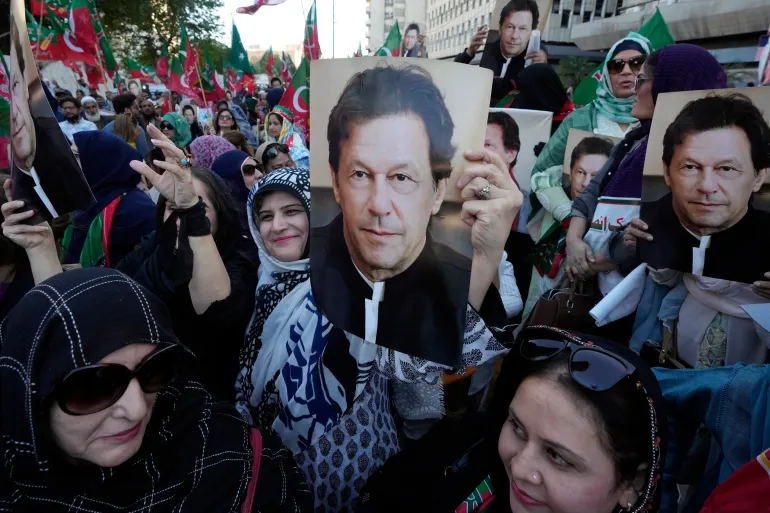
Geneva-based UN Working Group on Arbitrary Detention says Khan’s imprisonment violates international law and demands ‘immediate’ release.
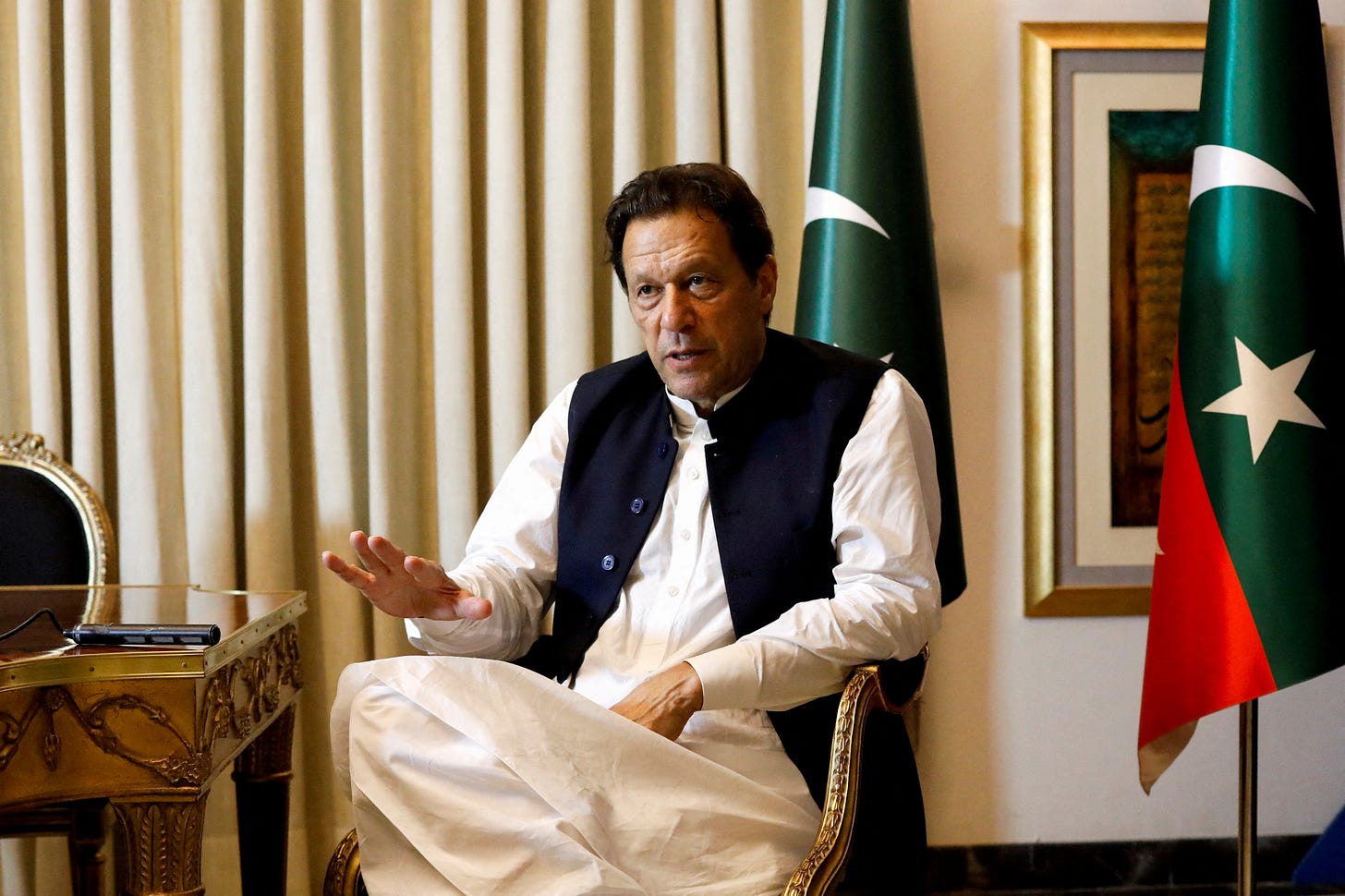
by Mehdi Hasan
The former Pakistani PM says he’s “confined to a death cell,” as he lambasts Pakistan’s political and military leaders.

By Bruno Maçães
The country’s former PM warns that its spiralling political crisis could end as a brutal military dictatorship.

By Imran Khan
TODAY PAKISTAN is being ruled by caretaker governments at both the federal level and provincial level. These administrations are constitutionally illegal because elections were not held within 90 days of parliamentary assemblies being dissolved.
Imran Khan’s Inspirational Leadership
by Aarna
Today, I stand before you to deliver a motivational speech that embodies the spirit and determination of a remarkable leader, Imran Khan, the Chairman of Pakistan Tehreek-e-Insaf (PTI). Imran Khan has ignited a spark of hope and has proven himself as a driving force behind the transformative change in our great nation. His leadership has been a beacon of inspiration, guiding us towards a prosperous and just Pakistan.
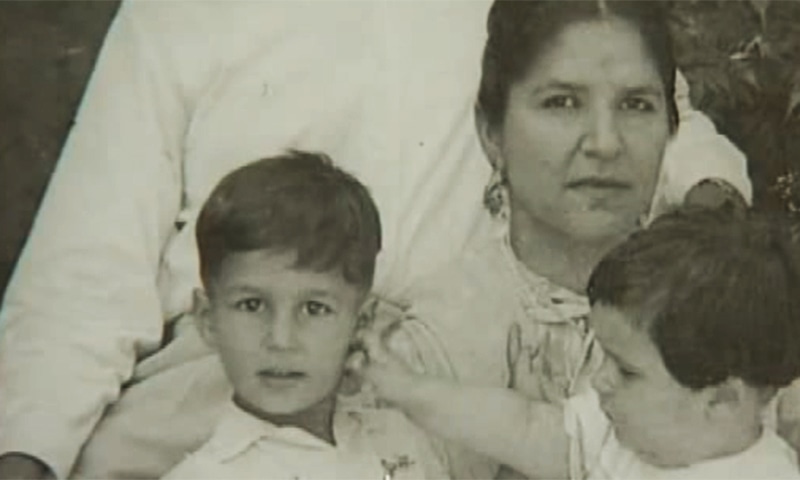
by Asia Jamil
After losing his mother to cancer in 1985, Imran Khan dreamed of constructing a free cancer hospital to help others. Imran Khan spent significant time and effort raising money for this cause because he was committed to building a center that would offer quality cancer care to low-income patients in Pakistan regardless of their ability to pay.
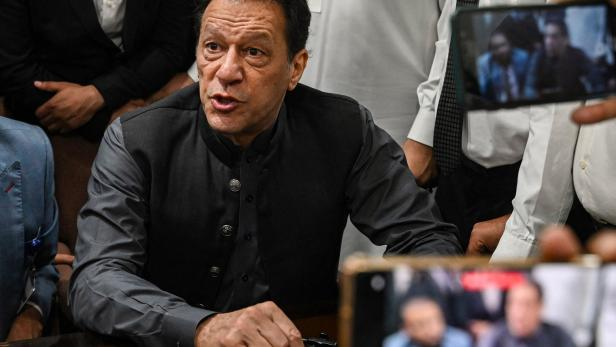
Imran Khan, Pakistan’s ousted prime minister, expects to be arrested soon and says he will continue to fight for democracy and the rule of law By Robert Treichler

Imran Khan interview with Mehdi Hasan
Ever since Imran Khan, the legendary Pakistani cricketer turned populist politician, was ejected from the Prime Minister’s Office last year in a very controversial parliamentary vote of no confidence, Pakistan has been in the midst of an historic political and economic crisis. Khan breaks his silence in an exclusive interview with MSNBC’s Mehdi Hasan.
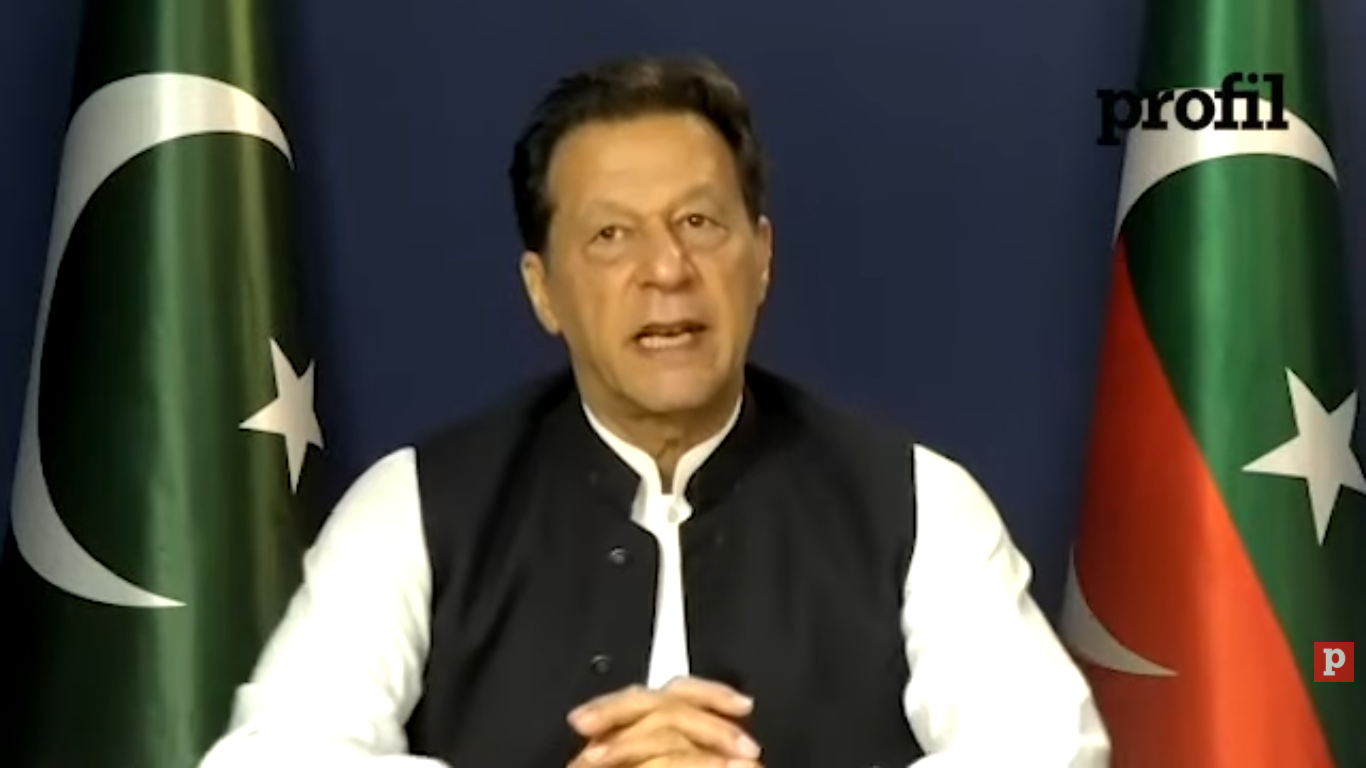
by Von Robert Treichler
Interview mit Imran Khan, Sonntag, 2. 7. 2023, geführt von Robert Treichler, Nachrichtenmagazin profil. Interview with Imran Khan, former prime minister of Pakistan, on Sunday, 2nd of July 2023. Interviewer: Robert Treichler, newsmagazine profil (Austria)

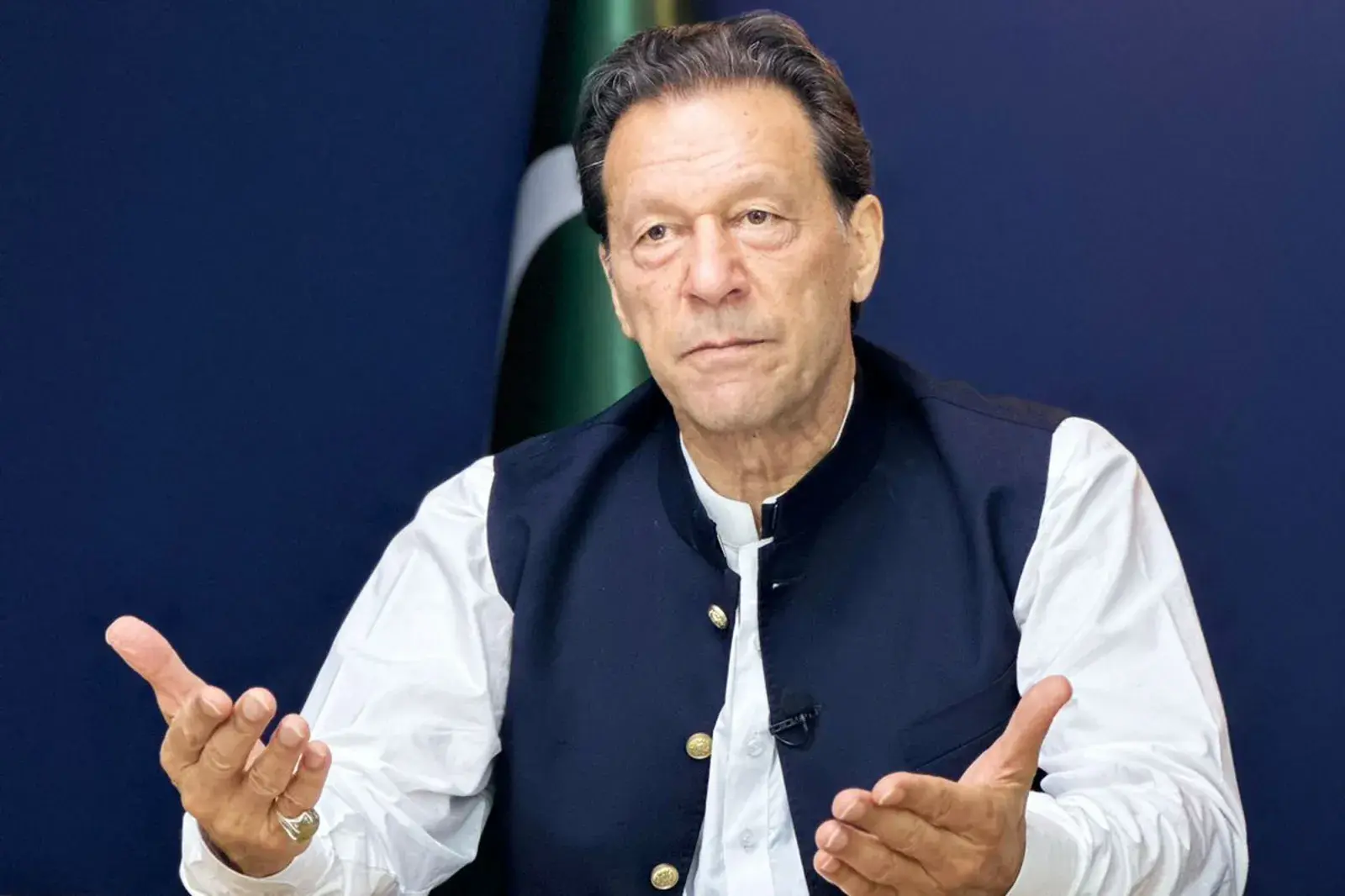
Today, Khan is largely confined to his residence in Lahore while on bail from successive court appearances on allegations ranging from corruption to terrorism and even murder.

by Caroline Davies – BBC News Islamabad
It was a surreal moment. On Tuesday night during his live TV show, Pakistani anchor Kashif Abbasi was talking about a legal petition filed by a lawyer against former prime minister Imran Khan.
Mr Abbasi says his name, then stops himself: “He filed an application under article six against Imran Khan… I apologise, against the chairman of Pakistan Tehreek-e Insaf.”
We tried to speak to Mr Abbasi, but he did not get back to us.
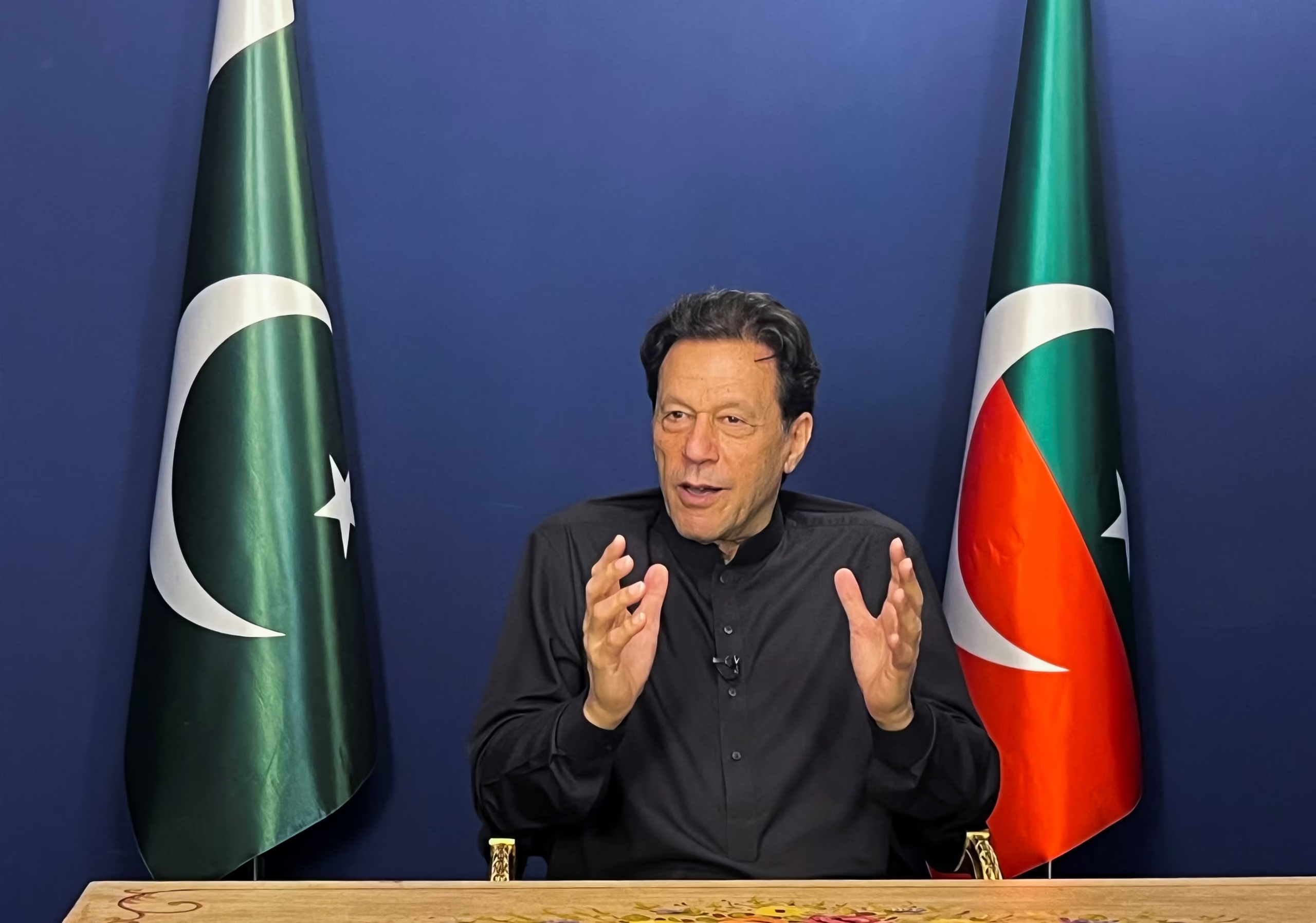
By Gibran Naiyyar Peshimam
LAHORE – Pakistan’s embattled former Prime Minister Imran Khan has accused the powerful military and its intelligence agency of openly trying to destroy his political party, saying he had “no doubt” he would be tried in a military court and thrown in jail.

“You think it is a big crisis for me, I don’t,” Imran Khan.
Imran Khan, the former Prime Minister of Pakistan, warns his country could be heading for a brutal military dictatorship.

Imran Khan, the former Pakistani prime minister, was removed in April last year – and since then, he has faced multiple criminal charges and even escaped an assassination attempt.
For months, hundreds of supporters have gathered outside his home in Lahore to protect him from arrest. But on Tuesday, May 9, the former cricket icon was dramatically arrested by paramilitary troops as he appeared in court to face corruption charges – prompting thousands of people to protest across the country.

Leaders and world bodies call for restraint and raise alarm after Pakistani authorities suspend mobile internet.

In the interim, Khan has survived an assassination attempt, been hit with a flurry of charges that he claims are concocted to disqualify him from reentering politics, and narrowly avoided arrest amid pitch battles between police and supporters outside his home in Lahore.
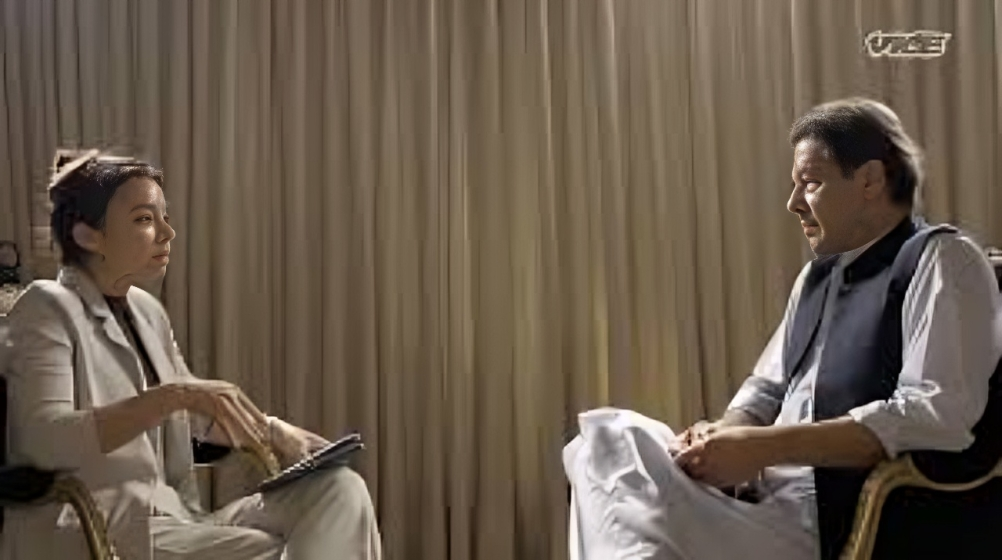
Imran Khan conversation with Isobel Yeung (VICE World News)
Pakistan is in the middle of political chaos — and one man is at the center of it all. Former Prime Minister Imran Khan was ousted last year in a no-confidence vote, but polls suggest he remains the country’s most popular political leader.
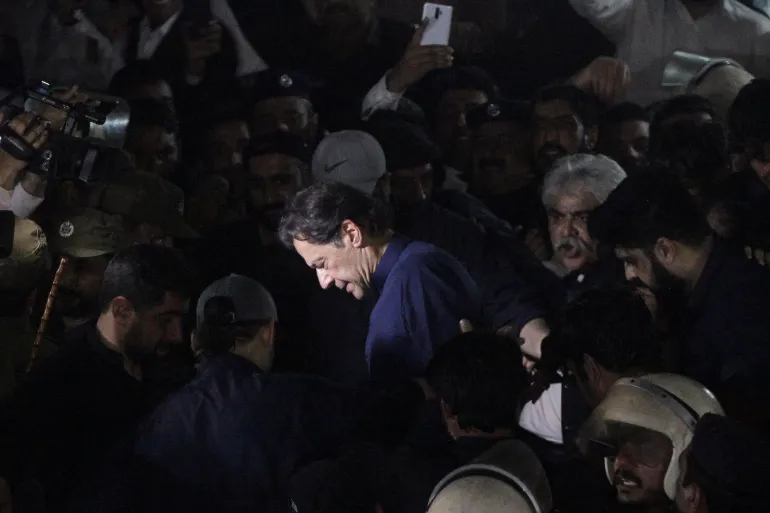
Pakistan’s election authorities have delayed the election for a crucial regional assembly after Prime Minister Shehbaz Sharif’s government refused to provide the necessary funds and polling staff citing financial constraints.
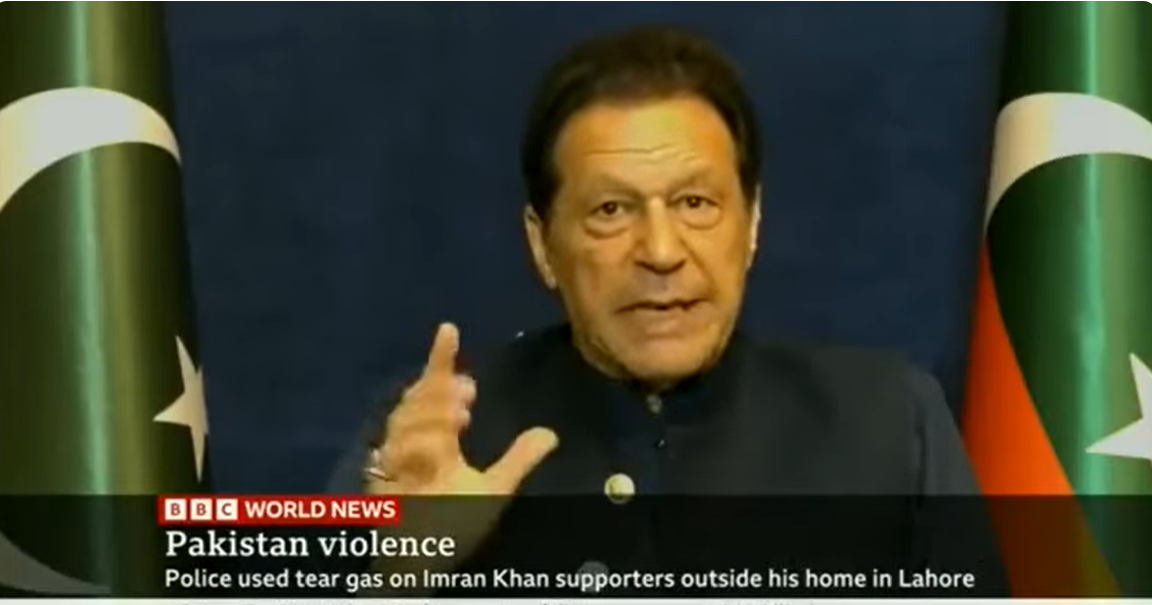
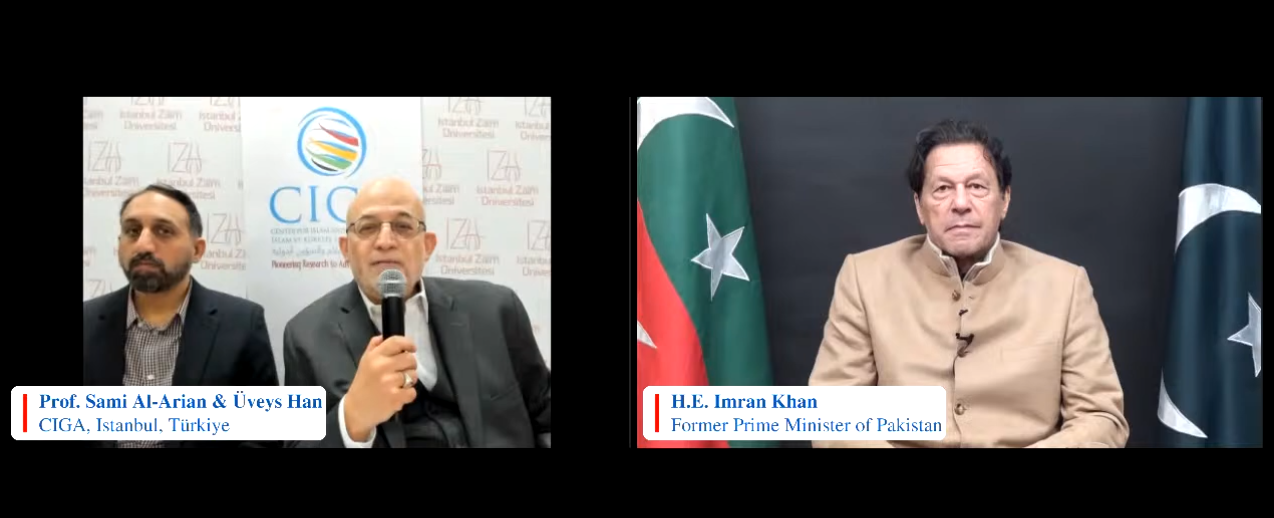
The Center for Islam and Global Affairs (CIGA) hosted a Diwaniyya-style dialogue that brought together public leaders, scholars, and public policy experts for an open, tradition-inspired discussion on pressing global and regional issues.
The event featured Imran Khan, former Prime Minister of Pakistan, whose participation anchored a wide-ranging conversation on geopolitics, regional challenges, governance, and his vision for Pakistan’s future. The dialogue reflected the Diwaniyya tradition of fostering inclusive, candid exchanges on matters of public importance.
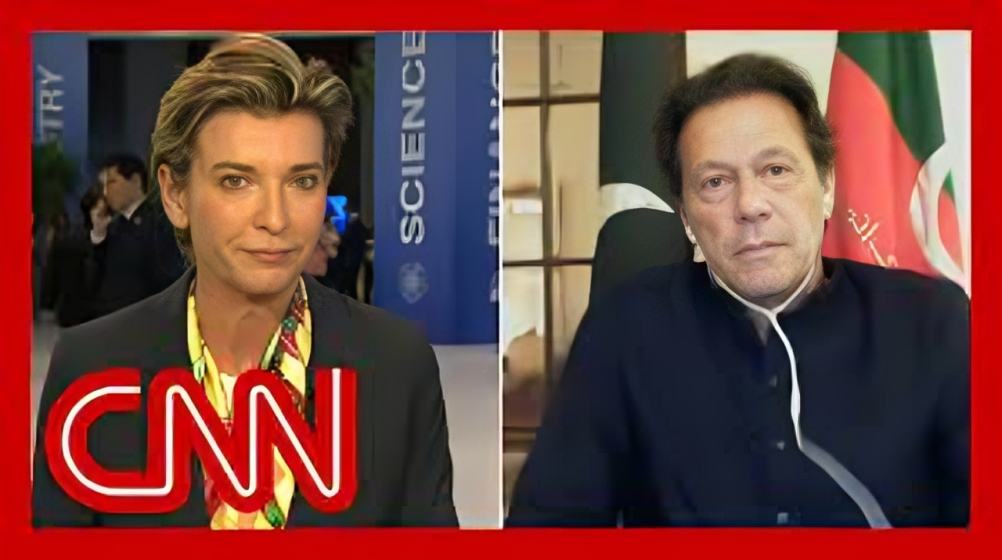
Imran Khan interview with CNN’s Becky Anderson
Speaking from his residence in Zaman Park, Lahore, Khan said that he had information from within intelligence agencies that the shooting which injured him last week would take place.

Pakistan’s ousted Prime Minister, Imran Khan, has survived a gun attack on his convoy while holding a protest march in the eastern city of Wazirabad.
He was wounded in the leg when a burst of gunfire hit his vehicle. One person was killed and at least five others were injured.
Pakistan’s former Prime Minister Imran Khan was injured when a gunman opened fire on a political rally in Wazirabad, located in Punjab province. Officials from his party, Pakistan Tehreek-e-Insaf (PTI), confirmed that Khan sustained a bullet injury to his foot and is out of danger.
At the time of the attack, Imran Khan was leading a long march from Lahore toward Islamabad, calling for immediate general elections. Since his removal from office through a no-confidence vote in April, the former Prime Minister has addressed large public gatherings across the country.
Imran Khan, who served as Pakistan’s 19th prime minister after taking office in August 2018, has repeatedly claimed that his ouster was the result of a planned conspiracy.
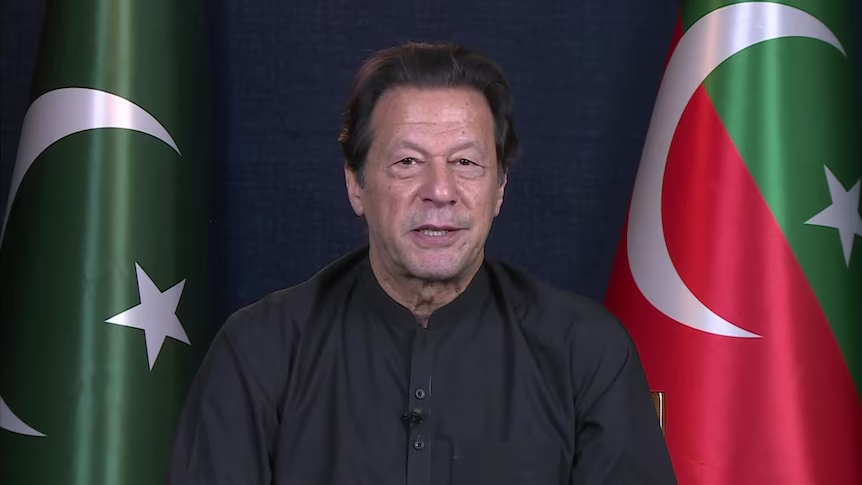
by Annie White
Pakistan’s ousted prime minister, Imran Khan says the people of Pakistan believe even a poor democracy would be better than a military government.
He spoke with ABC’s India Now! Host Marc Fennell as he continues to rally grassroots support to demand new elections.
by Sana Jamal, Correspondent Gulf News
Islamabad: Prime Minister Imran Khan said in an interview that the war on terror by the United States “actually bred terrorists” in different regions of the world, including Pakistan. The prime minister made the comments on Sunday during a CNN interview responding to a question on the surge in terrorism in the Middle East and Pakistan-Afghanistan region despite the withdrawal of US forces.
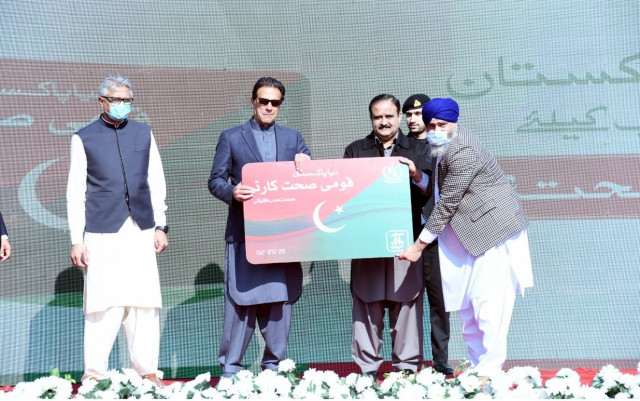
Prime Minister Imran Khan on Wednesday launched the Naya Pakistan Qaumi Sehat Card scheme to provide health insurance to families across Punjab, Islamabad, Azad Kashmir, Gilgit-Baltistan and Tharparkar.
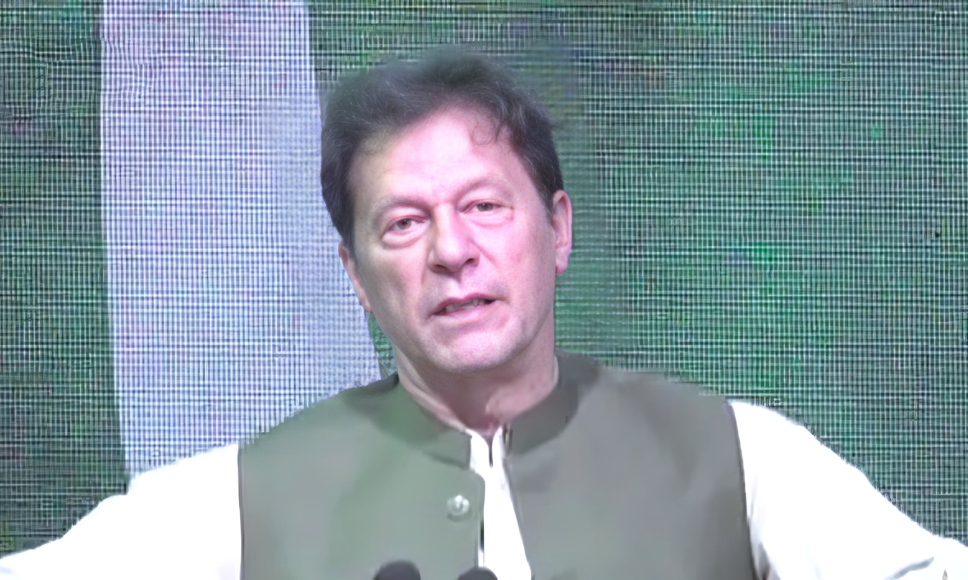
Imran Khan at ground-breaking of the Islamabad District Courts’ building
Prime Minister Imran Khan said on Tuesday that society becomes free when it gets justice, since the latter was necessary to uplift the common person. He reassured that the government would fully support the judiciary.

by Jonathan Swan and Zachary Basu
Pakistan will “absolutely not” allow the CIA to use bases on its soil for cross-border counter terrorism missions after American forces withdraw from Afghanistan, Prime Minister Imran Khan
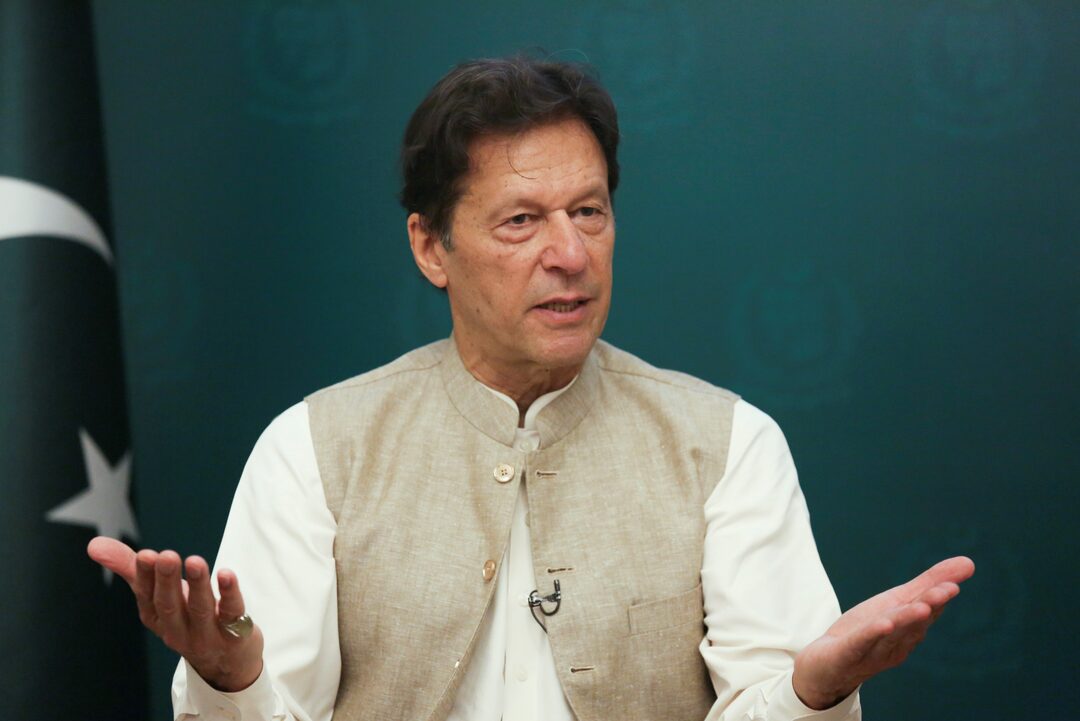
The world’s richest countries have not done enough to combat global warming, Pakistani Prime Minister Imran Khan said on Friday, adding his country had done more than any other in the world to combat rising emissions relative to its economic means.
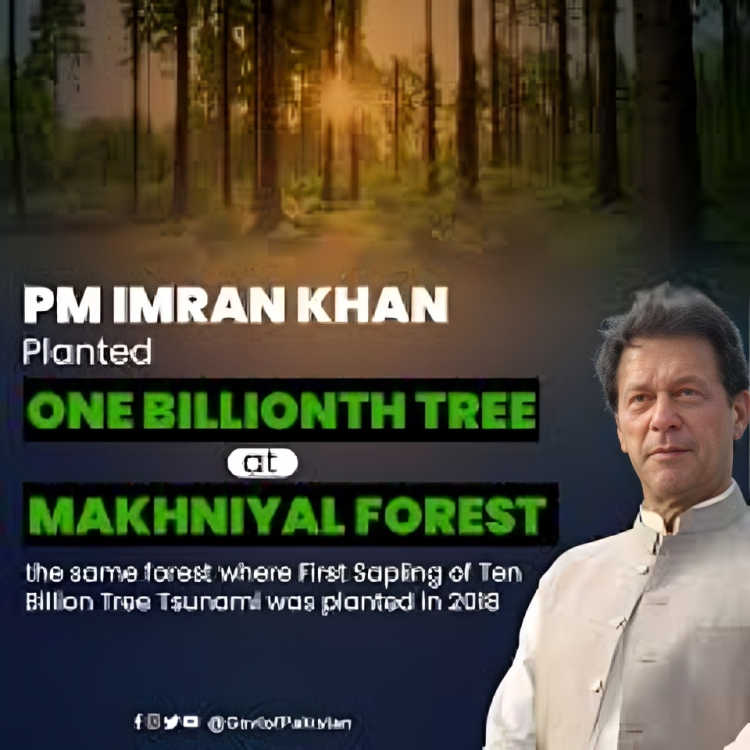
As Pakistan prepares for World Environment Day, on June 5, the country has shown it is prepared to lead the way in ecosystem restoration with its Ten Billion Tree Tsunami Project.
Large scale restoration projects such as The Ten Billion Tree Tsunami Project are central to Pakistan’s efforts to support the UN Decade and to increase ecosystem restoration.
Dechen Tsering, Director Asia and the Pacific, UNEP

Sana Jamal
Islamabad: The World Bank has ranked Pakistan’s Ehsaas Emergency Cash programme among the top four global social protection initiatives based on the number of people covered.
PM Imran Khan calls on Western governments to treat insult against Islam’s prophet as it does the Holocaust.
by Asad Hashim
Islamabad, Pakistan – Pakistani Prime Minister Imran Khan has called for Muslim-majority countries to band together to lobby Western governments to criminalise the insulting of Islam’s prophet, as negotiations between his government and a far-right anti-blasphemy religious group continue.
ISLAMABAD: Prime Minister Imran Khan said Pakistan would never recognize Israel until Palestinian rights were guaranteed.
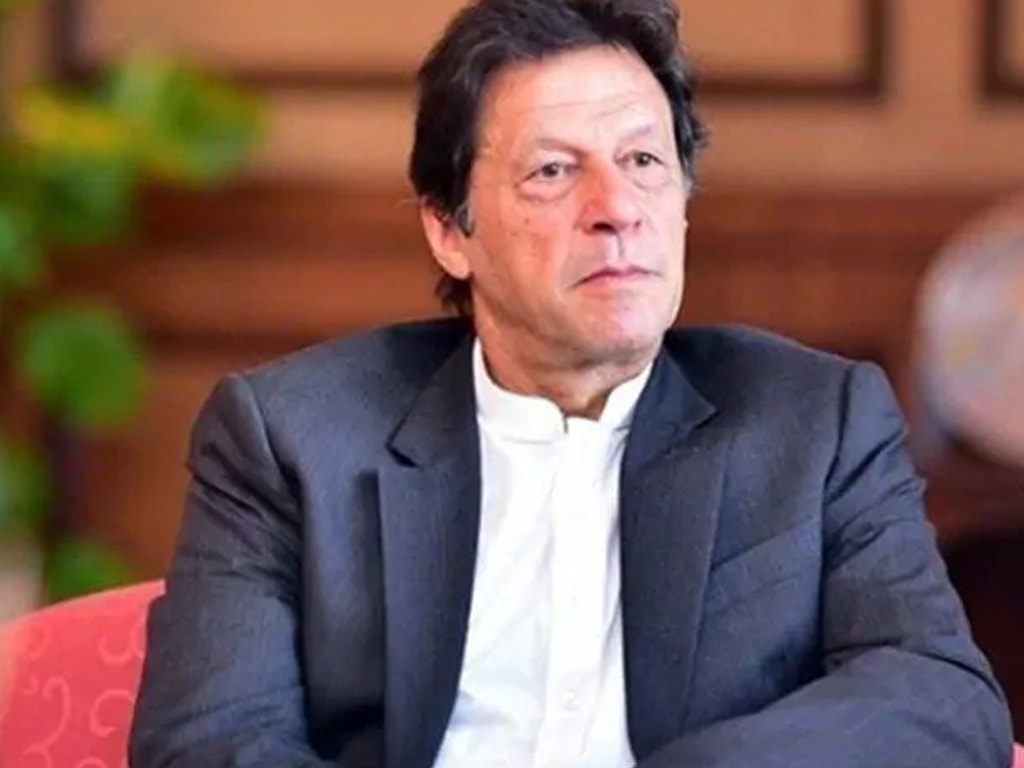
Prime Minister Imran Khan on Monday paying tribute to Pakistan’s national poet Dr Allama Muhammad Iqbal on his 143rd birth anniversary said Iqbal’s thoughts continue to be a source of inspiration and guidance.
PM Imran in his tweet shared an article of Dr Ali Shariati, renowned Iranian revolutionary and sociologist, and wrote that Iqbal’s thoughts continue to be a source of inspiration and guidance.
“He is a great mystic, with a pure spirit, delivered of materiality and, at the same time, a man who respects and honours science, technological progress, and the advancement of human reason in our age,” the PM quoted Dr Shariati.
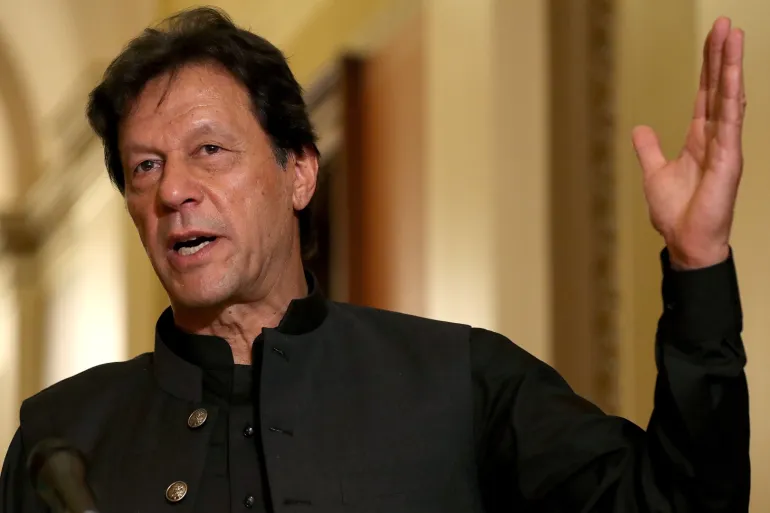
By Asad Hashim
In letter to leaders of Muslim-majority countries, the Pakistani prime minister asks to ‘act collectively to counter growing Islamophobia’.
Islamabad, Pakistan – Pakistani Prime Minister Imran Khan has written to the leaders of Muslim-majority countries, asking them “to act collectively to counter growing Islamophobia in non-Muslim states”, his office has said.
The letter follows a rebuke by Khan to French President Emmanuel Macron earlier this week, where he accused Macron of “encouraging Islamophobia” for moves made by his government to tackle what the French leader termed “Islamic separatism”.

ISLAMABAD:
The world is widely acknowledging Prime Minister Imran Khan’s smart lockdown strategy, mainly focusing balance between lives and livelihood, as the country witnessed a steep decline from around 6,800 Covid-19 patients a day in mid-June to 1,209 cases during the last 24 hours across the country.

Imran Khan’s comments come days after a US-brokered deal between UAE and Israel to normalise relations.
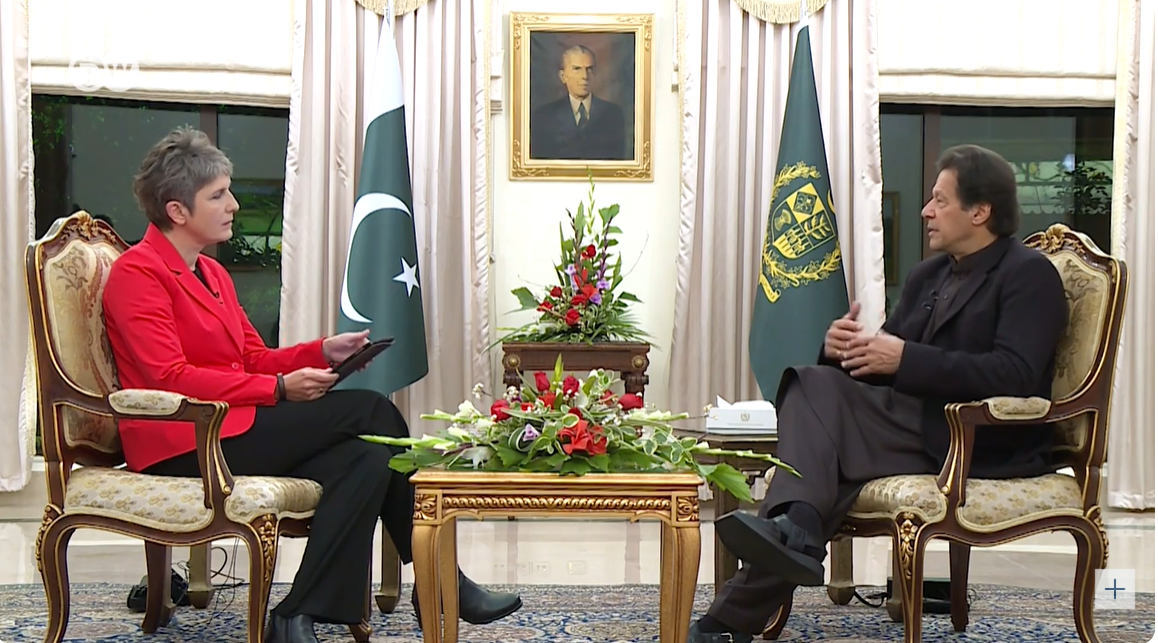
In an exclusive interview with DW Editor-in-Chief Ines Pohl, Pakistani Prime Minister Imran Khan talks about Pakistan’s relationship to India, the Iran crisis and the international community’s “lukewarm” response to the Kashmir dispute.
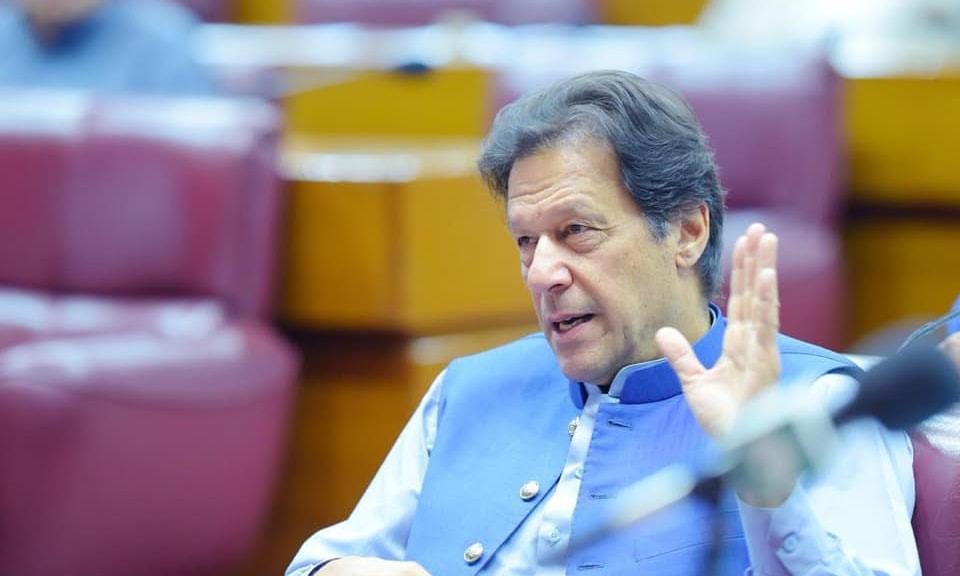
Prime Minister Imran Khan has been declared “Man of the Year” from the Muslim world by the Royal Islamic Strategic Studies Centre, an independent research entity affiliated with an international Islamic non-governmental, independent institute headquartered in Jordan.
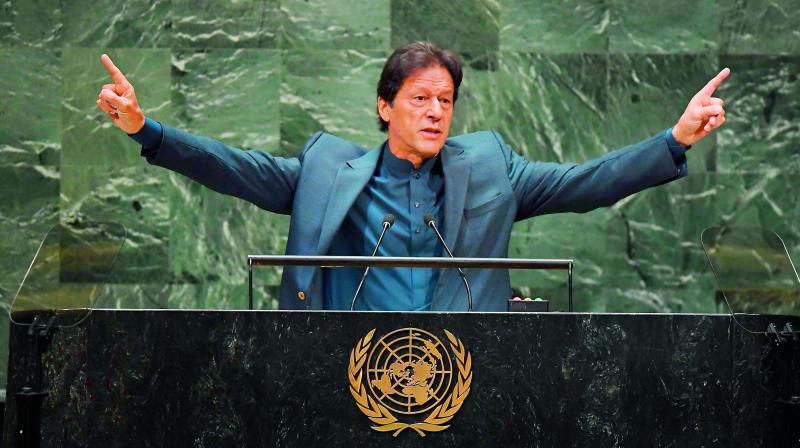
Prime Minister of Pakistan Imran Khan today warned that what is going to happen in Kashmir when the curfew is lifted “will be a bloodbath.”
Addressing the General Assembly today (27 Sep) in New York, Prime Minister of Pakistan Imran Khan said, “when a nuclear armed country fights to the end, it will have consequences far beyond the borders.” He added, “It will have consequences for the world, which is why I repeat I am here, because I’m warning you, it is not a threat, it’s a fair worry that where are we heading?”
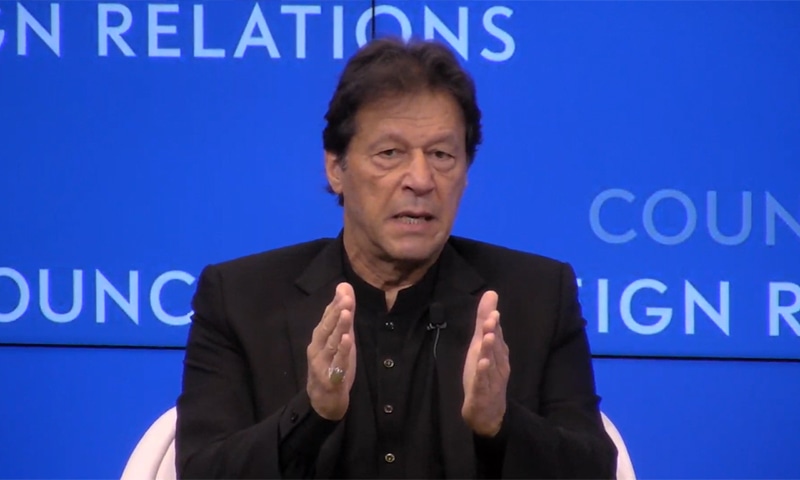
Speaker: Imran Khan Prime Minister of Pakistan
Presider: Richard N. Haass
Prime Minister Imran Khan discusses the current state of U.S.-Pakistan relations, recent developments in the disputed region of Kashmir, and Pakistan’s relationship with India, Afghanistan, and other neighboring countries.

Pakistani Prime Minister Imran Khan has told the BBC that peace with India over the disputed territory of Kashmir would be “tremendous” for the wider region.

by Pazir Gul
MIRAMSHAH: Prime Minister Imran Khan has said Pakistan believes in peace beyond borders and will play its role in the Afghan peace process, as peace in the war-ravaged country is critical for achieving an enduring peace in Pakistan.
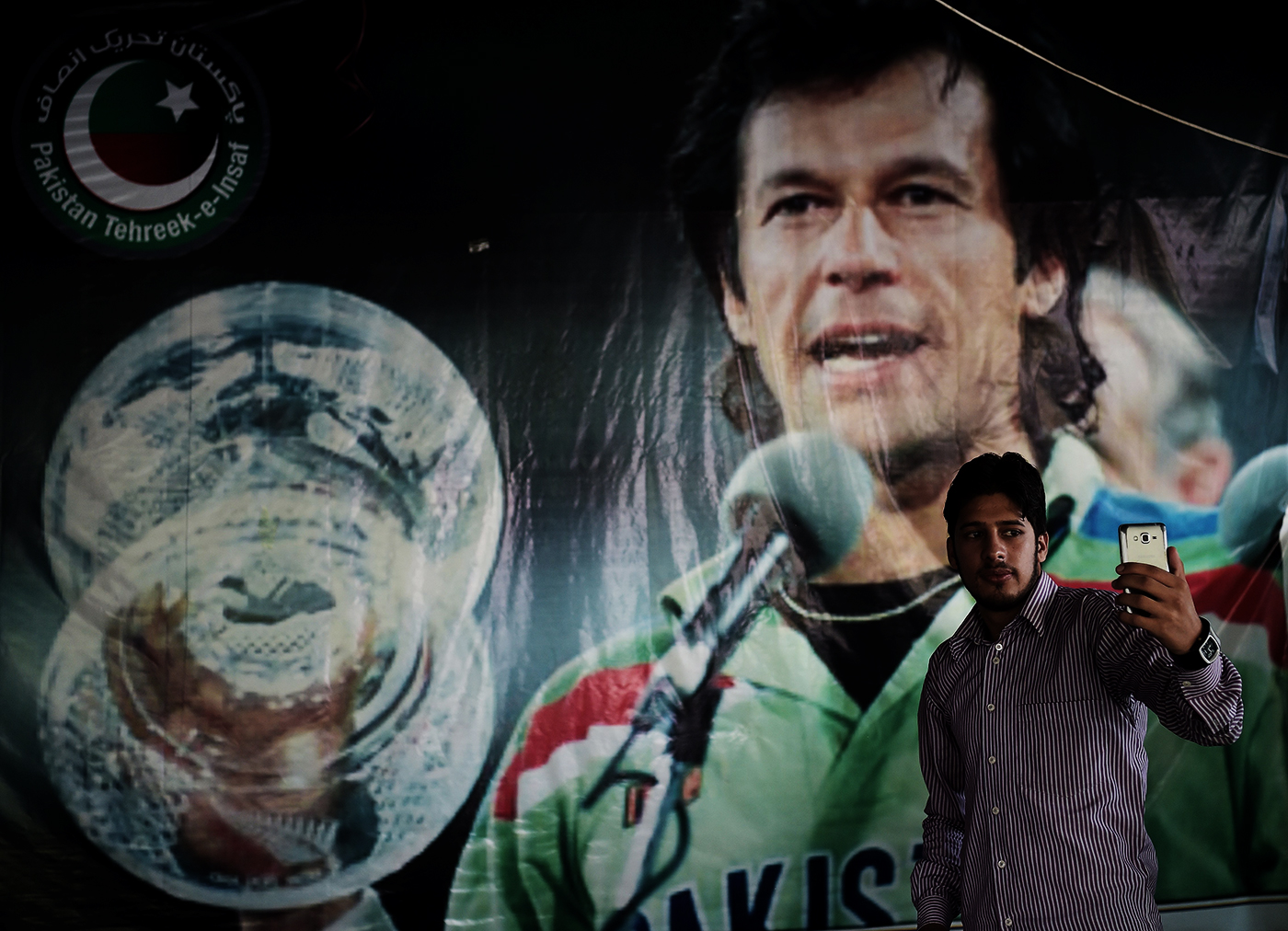
Cricketer who turned prime minister? There’s more to him than just those two avatars.

Imran Khan was catapulted to global fame as a World Cup cricket champion, but the man known in the West as a celebrity playboy is now seeking to lead Pakistan as a populist, religiously devout, anti-corruption reformist. Let’s take a look at the many faces of the man.
by Rosamond Hutt
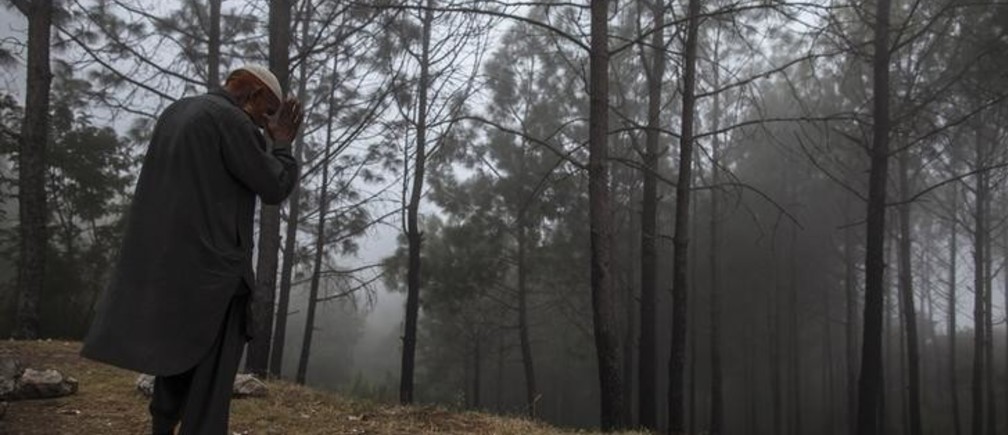
Pakistan hit its billion tree goal in August 2017 – months ahead of schedule. Now, the hills of the country’s northwestern province of Khyber Pakhtunkhwa are alive with newly planted saplings.
The massive reforestation project – named the Billion Tree Tsunami – added 350,000 hectares of trees both by planting and natural regeneration, in an effort to restore the province’s depleted forests and fight the effects of climate change.
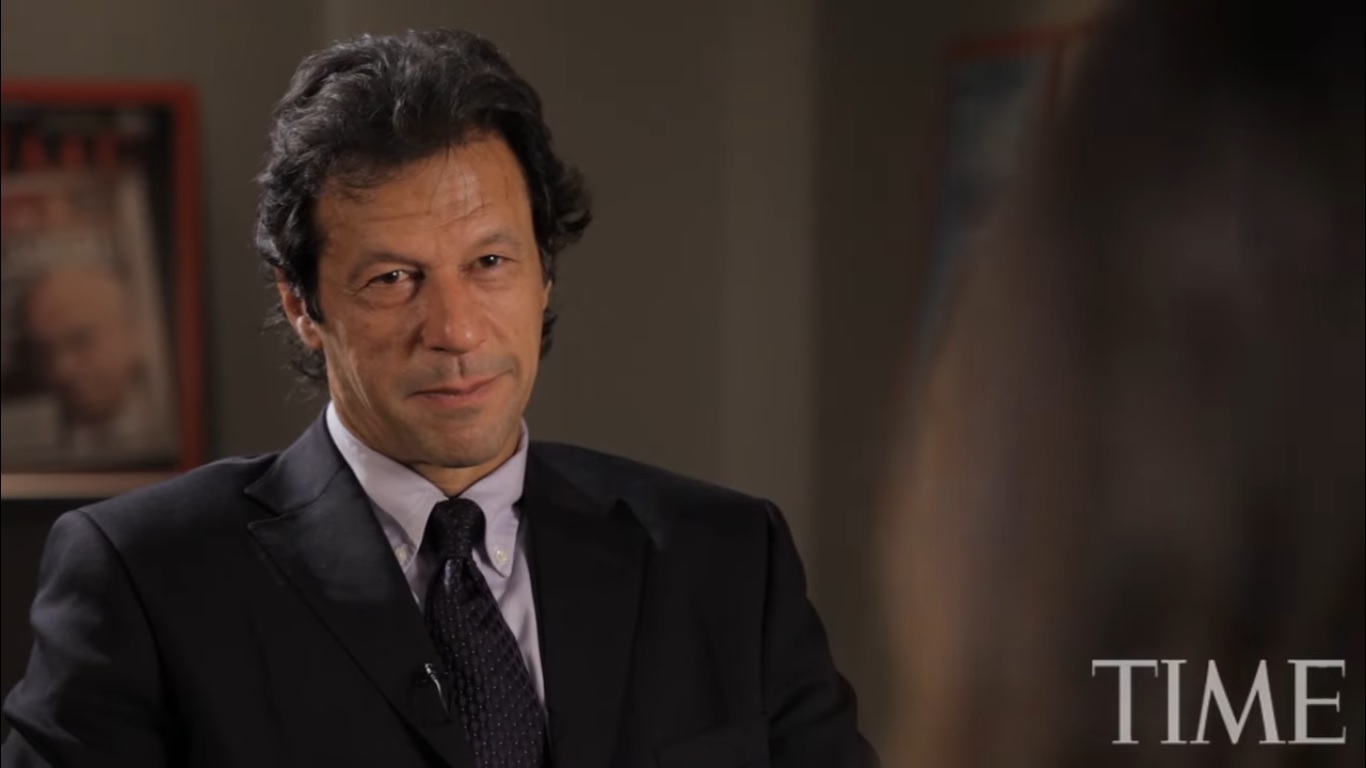

Imran Khan speaks at TEDxKarachi 2011 on Never Giving up on Your Dreams


A Rare old Interview of Imran Khan in 1994 With SSB TV Mary Kostakidis
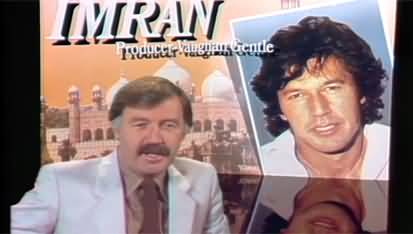
Imran Khan interview with George Negus
A remarkably frank interview filmed at Imran Khan’s home in Lahore.