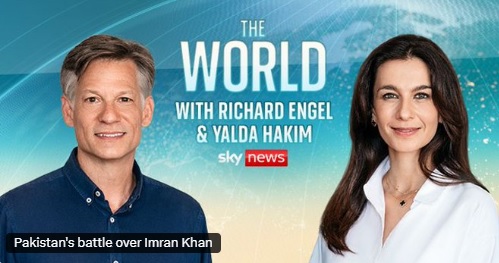
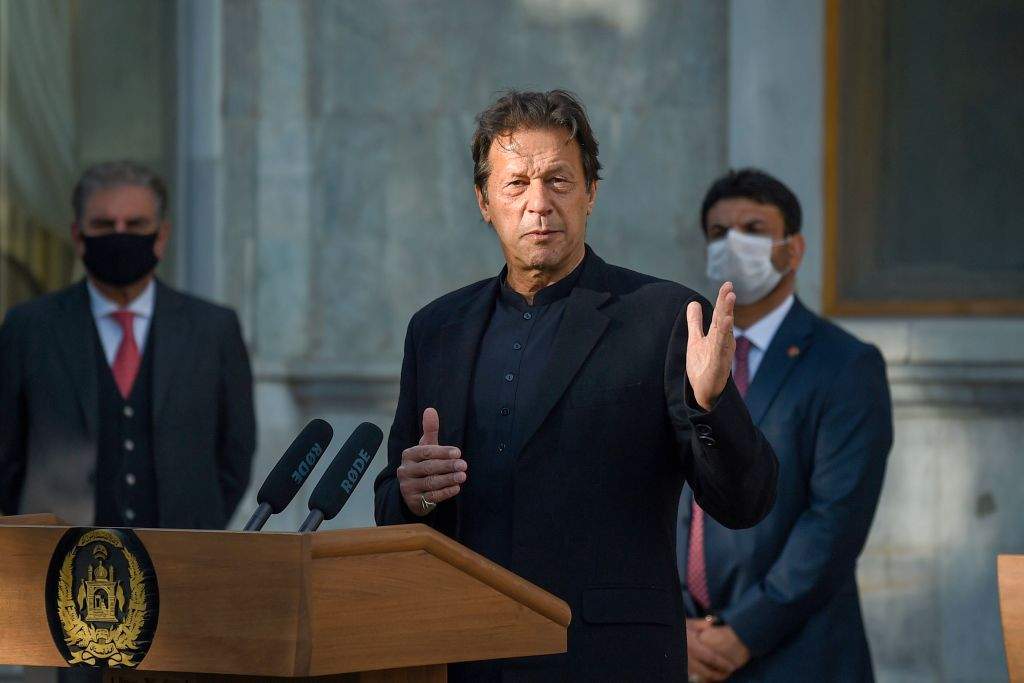
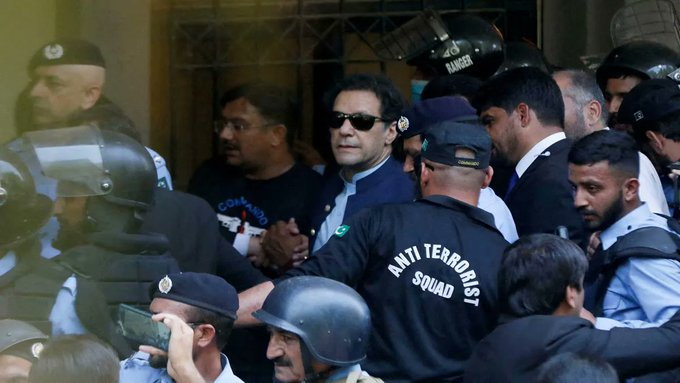
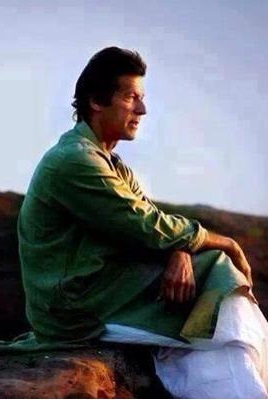
Former Pakistani PM, who is in solitary confinement, is at risk of losing his sight, say supporters
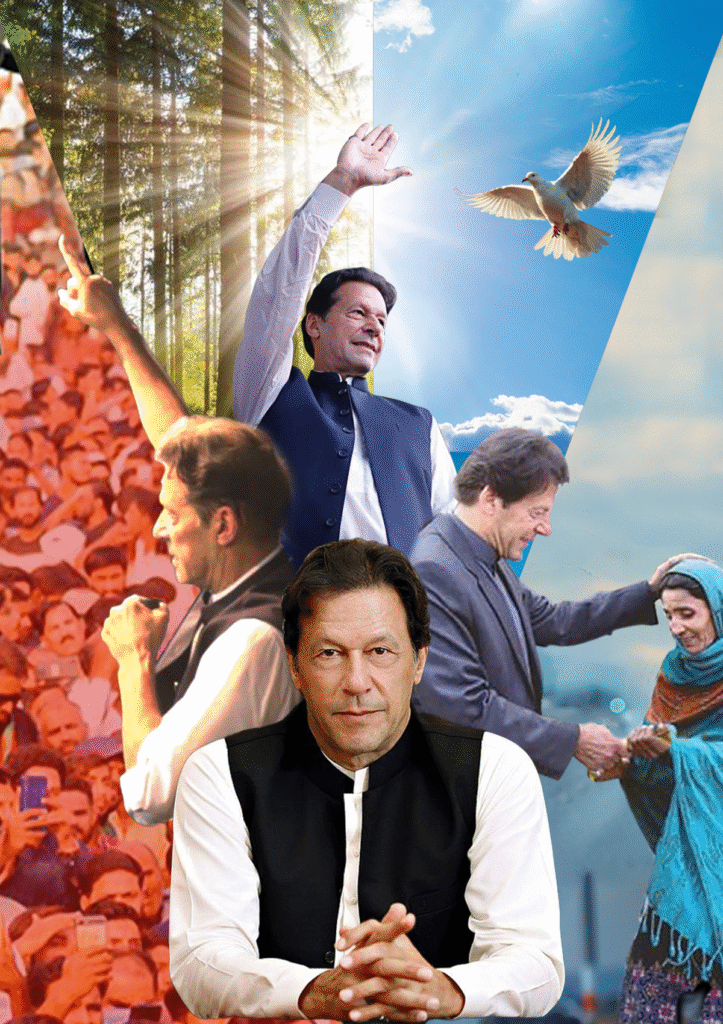
“An ongoing global campaign to acknowledge and highlight Imran Khan’s unique stature, distinctive qualities and remarkable achievements that position him as the natural leader of the Global South and pivotal bridge between East and West.”
IK Alliance is a global platform uniting people across borders to coordinate advocacy and action for Imran Khan’s release and the defense of peace, justice, human rights, and the rule of law. By bringing together diverse communities worldwide, it counters transnational forces that undermine freedom—affirming that only united global resistance can restore truth and liberty.
Pakistan’s election authorities have delayed the election for a crucial regional assembly after Prime Minister Shehbaz Sharif’s government refused to provide the necessary funds and polling staff citing financial constraints.
As Pakistan prepares for World Environment Day, on June 5, the country has shown it is prepared to lead the way in ecosystem restoration with its Ten Billion Tree Tsunami Project.
Large scale restoration projects such as The Ten Billion Tree Tsunami Project are central to Pakistan’s efforts to support the UN Decade and to increase ecosystem restoration.
Dechen Tsering, Director Asia and the Pacific, UNEP
A Rare old Interview of Imran Khan in 1994 With SSB TV Mary Kostakidis
by Annie White
Pakistan’s ousted prime minister, Imran Khan says the people of Pakistan believe even a poor democracy would be better than a military government.
He spoke with ABC’s India Now! Host Marc Fennell as he continues to rally grassroots support to demand new elections.
By Gibran Naiyyar Peshimam
LAHORE – Pakistan’s embattled former Prime Minister Imran Khan has accused the powerful military and its intelligence agency of openly trying to destroy his political party, saying he had “no doubt” he would be tried in a military court and thrown in jail.
Pakistan’s former Prime Minister Imran Khan was injured when a gunman opened fire on a political rally in Wazirabad, located in Punjab province. Officials from his party, Pakistan Tehreek-e-Insaf (PTI), confirmed that Khan sustained a bullet injury to his foot and is out of danger.
At the time of the attack, Imran Khan was leading a long march from Lahore toward Islamabad, calling for immediate general elections. Since his removal from office through a no-confidence vote in April, the former Prime Minister has addressed large public gatherings across the country.
Imran Khan, who served as Pakistan’s 19th prime minister after taking office in August 2018, has repeatedly claimed that his ouster was the result of a planned conspiracy.
by Faizan Dogar
“A nation is a detour of nature to arrive at five or six great men” – Friedrich Nietzsche.
Imran Khan is hitherto the greatest man the Pakistani collective (un)conscious has birthed. His persona successfully integrates the unconscious aspects of the Pakistani psyche with its bold ideals. Historian Ayesha Jalal explores how Pakistan’s postcolonial identity is shaped by a lingering colonial mentality, which contributes to a crisis of self-worth. This mentality leads Pakistanis to look toward Western models of success and governance while struggling to reconcile this influence with their own Islamic ideals.
Imran Khan is unique in this context: he is the only Pakistani who has scaled the heights of achievement, fame, and success as defined by the British, yet has redirected these triumphs toward a vision of self-assured independence and pride for Pakistan—a vision that aligns Pakistan with its boldest ideals. Imran Khan has resolved the inferiority complex Pakistanis inherit due to their colonial past by achieving success on terms set by the British themselves. For many Pakistanis, there exists a subtle, almost subconscious desire for validation from the West – a lingering effect of the colonial mentality that measures success by Western standards.
Imran Khan is the only Pakistani to have truly gained that validation, satisfying a craving that so many share but rarely articulate.
His education at Oxford, an emblem of British academia and aristocratic prestige, marked his entry into British society. His becoming the fancy of British women represents his deep acceptance by British society. His World Cup victory over England—a triumph in cricket, the very game the British invented—was no coincidence but a powerful symbol of his conquest over them. His subsequent marriage to Jemima Goldsmith, a figure of British wealth and aristocracy, further cemented his triumph within British society. For a nation where migration to the West is often viewed as the ultimate success, Khan’s choice to return to Pakistan after capturing the British imagination, rather than settle abroad, marks a profound psychological shift.
By bringing his achievements back to Pakistan, he redefined success not as external validation but as something rooted in one’s homeland. His return embodies a resolution of the inferiority complex, showcasing that the highest form of success is not in gaining approval from the West but in channeling those accomplishments into pride and purpose at home. What makes Imran Khan the greatest of Pakistani men isn’t just his overcoming of the inherited inferiority complex; it’s also his personification of Pakistan’s boldest ideals.
The idea of Pakistan may be hotly contested, but there is no dispute that Dr. Muhammad Iqbal, revered as Allama Iqbal, is the ideological father of the nation. Iqbal’s vision for governance within an Islamic state is complex, but his writings reveal key principles: he viewed matter as nothing but spirit within a space-time reference, and he regarded the essence of Tawhid (unity) as being rooted in equality, solidarity, and freedom. Iqbal’s understanding of spirit as matter projected onto space-time aligns with his verse: Khird huwee hai zamaan o makaan ki zunaari na hai zamaaN, na makaaN! La ilaha il Allah (The mind has worn the holy thread Of Time and Space like pagans all Though Time and Space both illusive “No god but He” is true withal) According to Iqbal, the state is a defined human organization, meant to bring the spiritual principles of equality, freedom, and solidarity into the temporal world. However, Iqbal’s vision of an Islamic state was in no way a theocracy where a single, self-appointed representative of God could impose his will under the pretense of infallibility.
On the contrary, Iqbal’s emphasis on individual development, combined with his view that reality is ultimately spiritual, gave rise to his concept of a “spiritual democracy.” Such a democracy could only reach its fullest potential through individuals who have transcended the material, recognizing spirit as the core of reality. Yet, these individuals are not ascetic Sufis removed from the world; they are people who, having understood reality’s essence, actively accept their responsibilities to their communities. As Iqbal states: “Fard qaim rabt-e-millat se hai, tanha kuch nahin, Mauj hai darya mein aur bairun-e-darya kuch nahin.” (An individual stands strong with the nation; alone they are nothing. A wave is only part of the river, outside it is nothing.) This aligns with Imran Khan’s commitment to his community and country, exemplifying that greatness is in serving the collective. Imran Khan exemplifies this ideal. His conviction in these ideas is evident from his lifelong journey of self-growth, a journey rooted in “mind over matter” as displayed through his achievements in cricket, philanthropy, and politics. But this conviction is perhaps most vividly demonstrated by his willingness to sacrifice his life for the ideals he upholds: equality, solidarity, and freedom.
In this commitment, Imran Khan bears the immense weight of Pakistan’s lofty ideals. Imran Khan’s transcendence of the classic Pakistani inferiority complex, combined with a spiritually grounded life dedicated to the service of his countrymen, embodies Iqbal’s Asrar-e-Khudi (Secrets of the Self) and Rumuz-e-Bekhudi (Mysteries of Selflessness)—two of Iqbal’s most celebrated works. If Iqbal were to fashion an individual according to his own vision, that person would undoubtedly be Imran Khan. Therefore, his imprisonment is the imprisonment of the Pakistani spirit. His freedom will be the emancipation of the Pakistani soul. Pakistan Zindabad!
Imran Khan: The Idea of Pakistan Crystallized
— Faizan Dogar (@faizandogar96) November 10, 2024
“A nation is a detour of nature to arrive at five or six great men” – Friedrich Nietzsche.
Imran Khan is hitherto the greatest man the Pakistani collective (un)conscious has birthed. His persona successfully integrates the…
A United Nations human rights working group on July 1 called for the immediate release of Pakistan’s imprisoned former Prime Minister Imran Khan, saying he had been detained “arbitrarily in violation of international laws.”
Cricketer who turned prime minister? There’s more to him than just those two avatars.